

1 ducaton – Netherlands East Indies
Add to wishlist
Indonesia
Context
Years: 1738–1740
Country: Indonesia
Issuer: Netherlands East Indies
Period:
(1602—1800)
Currency:
(1726—1854)
Demonetized: Yes
Total mintage: 92,000
References
KM: #
Numista: #375268
Value
Bullion value: $82.28
Obverse
Description:
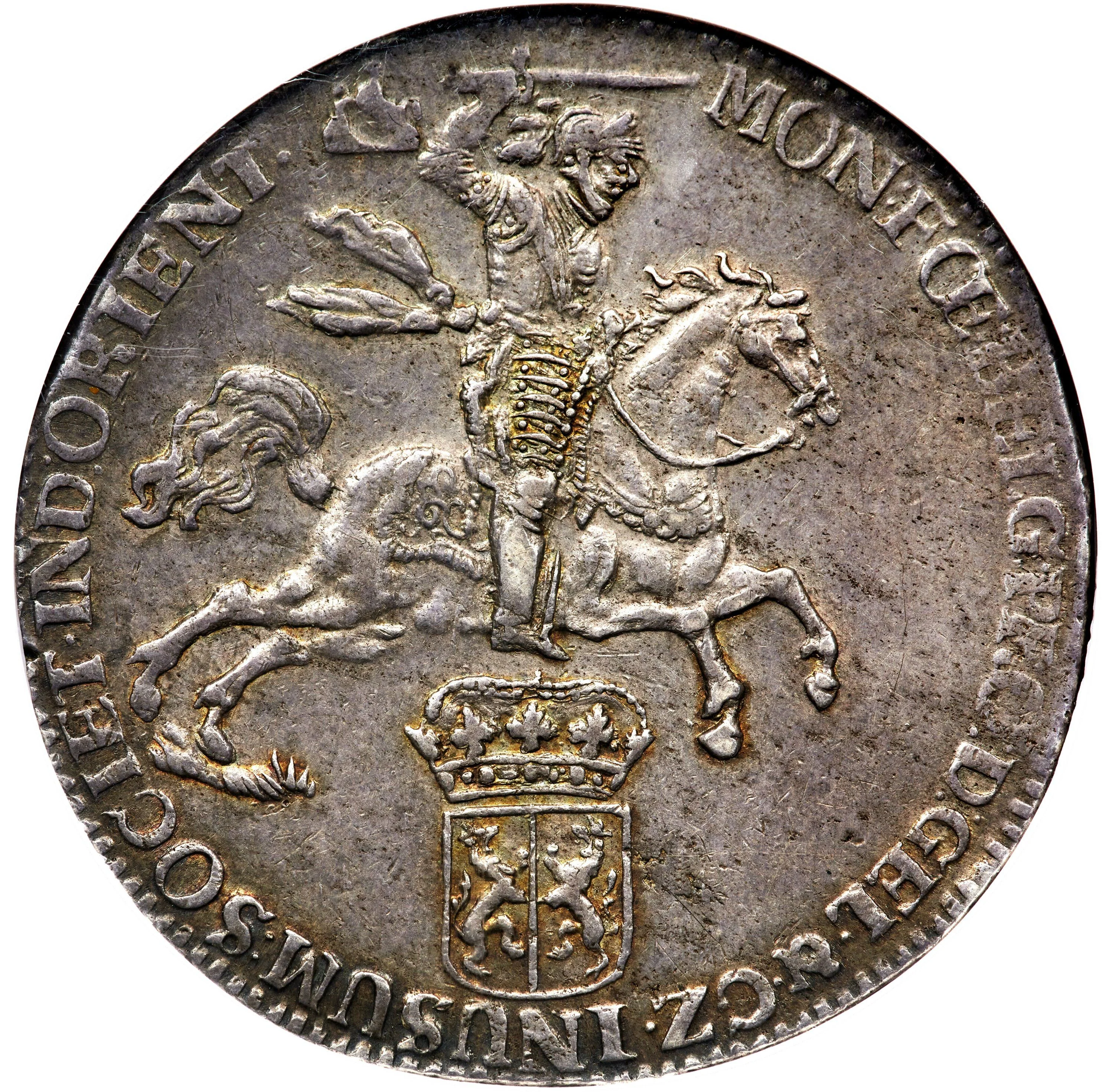
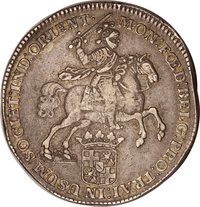
Knight on horseback right, crowned Gelderland arms below.
Inscription:
MON : FΠ: BELG : PRO : D : GEL : & : CZ : INUSUM : SOCIET : IND : ORIENT :
Script: Latin
Reverse
Description:
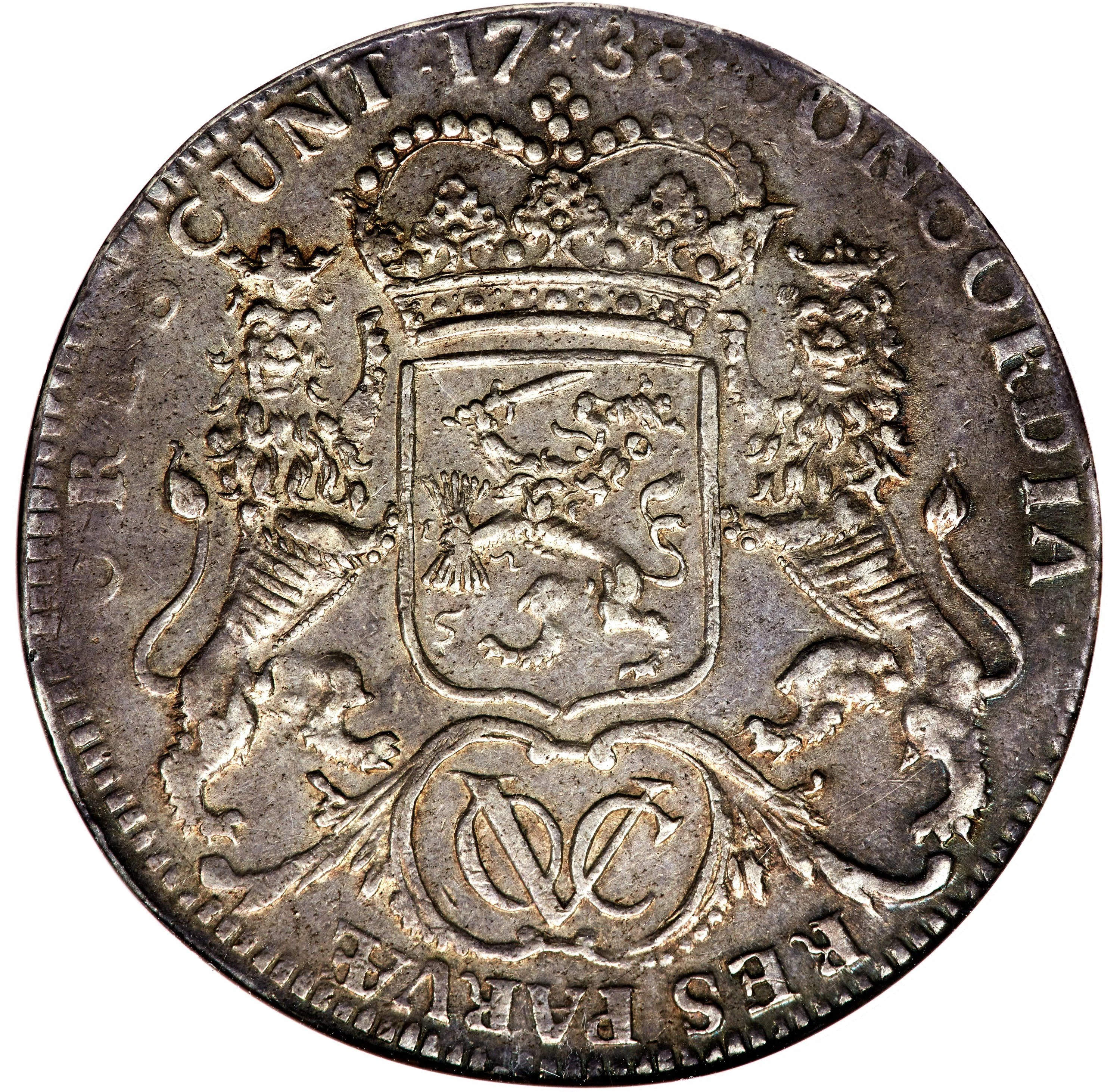
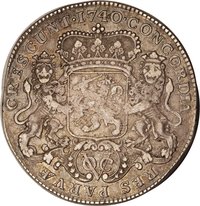
Crowned arms with lion supporters, VOC monogram below, date above.
Inscription:
CONCORDIA . RES • PARVÆ • CRESCUNT . 1738
VOC
VOC
Script: Latin
Edge
Mints
| Name | Mark |
|---|---|
| Harderwijk | — |
Mintings
| Year | Mint Mark | Mintage | Quality | Collection |
|---|---|---|---|---|
| 1738 | — | — | ||
| 1739 | — | — | ||
| 1740 | — | 92,000 |
Historical background
In 1738, the currency system of the Netherlands East Indies (NEI), centered in Batavia, was a complex and problematic amalgamation of official and unofficial monies. The official currency, as decreed by the Dutch East India Company (VOC), was the Netherlands Indies guilder, but its circulation was limited. The VOC, chronically short of specie (coinage) from Europe, struggled to meet the colony's economic needs, leading to a severe shortage of reliable, high-value coinage for major transactions and trade settlements.
Consequently, the daily monetary reality was dominated by a vast array of foreign silver coins, primarily Spanish-American pieces of eight (reales) and Mexican pesos, which circulated widely alongside Japanese koban gold coins, Indian rupees, and various local imitations. The VOC attempted to control this system by periodically issuing official valuation decrees (plakkaten) that set exchange rates for these foreign coins against the official guilder. However, these fixed rates often failed to reflect market values, leading to arbitrage, hoarding of undervalued coins, and persistent confusion. This mismatch between official policy and market reality created a chaotic and inefficient monetary environment.
The core of the problem in 1738 was the VOC's own financial practices. To bridge its cash shortfalls, the Company had begun issuing paper credit instruments, including kreditbrieven (promissory notes). More infamously, it resorted to the overproduction of low-quality copper duit coins at its mints in Batavia and later in Japan. These coins, intended for small, everyday transactions, were increasingly debased and often rejected in regional trade, causing inflation and eroding public trust. Thus, the currency situation was characterized by a fragile duality: an inadequate official system propped up by decrees, and a vibrant but chaotic unofficial market of foreign and debased coins, all underpinned by the VOC's growing fiscal strain.
Consequently, the daily monetary reality was dominated by a vast array of foreign silver coins, primarily Spanish-American pieces of eight (reales) and Mexican pesos, which circulated widely alongside Japanese koban gold coins, Indian rupees, and various local imitations. The VOC attempted to control this system by periodically issuing official valuation decrees (plakkaten) that set exchange rates for these foreign coins against the official guilder. However, these fixed rates often failed to reflect market values, leading to arbitrage, hoarding of undervalued coins, and persistent confusion. This mismatch between official policy and market reality created a chaotic and inefficient monetary environment.
The core of the problem in 1738 was the VOC's own financial practices. To bridge its cash shortfalls, the Company had begun issuing paper credit instruments, including kreditbrieven (promissory notes). More infamously, it resorted to the overproduction of low-quality copper duit coins at its mints in Batavia and later in Japan. These coins, intended for small, everyday transactions, were increasingly debased and often rejected in regional trade, causing inflation and eroding public trust. Thus, the currency situation was characterized by a fragile duality: an inadequate official system propped up by decrees, and a vibrant but chaotic unofficial market of foreign and debased coins, all underpinned by the VOC's growing fiscal strain.
✨ Legendary