

1 duit – Netherlands East Indies
Add to wishlist
Indonesia
Context
Years: 1741–1794
Country: Indonesia
Issuer: Netherlands East Indies
Period:
(1602—1800)
Currency:
(1726—1854)
Demonetized: Yes
Material
References
KM: #
Numista: #6585
Obverse
Description:
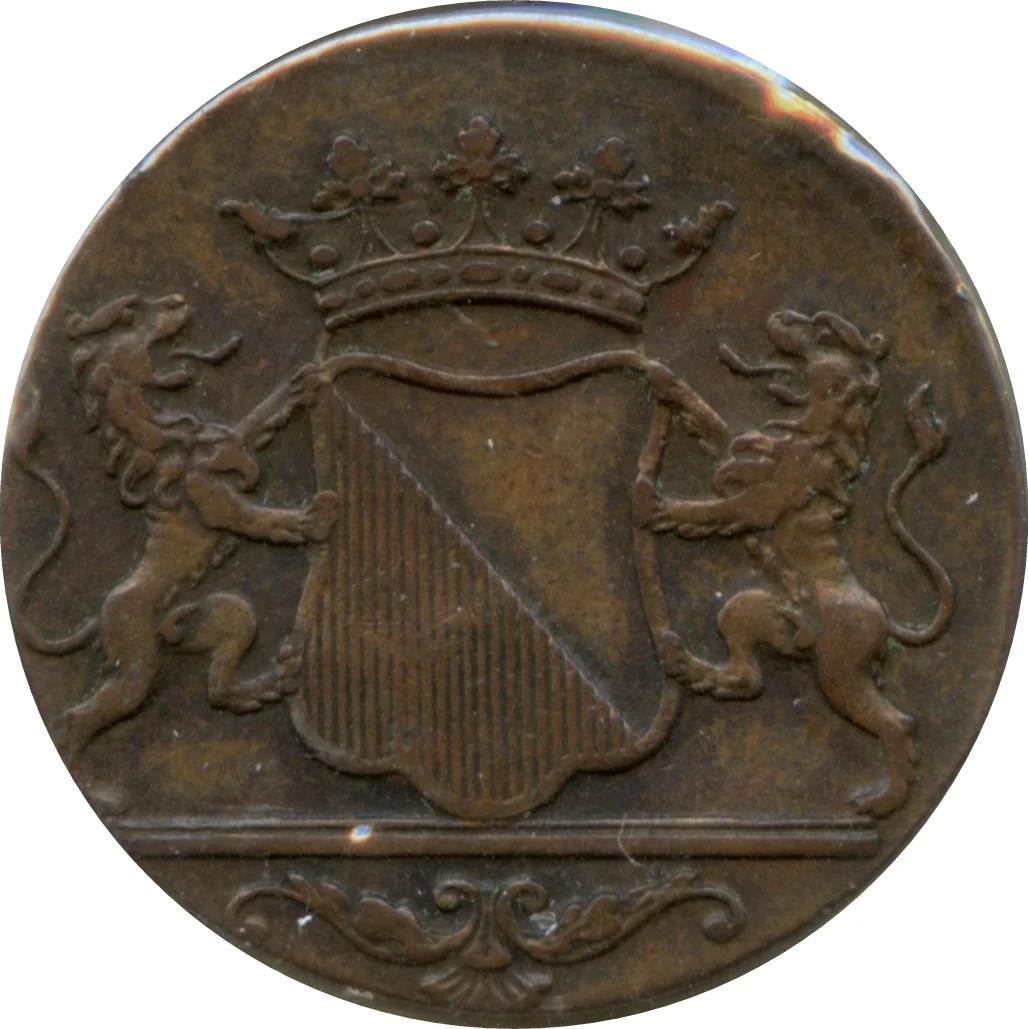
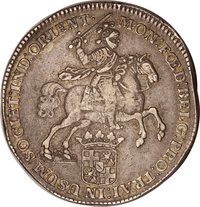
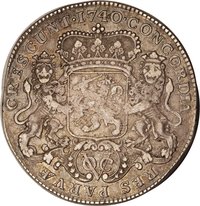
Utrecht arms with crown, lion supporters, scrollwork in double exergue.
Reverse
Edge
Plain
Categories
| Symbols> Coat of Arms |
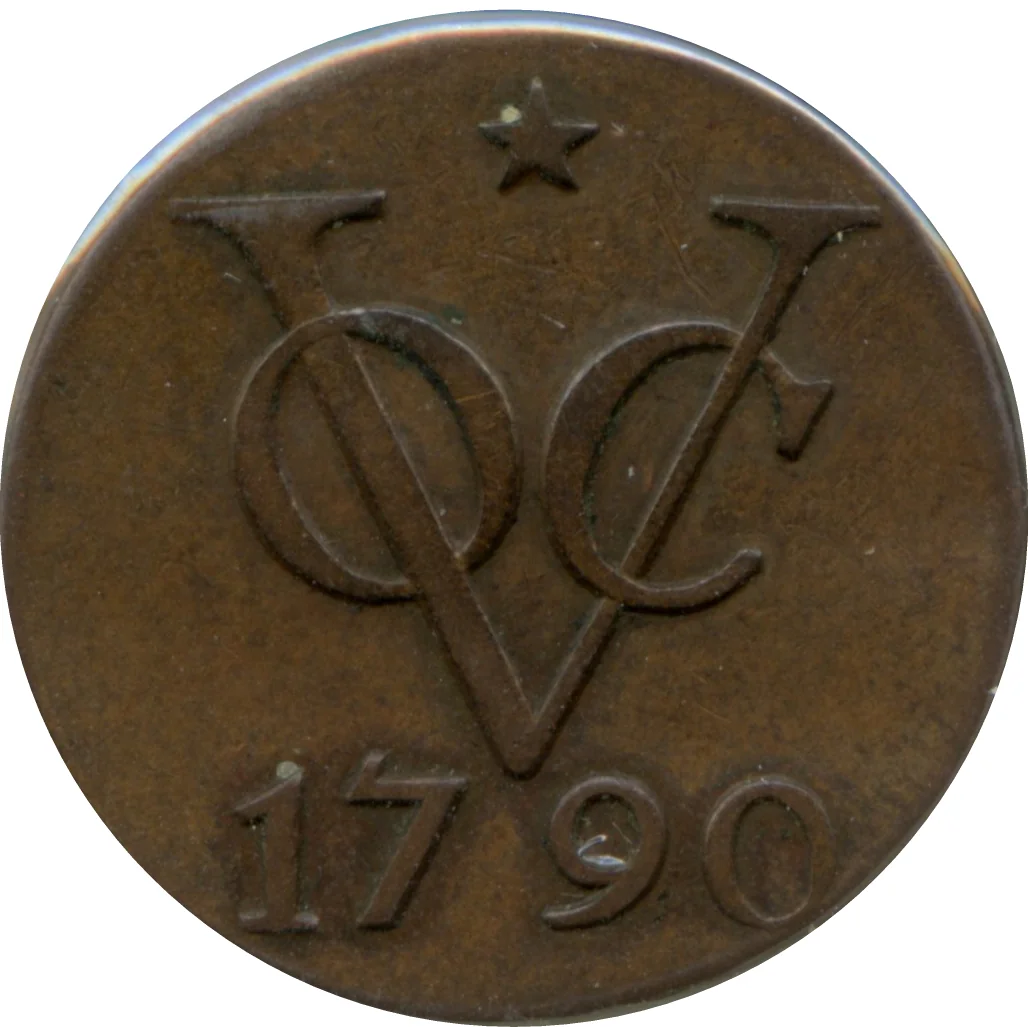
| Symbols> Monogram |
Mints
| Name | Mark |
|---|---|
| Royal Dutch Mint | — |
Mintings
| Year | Mint Mark | Mintage | Quality | Collection |
|---|---|---|---|---|
| 1741 | — | — | ||
| 1742 | — | — | ||
| 1744 | — | — | ||
| 1745 | — | — | ||
| 1746 | — | — | ||
| 1752 | — | — | ||
| 1753 | — | — | ||
| 1754 | — | — | ||
| 1755 | — | — | ||
| 1756 | — | — | ||
| 1757 | — | — | ||
| 1764 | — | — | ||
| 1765 | — | — | ||
| 1766 | — | — | ||
| 1767 | — | — | ||
| 1769 | — | — | ||
| 1770 | — | — | ||
| 1771 | — | — | ||
| 1776 | — | — | ||
| 1777 | — | — | ||
| 1778 | — | — | ||
| 1779 | — | — | ||
| 1780 | — | — | ||
| 1781 | — | — | ||
| 1784 | — | — | ||
| 1785 | — | — | ||
| 1786 | — | — | ||
| 1787 | — | — | ||
| 1788 | — | — | ||
| 1789 | — | — | ||
| 1790 | — | — | ||
| 1791 | — | — | ||
| 1792 | — | — | ||
| 1793 | — | — | ||
| 1794 | — | — |
Historical background
In 1741, the currency system of the Netherlands East Indies (NEI) was a complex and often chaotic blend of official and unofficial mediums of exchange, heavily influenced by the Dutch East India Company (VOC). The official currency was the rijksdaalder, a large silver coin, but its scarcity and the high-value transactions of the Company made it impractical for daily use. Consequently, a system of credit and bookkeeping transfers dominated large-scale trade, while a proliferation of foreign coins—most notably Spanish American silver reales (pieces of eight), Japanese koban gold coins, and various local copper duits—circulated for smaller transactions. The VOC struggled to control this diverse monetary landscape, leading to chronic instability and multiple exchange rates.
This instability was severely exacerbated by the ongoing Java War (1741-1743), a major conflict triggered by a joint rebellion of Javanese forces and Chinese plantation workers against VOC rule. The war caused massive economic disruption, diverting VOC resources and crippling trade. To finance its military campaigns, the VOC resorted to emergency measures, including the increased issuance of credit paper and the debasement of coinage. This further eroded public trust in the currency, as the value of coins became uncertain and inflationary pressures mounted, creating a crisis of confidence in both Company finances and the circulating medium.
Thus, the currency situation in 1741 was one of acute stress, defined by a fragmented physical coinage and an over-reliance on fragile credit mechanisms. The VOC's inability to impose a uniform and trusted currency, combined with the extreme financial demands of a widespread rebellion, pushed the system toward a breaking point. This monetary turmoil reflected the broader vulnerabilities of VOC administration, where commercial and territorial ambitions were increasingly underpinned by a precarious and overextended financial structure.
This instability was severely exacerbated by the ongoing Java War (1741-1743), a major conflict triggered by a joint rebellion of Javanese forces and Chinese plantation workers against VOC rule. The war caused massive economic disruption, diverting VOC resources and crippling trade. To finance its military campaigns, the VOC resorted to emergency measures, including the increased issuance of credit paper and the debasement of coinage. This further eroded public trust in the currency, as the value of coins became uncertain and inflationary pressures mounted, creating a crisis of confidence in both Company finances and the circulating medium.
Thus, the currency situation in 1741 was one of acute stress, defined by a fragmented physical coinage and an over-reliance on fragile credit mechanisms. The VOC's inability to impose a uniform and trusted currency, combined with the extreme financial demands of a widespread rebellion, pushed the system toward a breaking point. This monetary turmoil reflected the broader vulnerabilities of VOC administration, where commercial and territorial ambitions were increasingly underpinned by a precarious and overextended financial structure.
🌱 Common