

1 Sovrano – Milan
Italy
Context
Years: 1792–1800
Country: Italy 
Issuer: Milan
Ruler: Francis III
Currency:
(1515—1796)
Demonetized: Yes
Material
References
KM: #Click to copy to clipboard241
Numista: #21525
Value
Bullion value: $1698.51
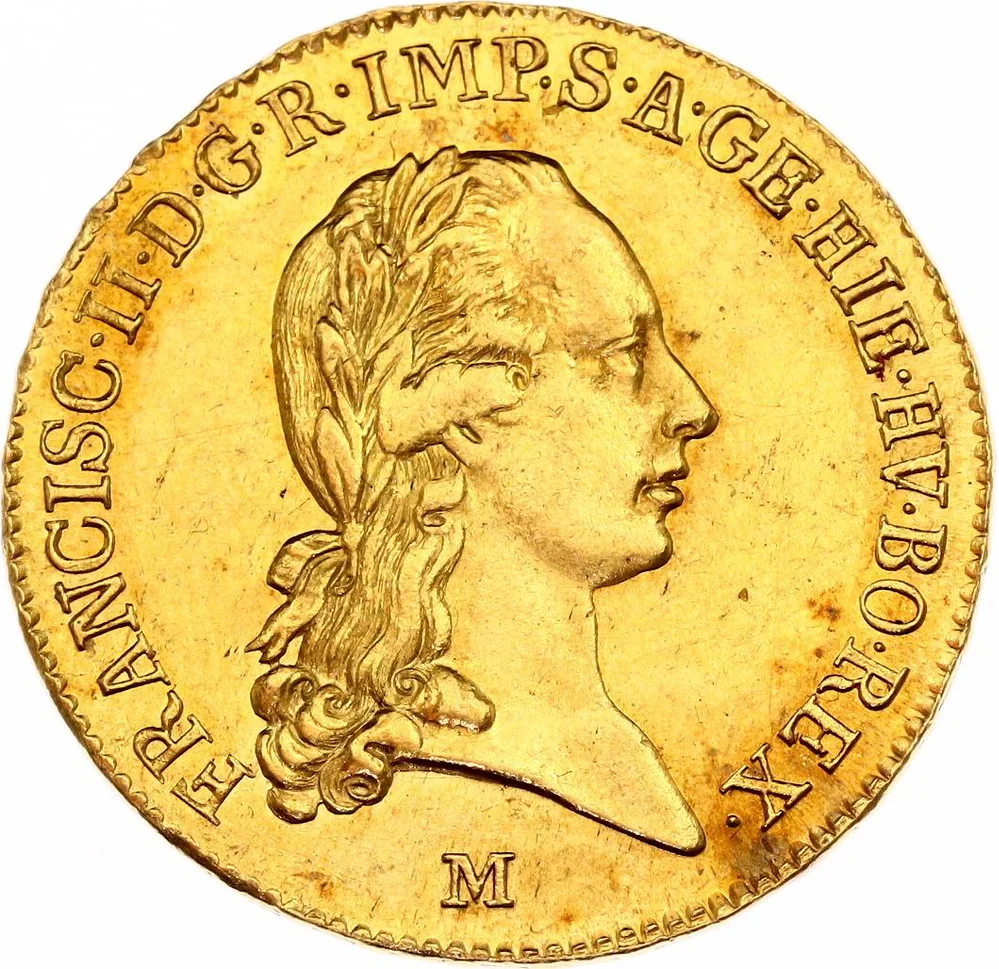
Obverse
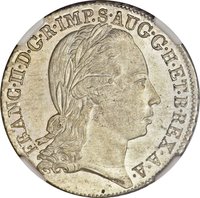
Description:
Weak strike above mintmark.
Inscription:
FRANC. II. D. G. R. IMP. S. A. GE. HIE. HV. BO. REX.
M
M
Script: Latin
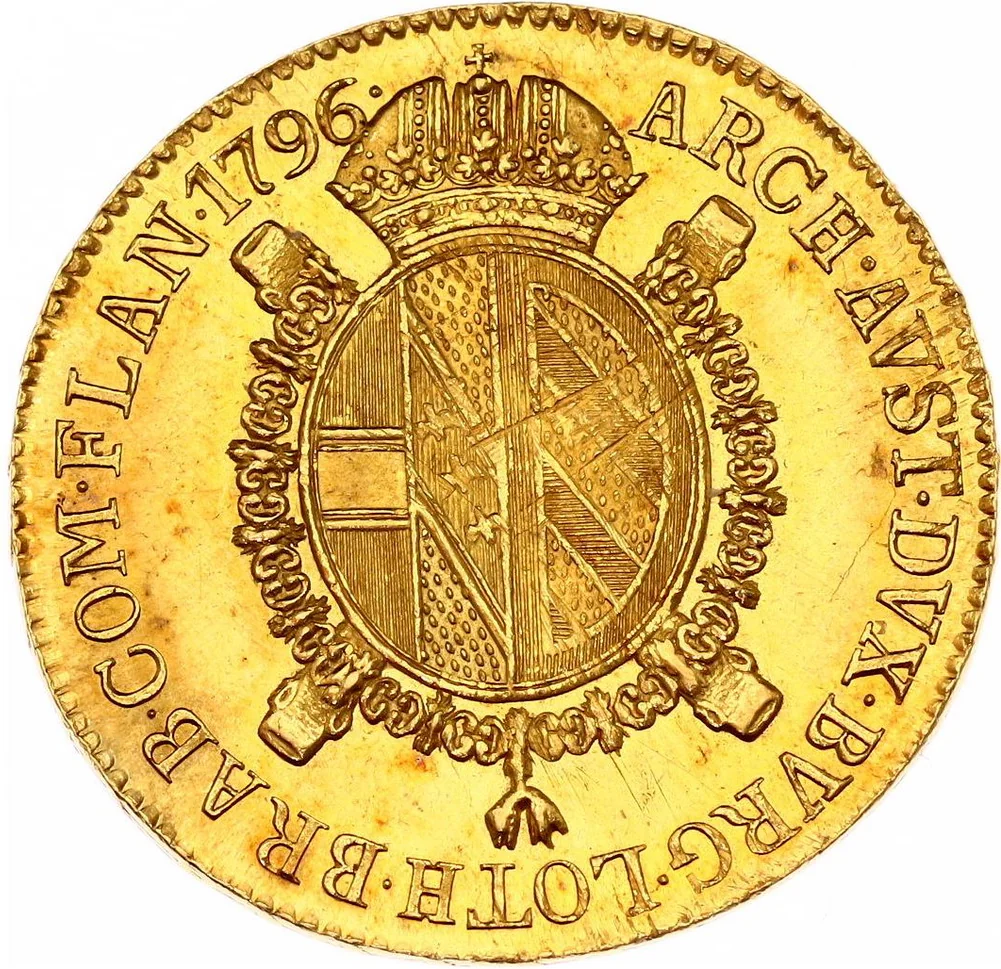
Reverse
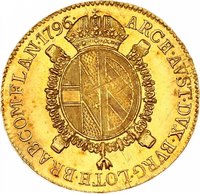
Description:
Crowned oval shield.
Inscription:
ARCH. AVST. DVX. BVRG. LOTH. BRAB. COM. FLAN.1796·
Script: Latin
Edge
Categories
| Symbols> Coat of Arms |
Mints
| Name | Mark |
|---|---|
| Milan | — |
Mintings
| Year | Mint Mark | Mintage | Quality | Collection |
|---|---|---|---|---|
| 1792 | M | — | ||
| 1793 | M | — | ||
| 1794 | M | — | ||
| 1795 | M | — | ||
| 1796 | M | — | ||
| 1799 | M | — | ||
| 1800 | M | — |
Historical background
In 1792, Milan found itself at a pivotal moment, still operating under the complex monetary system of the Habsburg-dominated Duchy of Milan. The official currency was the Milanese lira (divided into 20 soldi or 240 denari), which was part of the broader Lombard monetary system tied to the Conventionsthaler. However, the circulation was a chaotic mix, with Austrian, Venetian, Piedmontese, and even old Spanish coins all in use, their values fluctuating based on metal content and proclamation. This created a persistent challenge for merchants and the populace, requiring constant reference to exchange lists and inviting clipping and counterfeiting.
The year 1792 was one of tense stability on the surface, but the monetary environment was strained by the political shockwaves emanating from Revolutionary France. While the Habsburg administration under Emperor Leopold II and then Francis II maintained the existing system, trade disruptions and military preparations in the face of the French Revolutionary Wars began to exert inflationary pressures. The government's need to finance its military posture likely led to increased pressure on the money supply, though not yet the catastrophic depreciation that would follow.
Thus, Milan's currency situation on the eve of the Napoleonic invasions was one of entrenched complexity and growing fragility. The system functioned within the Austrian imperial framework but was burdened by its own archaic multiplicity and the gathering storm of European conflict. This unstable equilibrium would be shattered just four years later when Napoleon's arrival in 1796 led to the radical restructuring of the monetary system, imposing French revolutionary francs and, eventually, the Italian lira of the Cisalpine Republic.
The year 1792 was one of tense stability on the surface, but the monetary environment was strained by the political shockwaves emanating from Revolutionary France. While the Habsburg administration under Emperor Leopold II and then Francis II maintained the existing system, trade disruptions and military preparations in the face of the French Revolutionary Wars began to exert inflationary pressures. The government's need to finance its military posture likely led to increased pressure on the money supply, though not yet the catastrophic depreciation that would follow.
Thus, Milan's currency situation on the eve of the Napoleonic invasions was one of entrenched complexity and growing fragility. The system functioned within the Austrian imperial framework but was burdened by its own archaic multiplicity and the gathering storm of European conflict. This unstable equilibrium would be shattered just four years later when Napoleon's arrival in 1796 led to the radical restructuring of the monetary system, imposing French revolutionary francs and, eventually, the Italian lira of the Cisalpine Republic.

💎 Extremely Rare