

¼ Sovrano – Milan
Italy
Context
Material
References
KM: #Click to copy to clipboard237
Numista: #117507
Value
Bullion value: $424.68
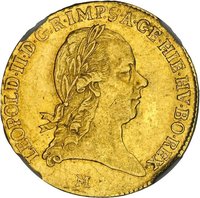
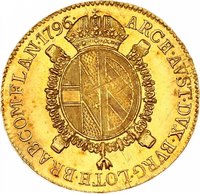
Obverse
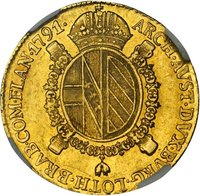
Reverse
Edge
Mints
| Name | Mark |
|---|---|
| Milan | — |
Mintings
| Year | Mint Mark | Mintage | Quality | Collection |
|---|---|---|---|---|
| 1791 | M | — |
Historical background
In 1791, Milan found itself in a complex monetary landscape, caught between the fading structures of the Old Regime and the rising tides of economic and political change. As the capital of the Duchy of Milan, it operated within the broader context of the Habsburg Monarchy under Emperor Leopold II. The official currency was the Milanese lira (divided into 20 soldi or 240 denari), which was part of the Lombard monetary system. However, this system was not exclusive; a multitude of foreign coins, particularly the heavy silver Thalers from the Austrian Empire and various Italian states, circulated widely for larger transactions, creating a constant need for exchange and valuation.
The system was inherently cumbersome and fragmented. The value of coins was tied to their precious metal content (specie), and the simultaneous circulation of so many different coins, each with fluctuating intrinsic and agreed-upon values, hampered commerce. Furthermore, the government's fiscal demands, including taxes and tariffs, often had to be calculated and paid in specific denominations, adding another layer of complexity for merchants and the populace. This environment was ripe for money changers (campsores) who played a crucial, if sometimes exploitative, role in daily economic life.
Beneath this operational complexity lay growing pressures. Enlightenment ideas questioning traditional economic structures were in the air, and the recent financial turmoil of the Habsburg state, including the debasement of coinage under previous rulers, had eroded trust. While not yet in revolution, Milan in 1791 was a financial system under strain. The inherited patchwork of currencies struggled to meet the needs of a growing commercial economy, setting the stage for the dramatic monetary reforms that would follow in the wake of the French Revolutionary Wars, which would reach Milan just a few years later.
The system was inherently cumbersome and fragmented. The value of coins was tied to their precious metal content (specie), and the simultaneous circulation of so many different coins, each with fluctuating intrinsic and agreed-upon values, hampered commerce. Furthermore, the government's fiscal demands, including taxes and tariffs, often had to be calculated and paid in specific denominations, adding another layer of complexity for merchants and the populace. This environment was ripe for money changers (campsores) who played a crucial, if sometimes exploitative, role in daily economic life.
Beneath this operational complexity lay growing pressures. Enlightenment ideas questioning traditional economic structures were in the air, and the recent financial turmoil of the Habsburg state, including the debasement of coinage under previous rulers, had eroded trust. While not yet in revolution, Milan in 1791 was a financial system under strain. The inherited patchwork of currencies struggled to meet the needs of a growing commercial economy, setting the stage for the dramatic monetary reforms that would follow in the wake of the French Revolutionary Wars, which would reach Milan just a few years later.
✨ Legendary