

30 Soldi – Milan
Italy
Context
Years: 1794–1800
Country: Italy 
Issuer: Milan
Ruler: Francis III
Currency:
(1515—1796)
Demonetized: Yes
Material
References
KM: #Click to copy to clipboard244
Numista: #59410
Value
Bullion value: $14.56
Obverse
Description:
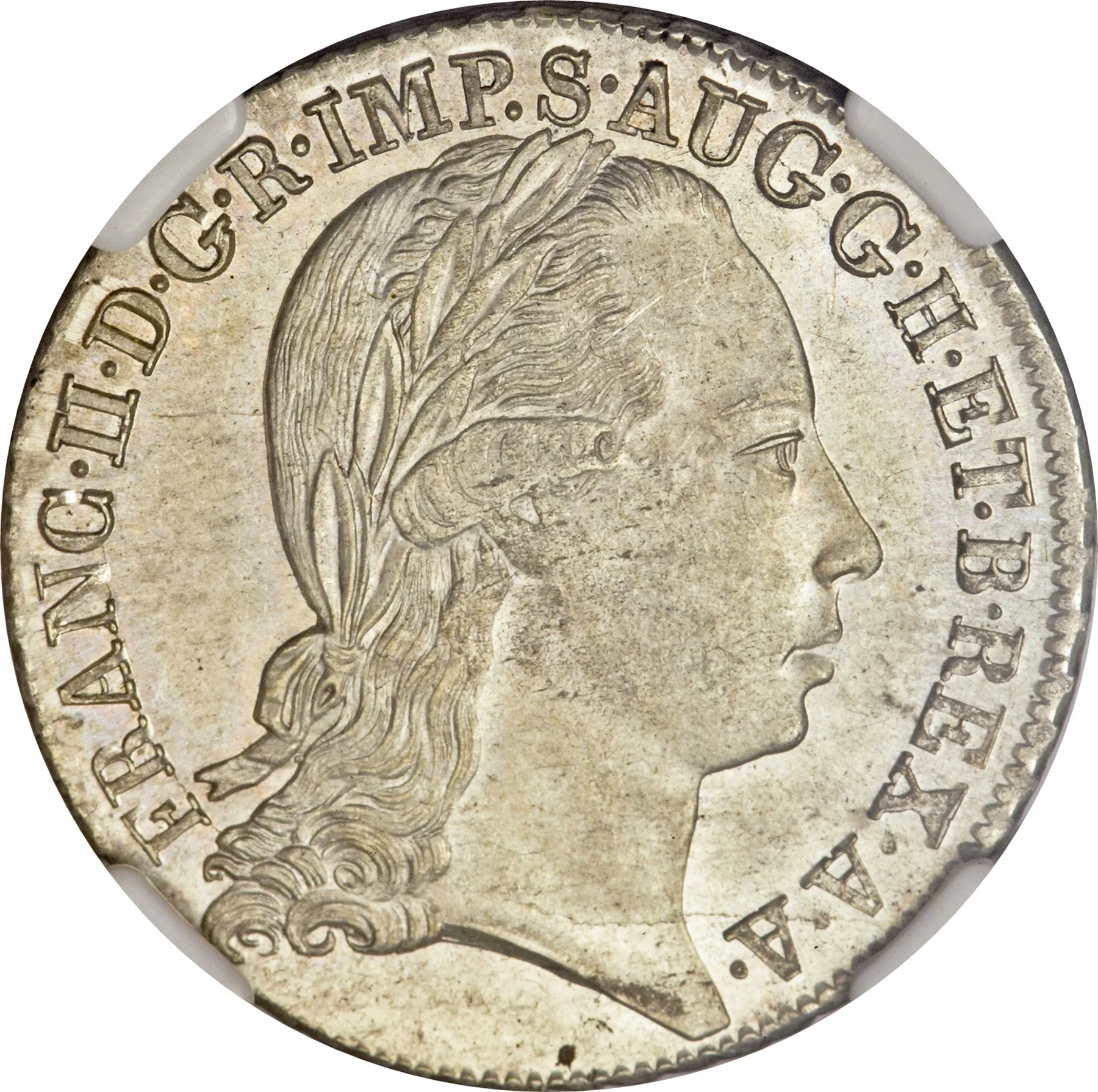
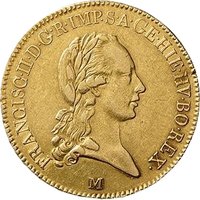
Laureate head right.
Inscription:
FRANC.II.D.G.R.IMP.S.AUG.G.H.ET.B.REX.A.A.
Script: Latin
Reverse
Description:
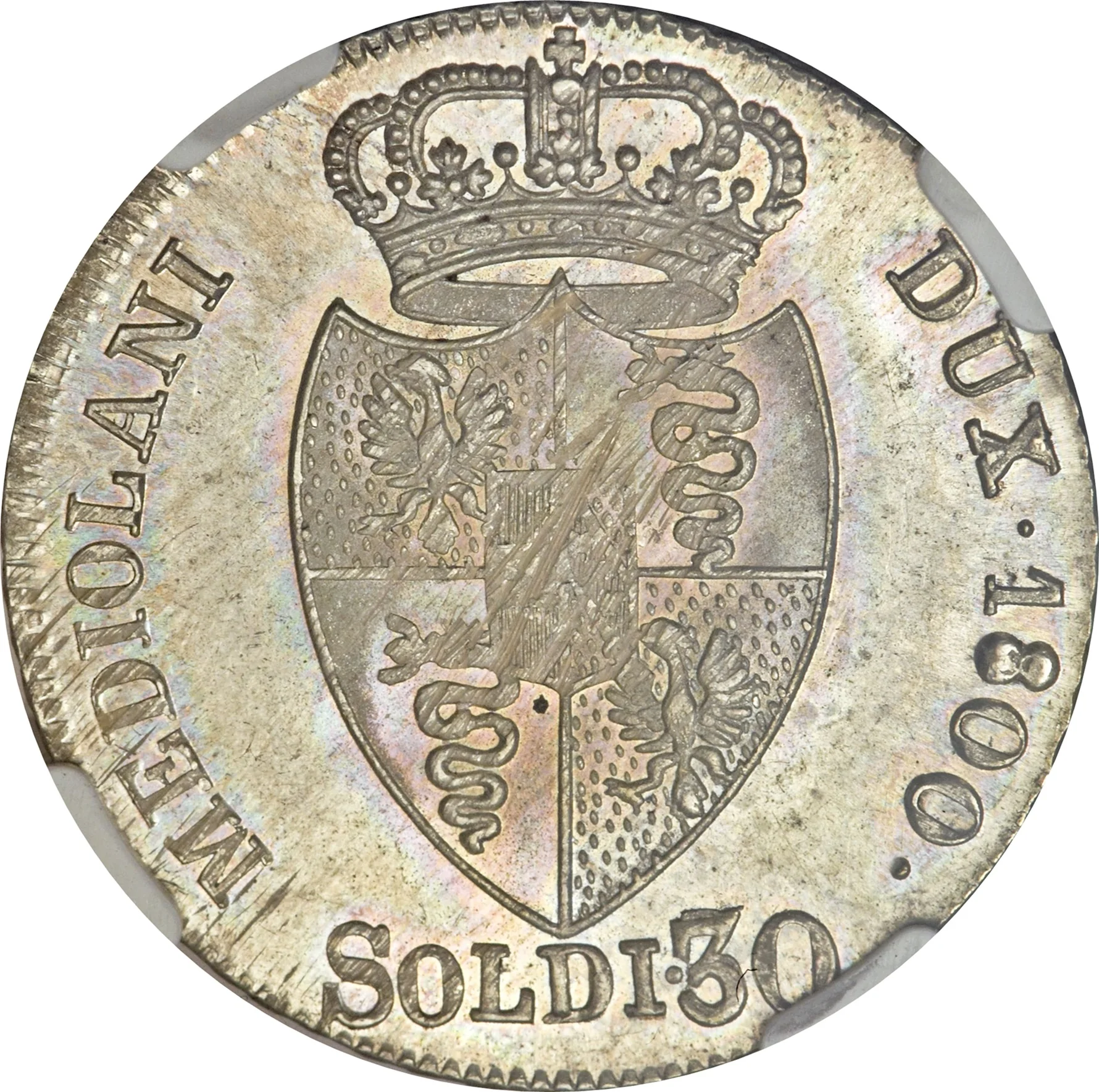
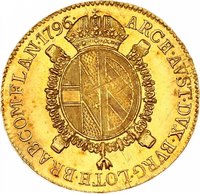
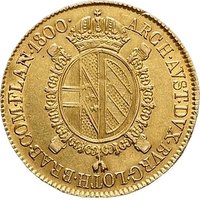
Shield with four quarterings and central shield, inscribed "SOLDI.30," date in legend.
Inscription:
MEDIOLANI / DUX.1800.
SOLDI.30
SOLDI.30
Script: Latin
Edge
Floral pattern
Categories
| Object> Armour |
| Symbols> Coat of Arms |
Mints
| Name | Mark |
|---|---|
| Milan | — |
Mintings
| Year | Mint Mark | Mintage | Quality | Collection |
|---|---|---|---|---|
| 1794 | — | — | ||
| 1795 | — | — | ||
| 1796 | — | — | ||
| 1799 | — | — | ||
| 1800 | — | — |
Historical background
In 1794, Milan found itself under the political and economic domination of the Habsburg Monarchy, having been annexed to the Austrian Empire in the 1713 Treaty of Utrecht. The official currency was therefore the Austrian monetary system, centered on the Conventionsthaler (or Conventionstaler), a large silver coin standardized across the Habsburg lands in 1754. This system also included smaller denominations like kreuzers and guilders (florins), with 1 Conventionsthaler = 2 guilders = 120 kreuzers. The stability of this currency was tied directly to Vienna's fiscal policies and the empire's substantial silver reserves, aiming to provide reliable trade across its diverse territories.
However, the monetary landscape was far from uniform. The political upheaval of the era, particularly the revolutionary fervor emanating from France following 1789, introduced significant instability. French armies were advancing into Northern Italy, and their practice of financing campaigns through forced loans, requisitions, and the imposition of military currency sowed financial chaos in the regions they occupied. While full French control of Milan was still a year away (it would fall in 1796), the anticipation of invasion disrupted commerce and created uncertainty about the future value and legitimacy of the Austrian currency in circulation.
Furthermore, older regional currencies from the former Duchy of Milan, such as the lira milanese, still persisted in local accounting and small-scale transactions, creating a complex multi-layered monetary environment. This coexistence of official imperial coinage, lingering local units of account, and the looming threat of unstable occupation currency created a fragile economic climate. Merchants and citizens in Milan in 1794 were thus navigating a system where the value of money was not only a matter of metallic content but also a gamble on the rapidly shifting military and political fortunes of the continent.
However, the monetary landscape was far from uniform. The political upheaval of the era, particularly the revolutionary fervor emanating from France following 1789, introduced significant instability. French armies were advancing into Northern Italy, and their practice of financing campaigns through forced loans, requisitions, and the imposition of military currency sowed financial chaos in the regions they occupied. While full French control of Milan was still a year away (it would fall in 1796), the anticipation of invasion disrupted commerce and created uncertainty about the future value and legitimacy of the Austrian currency in circulation.
Furthermore, older regional currencies from the former Duchy of Milan, such as the lira milanese, still persisted in local accounting and small-scale transactions, creating a complex multi-layered monetary environment. This coexistence of official imperial coinage, lingering local units of account, and the looming threat of unstable occupation currency created a fragile economic climate. Merchants and citizens in Milan in 1794 were thus navigating a system where the value of money was not only a matter of metallic content but also a gamble on the rapidly shifting military and political fortunes of the continent.
💎 Extremely Rare