

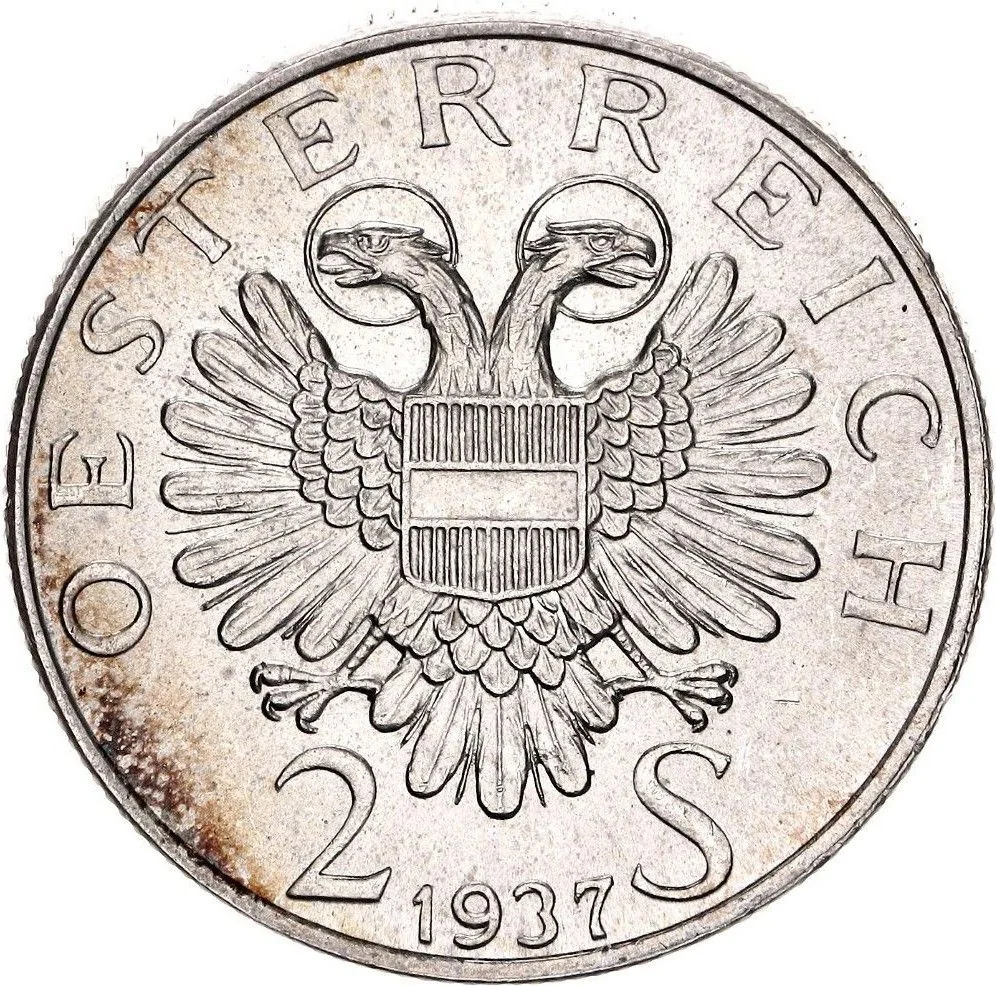
2 schilling (St. Karl Church) – Austria
Add to wishlist
Circulating commemorative coins
Commemoration: 200th Anniversary of the Completion of St. Karl Church
Austria
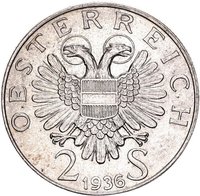
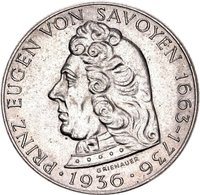
Obverse
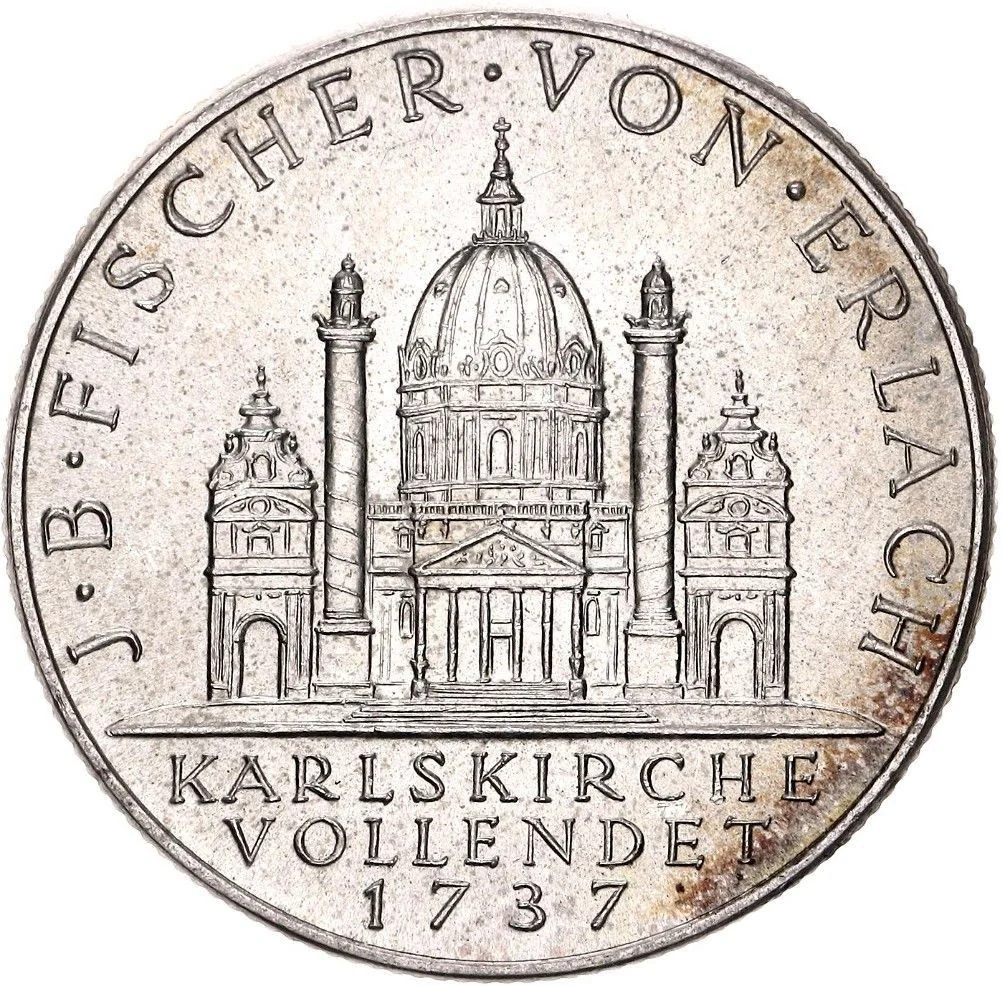
Reverse
Description:
St. Charles Church, dated below.
Inscription:
J.B. FISHER VON ERLACH
KARLSKIRCHE VOLLENDET
1737
KARLSKIRCHE VOLLENDET
1737
Script: Latin
Engraver: Edwin Grienauer
Edge
Reeded.
Categories
| Building> Religious building |
| Symbols> Coat of Arms |
| Symbol> Double-headed eagle |
Mints
| Name | Mark |
|---|---|
| Münze Österreich | — |
Mintings
| Year | Mint Mark | Mintage | Quality | Collection |
|---|---|---|---|---|
| 1937 | — | 500,000 | ||
| 1937 | — | — | Proof |
Historical background
In 1937, Austria's currency situation was precarious and deeply intertwined with its political vulnerability. The Austrian schilling, introduced in 1925 to stabilize the hyperinflation-ravaged economy, was officially pegged to gold but operated within the sphere of influence of the German Reichsmark. This linkage was a double-edged sword: while it provided some external stability, it also made Austria acutely sensitive to German economic pressure and political maneuvering. The country's economy was weak, burdened by the global depression and a banking crisis earlier in the decade, which kept foreign exchange reserves low and confidence fragile.
The monetary landscape was dominated by the looming threat of Anschluss (annexation) with Nazi Germany. Berlin aggressively used economic weapons, such as blocking tourism and imposing a 1,000-mark fee on Germans traveling to Austria, to cripple Vienna's vital tourism revenue and drain its gold and foreign currency reserves. This "silent annexation" through economic coercion severely strained the Austrian National Bank's ability to defend the schilling's parity. Internally, the authoritarian Fatherland Front government under Chancellor Kurt Schuschnigg struggled to maintain monetary sovereignty while navigating between German demands and the wish to preserve national independence.
By late 1937, the currency system was effectively on life support, sustained more by political hope than economic fundamentals. The schilling's stability was entirely dependent on the political outcome of the standoff with the Third Reich. When Germany executed the Anschluss in March 1938, one of the first acts was the immediate and forcible conversion of the Austrian schilling into Reichsmarks at a rate favorable to Germany, formally ending the currency's brief existence and fully absorbing Austria into the German economic area. Thus, in 1937, the Austrian schilling was less a symbol of economic sovereignty and more a barometer of the nation's fading political independence.
The monetary landscape was dominated by the looming threat of Anschluss (annexation) with Nazi Germany. Berlin aggressively used economic weapons, such as blocking tourism and imposing a 1,000-mark fee on Germans traveling to Austria, to cripple Vienna's vital tourism revenue and drain its gold and foreign currency reserves. This "silent annexation" through economic coercion severely strained the Austrian National Bank's ability to defend the schilling's parity. Internally, the authoritarian Fatherland Front government under Chancellor Kurt Schuschnigg struggled to maintain monetary sovereignty while navigating between German demands and the wish to preserve national independence.
By late 1937, the currency system was effectively on life support, sustained more by political hope than economic fundamentals. The schilling's stability was entirely dependent on the political outcome of the standoff with the Third Reich. When Germany executed the Anschluss in March 1938, one of the first acts was the immediate and forcible conversion of the Austrian schilling into Reichsmarks at a rate favorable to Germany, formally ending the currency's brief existence and fully absorbing Austria into the German economic area. Thus, in 1937, the Austrian schilling was less a symbol of economic sovereignty and more a barometer of the nation's fading political independence.
🌱 Fairly Common