

2 schilling (Karl Lueger) – Austria
Add to wishlist
Circulating commemorative coins
Commemoration: 25th Anniversary of the Death of Karl Lueger
Austria
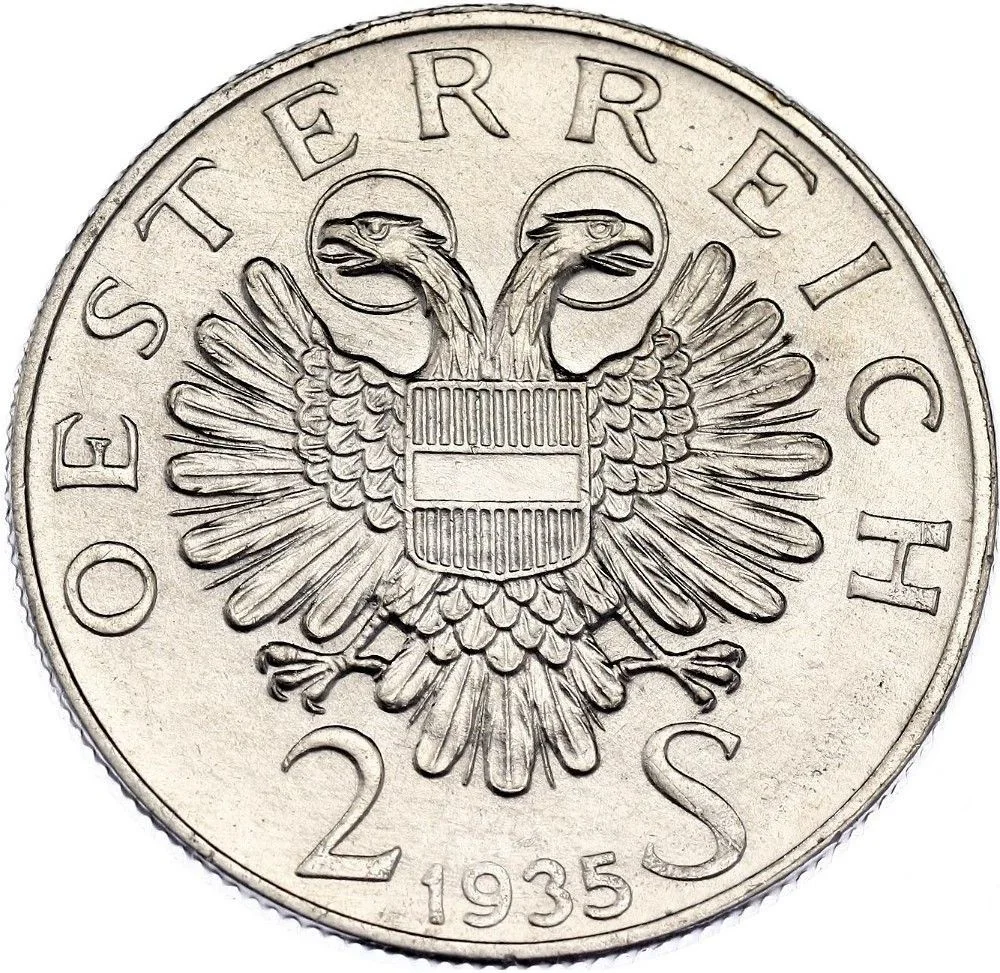
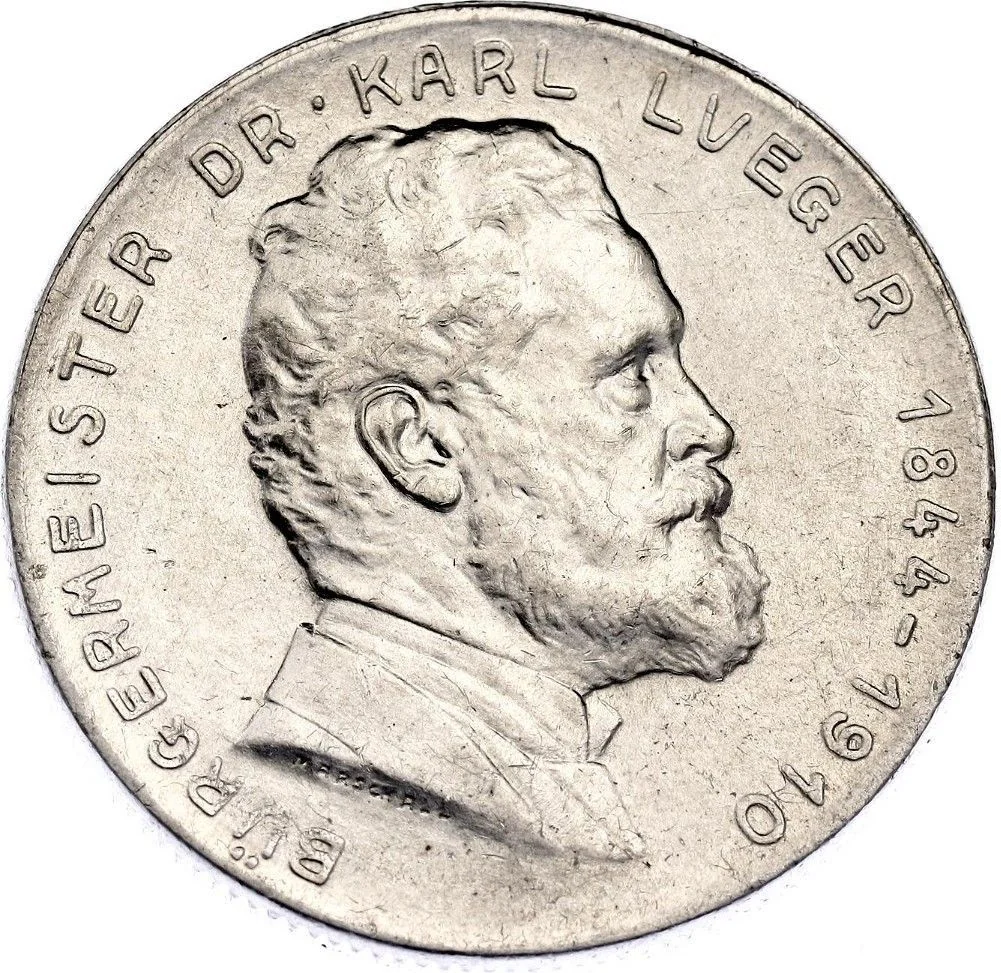
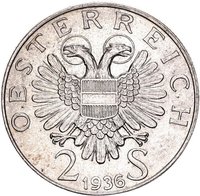
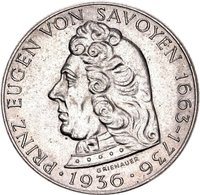
Obverse
Reverse
Description:
Karl Lueger bust, right profile.
Inscription:
BÜRGERMEISTER DR. KARL LUEGER 1844-1910
Translation:
Mayor Dr. Karl Lueger 1844-1910
Script: Latin
Language: German
Engraver: Rudolf Marschall
Edge
Reeded
Categories
| Symbol> Double-headed eagle |
| Event> Death anniversary |
| Person> Politician |
| Mustache/Beard |
| Symbols> Coat of Arms |
Mints
| Name | Mark |
|---|---|
| Münze Österreich | — |
Mintings
| Year | Mint Mark | Mintage | Quality | Collection |
|---|---|---|---|---|
| 1935 | — | 500,000 | ||
| 1935 | — | — | Proof |
Historical background
In 1935, Austria's currency situation was defined by the lingering impact of the 1931 collapse of the Creditanstalt, the country's largest bank, which had triggered a severe financial and economic crisis. This event forced Austria to abandon the gold standard and led to the establishment of strict capital controls to prevent a complete flight of money. The Austrian schilling, introduced in 1924 to replace the hyperinflated krone, was now a managed currency, its value propped up by the Austrian National Bank through significant foreign exchange reserves and a de facto peg to sterling, which provided a degree of stability amidst regional turmoil.
The economy operated under a regime of "exchange control," creating a complex system where access to foreign currency for imports and international transactions was heavily restricted and required official permission. This resulted in a fragmented currency landscape with different exchange rates for different types of transactions, stifling trade and investment. Domestically, the government of the authoritarian Ständestaat regime, led by Chancellor Kurt Schuschnigg, pursued a policy of deflation and austerity to balance the budget and maintain the schilling's value, but this came at a high social cost through persistent high unemployment and depressed economic activity.
Politically, the currency's stability was a point of national pride and a symbol of Austria's fragile independence, caught between the gravitational pull of Nazi Germany and Fascist Italy. However, this stability was increasingly artificial and vulnerable. Germany's economic pressure, including the crippling "1,000 Mark Sperre" (a fee imposed on Germans traveling to Austria), severely damaged the vital tourism sector and drained foreign exchange. By 1935, the Austrian schilling was stable on paper, but the system was maintained only through stringent controls and international loans, masking an economy under severe strain and setting the stage for the financial and political annexation that would follow the Anschluss in 1938.
The economy operated under a regime of "exchange control," creating a complex system where access to foreign currency for imports and international transactions was heavily restricted and required official permission. This resulted in a fragmented currency landscape with different exchange rates for different types of transactions, stifling trade and investment. Domestically, the government of the authoritarian Ständestaat regime, led by Chancellor Kurt Schuschnigg, pursued a policy of deflation and austerity to balance the budget and maintain the schilling's value, but this came at a high social cost through persistent high unemployment and depressed economic activity.
Politically, the currency's stability was a point of national pride and a symbol of Austria's fragile independence, caught between the gravitational pull of Nazi Germany and Fascist Italy. However, this stability was increasingly artificial and vulnerable. Germany's economic pressure, including the crippling "1,000 Mark Sperre" (a fee imposed on Germans traveling to Austria), severely damaged the vital tourism sector and drained foreign exchange. By 1935, the Austrian schilling was stable on paper, but the system was maintained only through stringent controls and international loans, masking an economy under severe strain and setting the stage for the financial and political annexation that would follow the Anschluss in 1938.
🌱 Fairly Common