

2 schilling – Austria
Add to wishlist
Circulating commemorative coins
Commemoration: Death of Engelbert Dollfuß
Austria
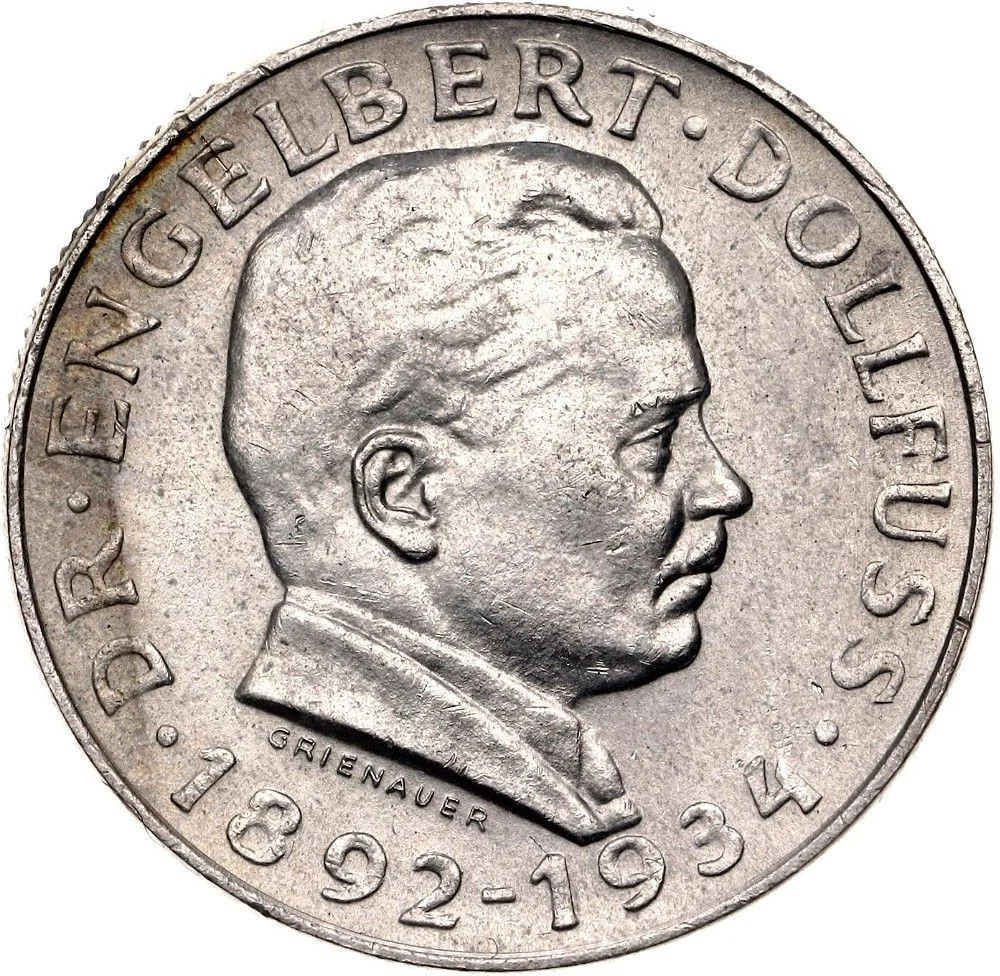
Obverse
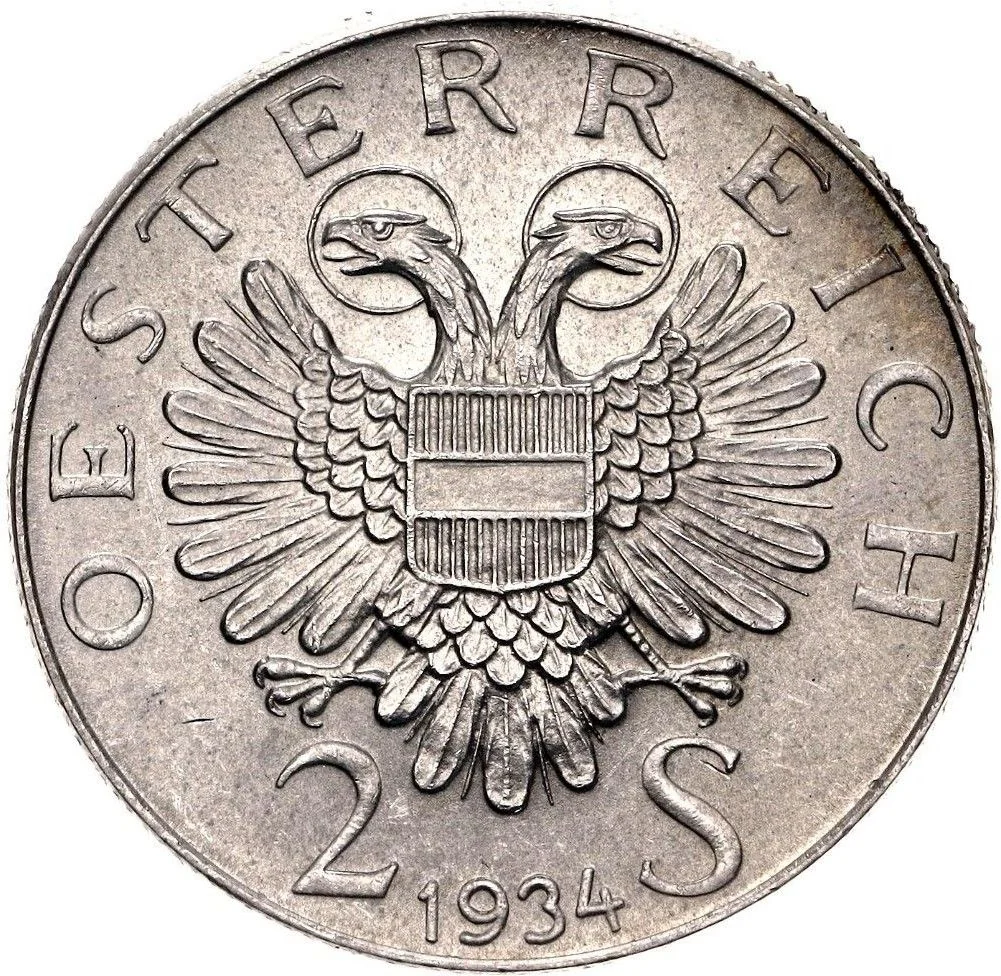
Reverse
Description:
Dr. Engelbert Dollfuss, right. Two dates below.
Inscription:
DR ENGELBERT DOLLFUSS
1892 1934
1892 1934
Script: Latin
Engraver: Edwin Grienauer
Edge
Reeded
Categories
| Event> Death anniversary |
| Person> Politician |
| Symbols> Coat of Arms |
| Symbol> Double-headed eagle |
Mints
| Name | Mark |
|---|---|
| Münze Österreich | — |
Mintings
| Year | Mint Mark | Mintage | Quality | Collection |
|---|---|---|---|---|
| 1934 | — | 1,500,000 | ||
| 1934 | — | — | Proof |
Historical background
In 1934, Austria's currency situation was defined by the severe constraints of the Great Depression and the political struggle to maintain independence from Nazi Germany. The country operated under the rigid framework of the Goldschilling, introduced in 1925 to stabilize the hyperinflation-ravaged economy of the First Republic. This currency was backed by gold and foreign exchange reserves, managed by the Austrian National Bank (Österreichische Nationalbank). However, by the early 1930s, a global collapse in trade and credit flows led to a severe shortage of foreign currency and gold reserves, forcing Austria to implement strict exchange controls in 1931 to prevent a run on the Schilling and the exhaustion of its reserves.
Politically, the currency became a symbol of Austrian sovereignty. The authoritarian Austrofascist regime, established after the civil war in 1934 under Chancellor Engelbert Dollfuss and later Kurt Schuschnigg, viewed a stable, independent Schilling as a vital bulwark against economic and political absorption by Hitler's Germany. Germany, pursuing its policy of Anschluss (union), aggressively used economic pressure, including a damaging tourist boycott, to undermine the Austrian economy and create dependency. Maintaining the Schilling's fixed parity and convertibility, albeit within tight controls, was thus a point of national pride and resistance.
Consequently, the Austrian economy in 1934 was characterized by a state-managed, insulated system. The exchange controls created a complex bureaucracy for foreign trade and limited capital movement, leading to a decline in international commerce. While this protectionist regime prevented a currency collapse and shielded reserves, it also resulted in economic stagnation, high unemployment, and a reliance on bilateral trade agreements, most notably with Fascist Italy, which acted as Austria's primary political patron. The currency's stability was therefore fragile, artificially preserved by controls and political will against overwhelming external pressures that would ultimately culminate in the German annexation in 1938 and the immediate replacement of the Schilling with the Reichsmark.
Politically, the currency became a symbol of Austrian sovereignty. The authoritarian Austrofascist regime, established after the civil war in 1934 under Chancellor Engelbert Dollfuss and later Kurt Schuschnigg, viewed a stable, independent Schilling as a vital bulwark against economic and political absorption by Hitler's Germany. Germany, pursuing its policy of Anschluss (union), aggressively used economic pressure, including a damaging tourist boycott, to undermine the Austrian economy and create dependency. Maintaining the Schilling's fixed parity and convertibility, albeit within tight controls, was thus a point of national pride and resistance.
Consequently, the Austrian economy in 1934 was characterized by a state-managed, insulated system. The exchange controls created a complex bureaucracy for foreign trade and limited capital movement, leading to a decline in international commerce. While this protectionist regime prevented a currency collapse and shielded reserves, it also resulted in economic stagnation, high unemployment, and a reliance on bilateral trade agreements, most notably with Fascist Italy, which acted as Austria's primary political patron. The currency's stability was therefore fragile, artificially preserved by controls and political will against overwhelming external pressures that would ultimately culminate in the German annexation in 1938 and the immediate replacement of the Schilling with the Reichsmark.
🌱 Common