

1⁄24 Thaler – Brunswick-Lüneburg-Celle
Germany
Context
Years: 1687–1688
Country: Germany 
Issuer: Brunswick-Lüneburg-Celle
Ruler: George William
Currency:
Demonetized: Yes
Material
References
KM: #Click to copy to clipboard324
Numista: #204341
Value
Bullion value: $4.67
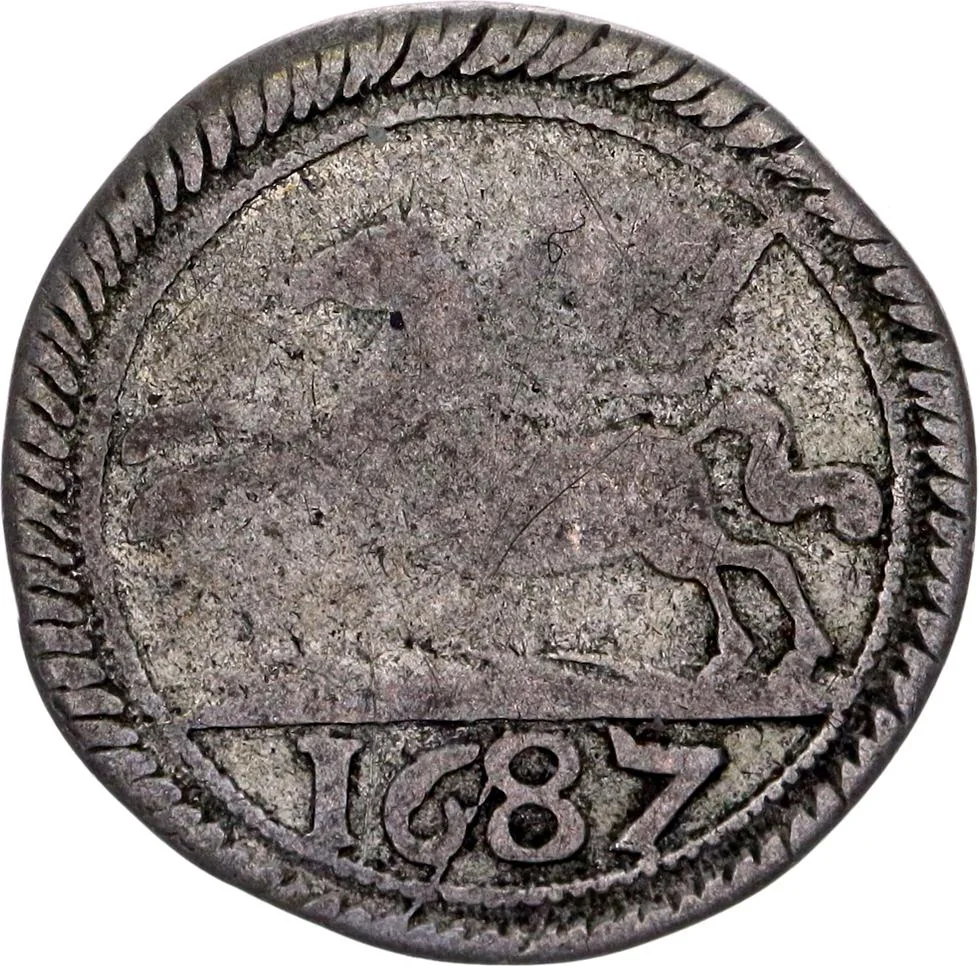
Obverse
Description:
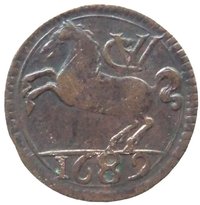
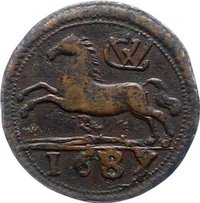
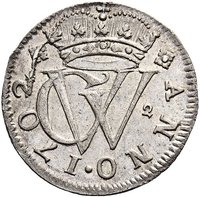
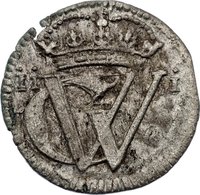
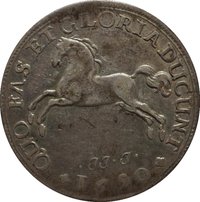
Rearing horse left, Georg Wilhelm monogram upper right, date in exergue.
Inscription:
GW
1688
1688
Script: Latin
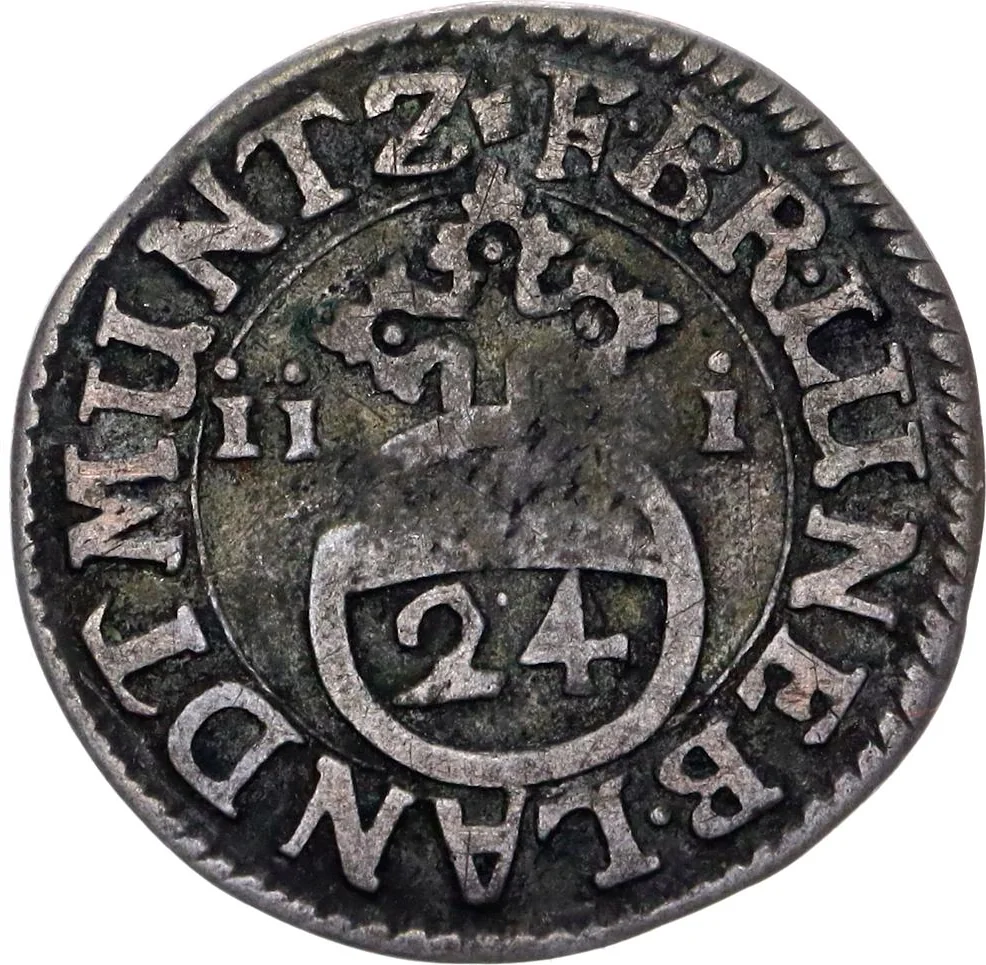
Reverse
Description:
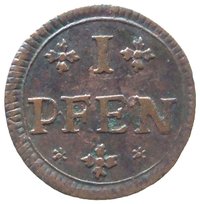
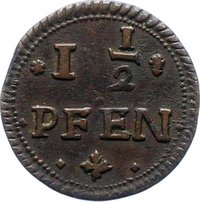
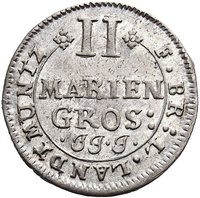
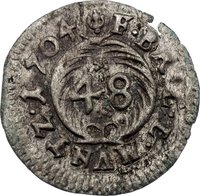
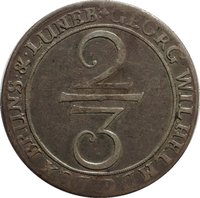
Imperial orb with surrounding legend and denomination.
Inscription:
ii i
Z·4
♦ F · BR · LUNEB · LANTMUNTZ
Z·4
♦ F · BR · LUNEB · LANTMUNTZ
Script: Latin
Edge
Plain
Mints
| Name | Mark |
|---|---|
| Celle | — |
Mintings
| Year | Mint Mark | Mintage | Quality | Collection |
|---|---|---|---|---|
| 1687 | — | — | ||
| 1688 | — | — |
Historical background
In 1687, the Duchy of Brunswick-Lüneburg, specifically the Principality of Celle under Duke George William, was entangled in the complex and debilitating monetary fragmentation that characterized the Holy Roman Empire. The region operated within a patchwork of multiple circulating currencies, including local Thalers, Groschen, and Pfennigs, alongside coins from neighbouring German states and even foreign imports like Dutch Ducats. This proliferation created chronic confusion for commerce, as the intrinsic silver content and exchange rates between coins varied widely, facilitating clipping, counterfeiting, and arbitrage that eroded economic stability.
The situation was further complicated by the legacy of the 1667 Zinnaische Münzvertrag and the 1687 Leipziger Münzfuß, imperial treaties that attempted to standardize coinage across broad regions of the Empire. These agreements set a Reichsthaler standard based on a specific silver fine weight, but enforcement was weak. In practice, individual mints, including Celle's own, often deviated from these standards, debasing coinage to finance state expenditures or local projects, thereby perpetuating the very monetary disorder the treaties sought to resolve.
For Duke George William, managing this currency chaos was a pressing fiscal and administrative concern. A stable and trustworthy coinage was essential for financing his modernized army and efficient bureaucracy, the hallmarks of his reign. While a comprehensive monetary reform for the entire Brunswick-Lüneburg dynastic holdings was still decades away, the pressures of 1687 underscored the necessity for territorial princes to assert greater control over minting rights (Münzhoheit) as a key step toward sovereign financial authority and economic integration within their own lands.
The situation was further complicated by the legacy of the 1667 Zinnaische Münzvertrag and the 1687 Leipziger Münzfuß, imperial treaties that attempted to standardize coinage across broad regions of the Empire. These agreements set a Reichsthaler standard based on a specific silver fine weight, but enforcement was weak. In practice, individual mints, including Celle's own, often deviated from these standards, debasing coinage to finance state expenditures or local projects, thereby perpetuating the very monetary disorder the treaties sought to resolve.
For Duke George William, managing this currency chaos was a pressing fiscal and administrative concern. A stable and trustworthy coinage was essential for financing his modernized army and efficient bureaucracy, the hallmarks of his reign. While a comprehensive monetary reform for the entire Brunswick-Lüneburg dynastic holdings was still decades away, the pressures of 1687 underscored the necessity for territorial princes to assert greater control over minting rights (Münzhoheit) as a key step toward sovereign financial authority and economic integration within their own lands.
💎 Extremely Rare