

2 Mariengroschen – Brunswick-Lüneburg-Calenberg
Germany
Context
Years: 1649–1661
Country: Germany 
Issuer: Brunswick-Lüneburg-Calenberg
Ruler: George William
Currency:
Demonetized: Yes
Material
References
KM: #Click to copy to clipboard51
Numista: #204332
Value
Bullion value: $3.61
Obverse
Description:
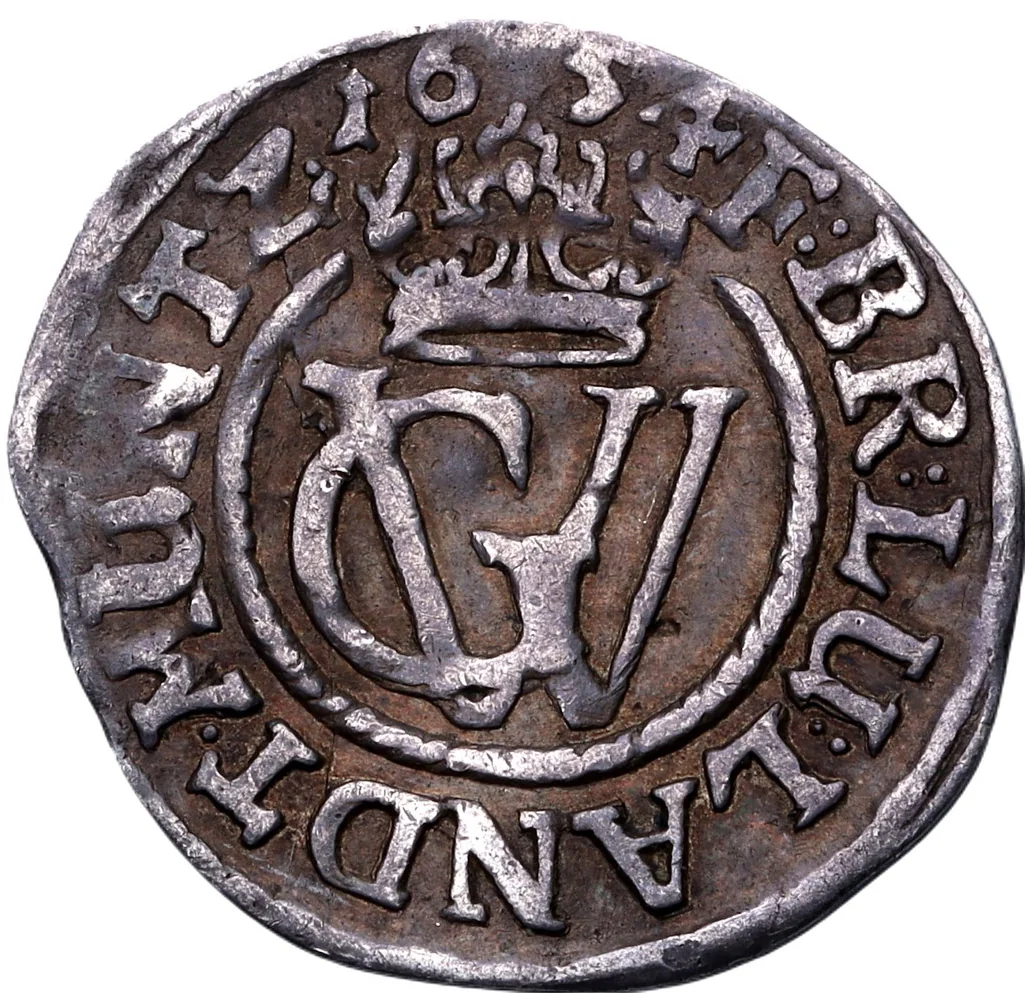
Georg Wilhelm crowned monogram, encircled by legend.
Inscription:
F ·BR:LU:LANDT ·MUNTZ · 1655
GW
GW
Script: Latin
Reverse
Description:
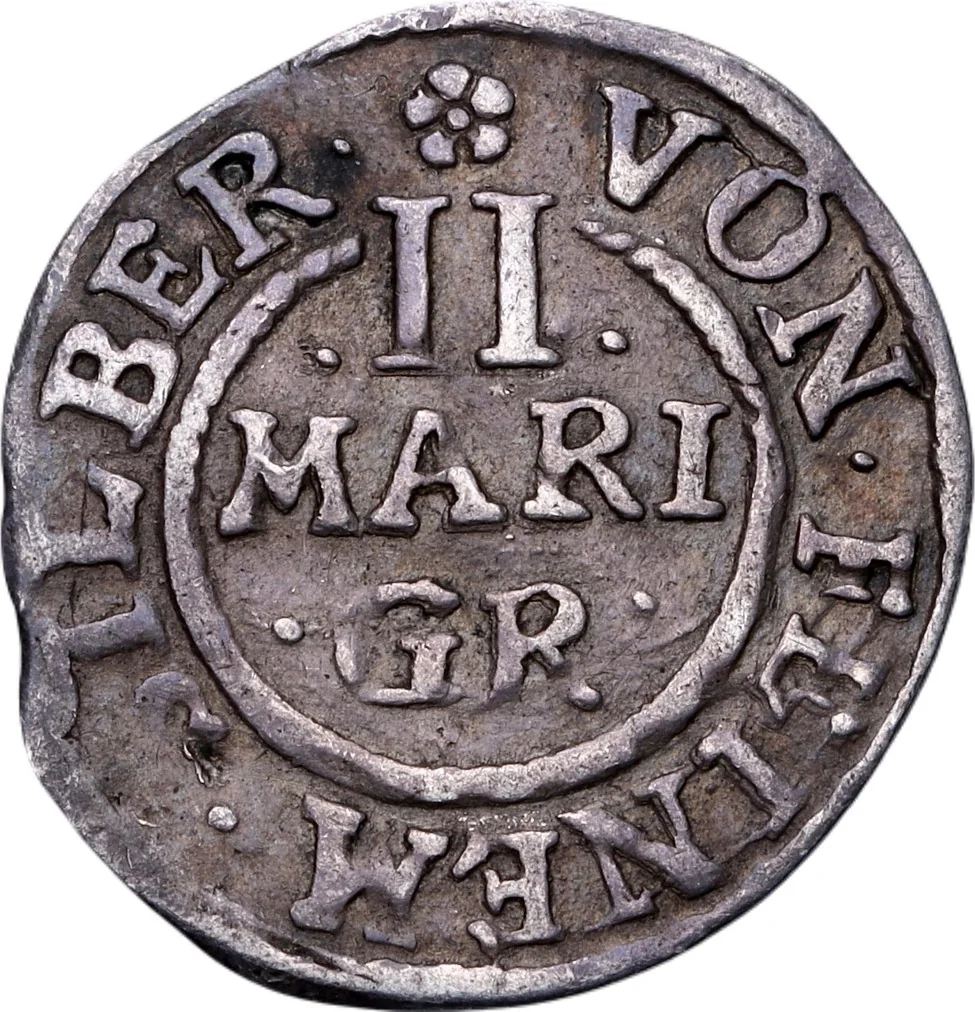
Denomination in three lines, legend above with top rosette.
Inscription:
.II.
MARI
·GR:
VON · FEINEM · SILBER
MARI
·GR:
VON · FEINEM · SILBER
Script: Latin
Edge
Plain
Mints
| Name | Mark |
|---|---|
| Zellerfeld | — |
Mintings
| Year | Mint Mark | Mintage | Quality | Collection |
|---|---|---|---|---|
| 1649 | — | — | ||
| 1650 | — | — | ||
| 1651 | — | — | ||
| 1652 | — | — | ||
| 1653 | — | — | ||
| 1654 | — | — | ||
| 1655 | — | — | ||
| 1656 | — | — | ||
| 1657 | — | — | ||
| 1659 | — | — | ||
| 1661 | — | — |
Historical background
In 1649, the Duchy of Brunswick-Lüneburg, specifically the Principality of Calenberg, was emerging from the profound devastation of the Thirty Years' War. The conflict had left the region's economy in ruins, with trade disrupted, agricultural production severely diminished, and a population drastically reduced by violence, famine, and disease. This economic collapse created a fundamental crisis of confidence in the currency system. The various states within the Holy Roman Empire, including the Brunswick-Lüneburg territories, had long engaged in competitive devaluation, debasing their coinage to fund military expenses, which resulted in a chaotic mix of coins of varying intrinsic values circulating simultaneously.
The immediate currency situation was therefore characterized by extreme instability and complexity. A plethora of coins were in use—not only those officially minted by the Brunswick-Lüneburg dukes but also older, clipped, and debased domestic issues, as well as foreign coins from neighboring states. This "Kipper und Wipper" period had severely eroded trust in small-change currency, hindering even basic daily transactions. The monetary fragmentation across the German states meant that exchange rates were fluid and uncertain, creating a significant burden on merchants and peasants alike, and stifling any potential for post-war economic recovery.
Recognizing this crisis, the ruling Duke George William of Calenberg (and his brother, the Duke of Brunswick-Wolfenbüttel) were actively engaged in efforts toward monetary reform. The year 1649 falls within a period of negotiation that would lead to concrete action. Just a few years later, in 1665, the Brunswick-Lüneburg territories would join the important Zinnaische Münzvertrag (Zinna Coinage Treaty), a regional agreement aimed at standardizing coinage and establishing stable exchange rates between member states. Thus, the situation in 1649 was one of severe post-war monetary disorder, but also a pivotal moment laying the groundwork for the structured reforms necessary to restore economic stability.
The immediate currency situation was therefore characterized by extreme instability and complexity. A plethora of coins were in use—not only those officially minted by the Brunswick-Lüneburg dukes but also older, clipped, and debased domestic issues, as well as foreign coins from neighboring states. This "Kipper und Wipper" period had severely eroded trust in small-change currency, hindering even basic daily transactions. The monetary fragmentation across the German states meant that exchange rates were fluid and uncertain, creating a significant burden on merchants and peasants alike, and stifling any potential for post-war economic recovery.
Recognizing this crisis, the ruling Duke George William of Calenberg (and his brother, the Duke of Brunswick-Wolfenbüttel) were actively engaged in efforts toward monetary reform. The year 1649 falls within a period of negotiation that would lead to concrete action. Just a few years later, in 1665, the Brunswick-Lüneburg territories would join the important Zinnaische Münzvertrag (Zinna Coinage Treaty), a regional agreement aimed at standardizing coinage and establishing stable exchange rates between member states. Thus, the situation in 1649 was one of severe post-war monetary disorder, but also a pivotal moment laying the groundwork for the structured reforms necessary to restore economic stability.
✨ Legendary