

1 Thaler – Brunswick-Lüneburg-Calenberg
Germany
Context
Years: 1643–1665
Country: Germany 
Issuer: Brunswick-Lüneburg-Calenberg
Ruler: Christian Louis
Currency:
Demonetized: Yes
Material
References
KM: #Click to copy to clipboard47
Numista: #39911
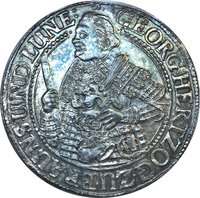
Obverse
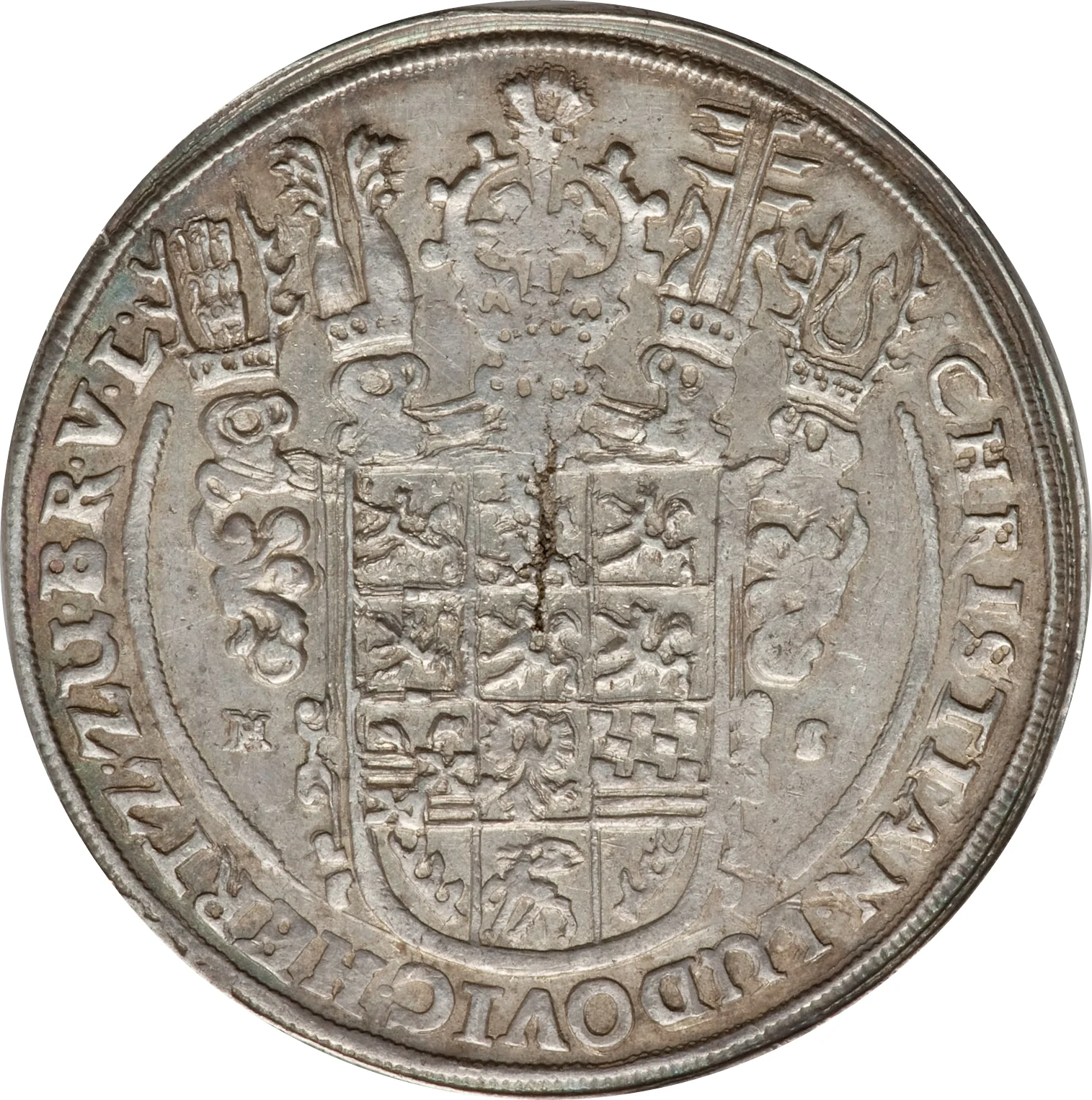
Description:
Helmeted arms with encircling legend.
Inscription:
CHRISTIAN·LUDOVIC·HERTZ·ZU·BR·V·L·
Script: Latin
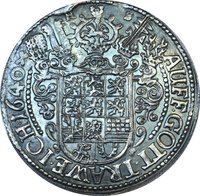
Reverse
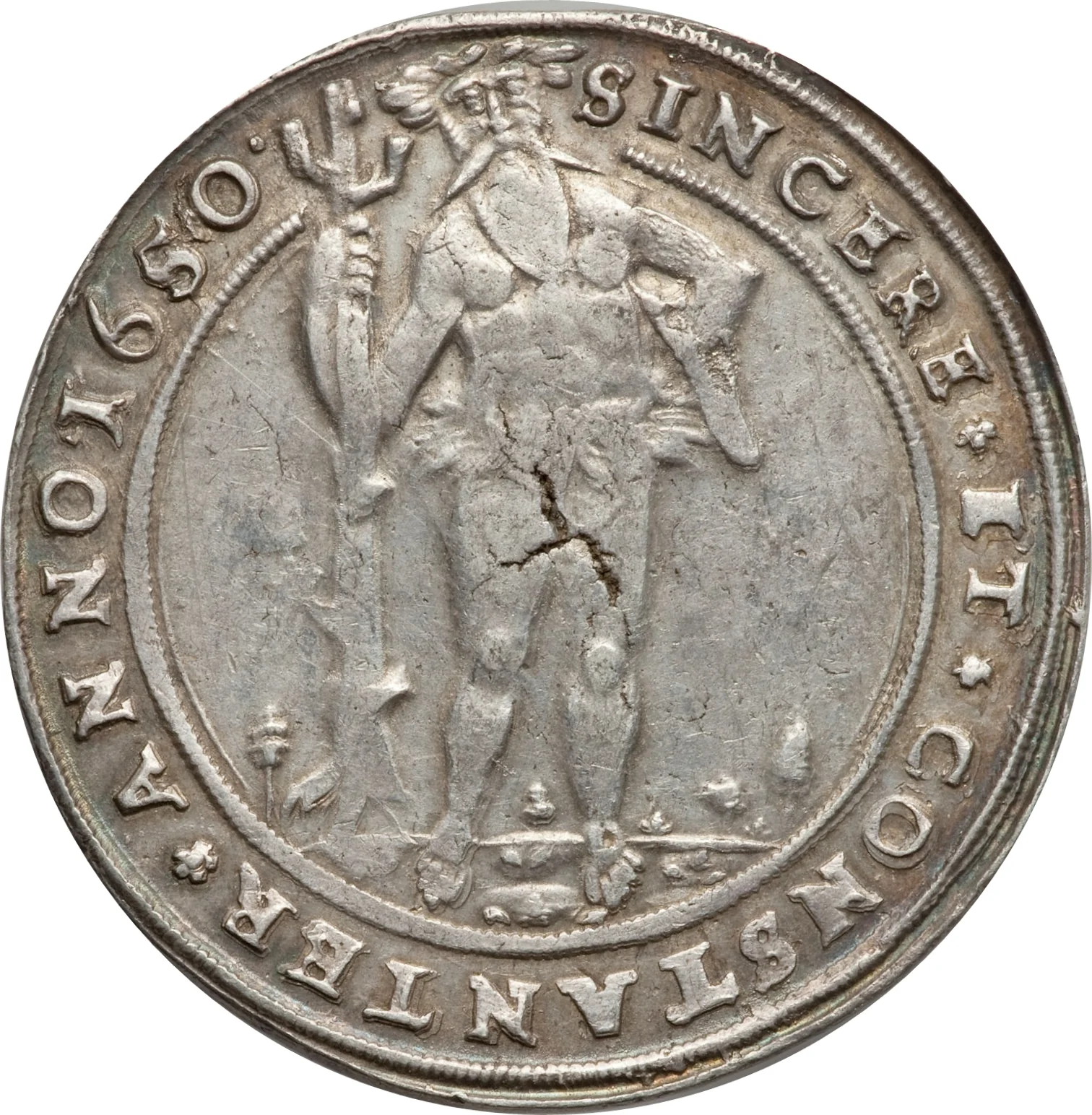
Description:
Wild man with a tree, legend encircling.
Inscription:
SINCERE*ET*CONSTANTER*ANNO·1650·
Script: Latin
Edge
Mints
| Name | Mark |
|---|---|
| Zellerfeld | — |
Mintings
| Year | Mint Mark | Mintage | Quality | Collection |
|---|---|---|---|---|
| 1643 | — | — | ||
| 1643 | H | — | ||
| 1646 | — | — | ||
| 1648 | — | — | ||
| 1648 | H | — | ||
| 1649 | — | — | ||
| 1650 | — | — | ||
| 1652 | — | — | ||
| 1652 | H | — | ||
| 1653 | H | — | ||
| 1655 | H | — | ||
| 1657 | H | — | ||
| 1663 | H | — | ||
| 1664 | H | — | ||
| 1665 | H | — |
Historical background
In 1643, the Duchy of Brunswick-Lüneburg, specifically the Principality of Calenberg, was embroiled in the final, devastating years of the Thirty Years' War. The region had been a frequent battleground and transit route for marauding armies, leading to severe economic dislocation, population decline, and the disruption of normal trade and mining—the traditional sources of the prince's wealth. This context of crisis directly shaped the currency situation, which was characterized by acute instability and devaluation as the ruling authority, Duke George of Brunswick-Lüneburg, struggled to meet the exorbitant financial demands of sustaining military forces and administration.
The currency system itself was complex and fragmented. Calenberg operated within the framework of the Reichstaler, a standard silver coin defined by the Imperial Minting Ordinance of 1559. However, the pressing need for revenue led to the debasement of coinage. The mint in Hanover was likely producing lower-quality subsidiary coins, such as Gute Groschen and Mariengroschen, with reduced silver content. This practice, known as Kippermünze, flooded the market with weak money, causing prices in these units to soar and creating a gap between their face value and their intrinsic metal worth, which eroded public trust.
Consequently, the monetary landscape was one of confusion and hardship. "Good" pre-war coins were hoarded, following Gresham's Law, while the circulating debased coins fostered inflation and hindered commerce. The situation was further complicated by the circulation of coins from neighboring German states and occupied territories, creating a chaotic mix of values. Thus, in 1643, the currency of Calenberg was less a reliable medium of exchange and more a symptom of the broader wartime crisis, serving as a fiscal instrument for a desperate government rather than a stable foundation for economic recovery.
The currency system itself was complex and fragmented. Calenberg operated within the framework of the Reichstaler, a standard silver coin defined by the Imperial Minting Ordinance of 1559. However, the pressing need for revenue led to the debasement of coinage. The mint in Hanover was likely producing lower-quality subsidiary coins, such as Gute Groschen and Mariengroschen, with reduced silver content. This practice, known as Kippermünze, flooded the market with weak money, causing prices in these units to soar and creating a gap between their face value and their intrinsic metal worth, which eroded public trust.
Consequently, the monetary landscape was one of confusion and hardship. "Good" pre-war coins were hoarded, following Gresham's Law, while the circulating debased coins fostered inflation and hindered commerce. The situation was further complicated by the circulation of coins from neighboring German states and occupied territories, creating a chaotic mix of values. Thus, in 1643, the currency of Calenberg was less a reliable medium of exchange and more a symptom of the broader wartime crisis, serving as a fiscal instrument for a desperate government rather than a stable foundation for economic recovery.
✨ Legendary