

2 schilling (Theodor Billroth) – Austria
Add to wishlist
Circulating commemorative coins
Commemoration: 100th Anniversary of birth of Theodor Billroth
Austria
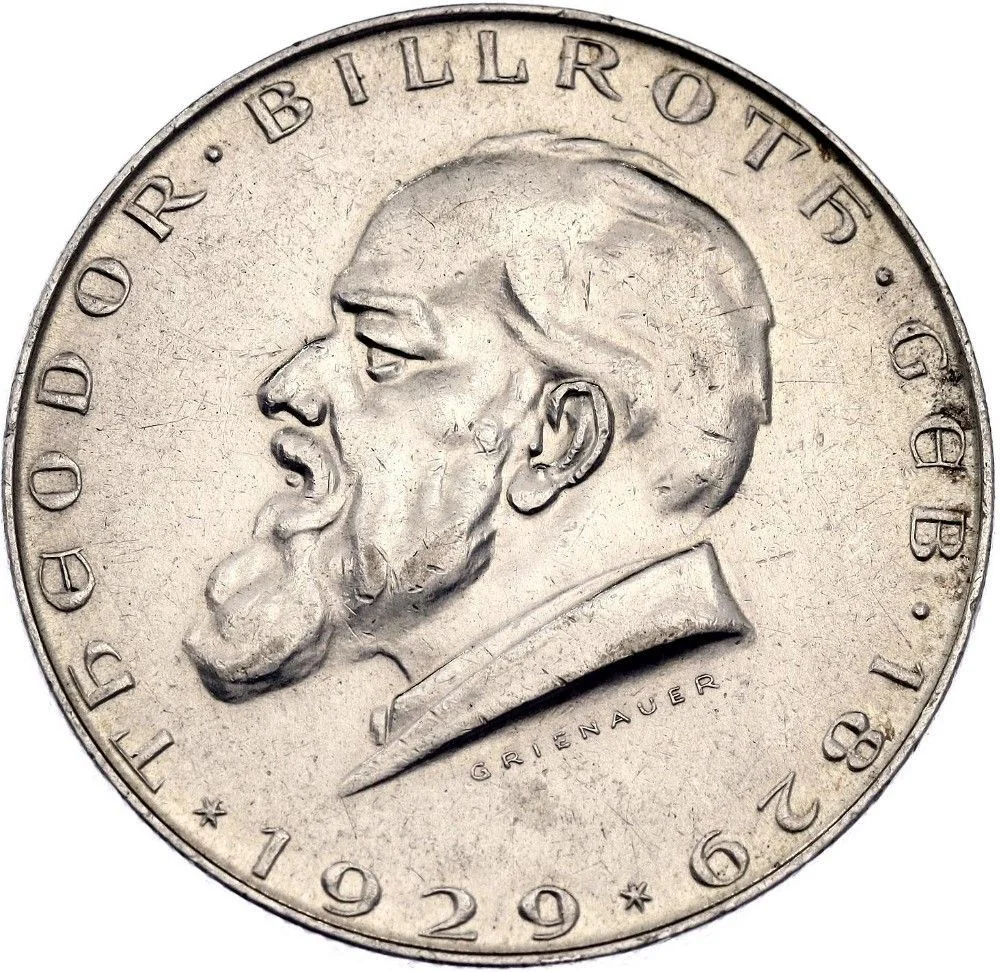
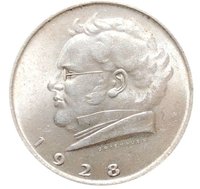
Obverse
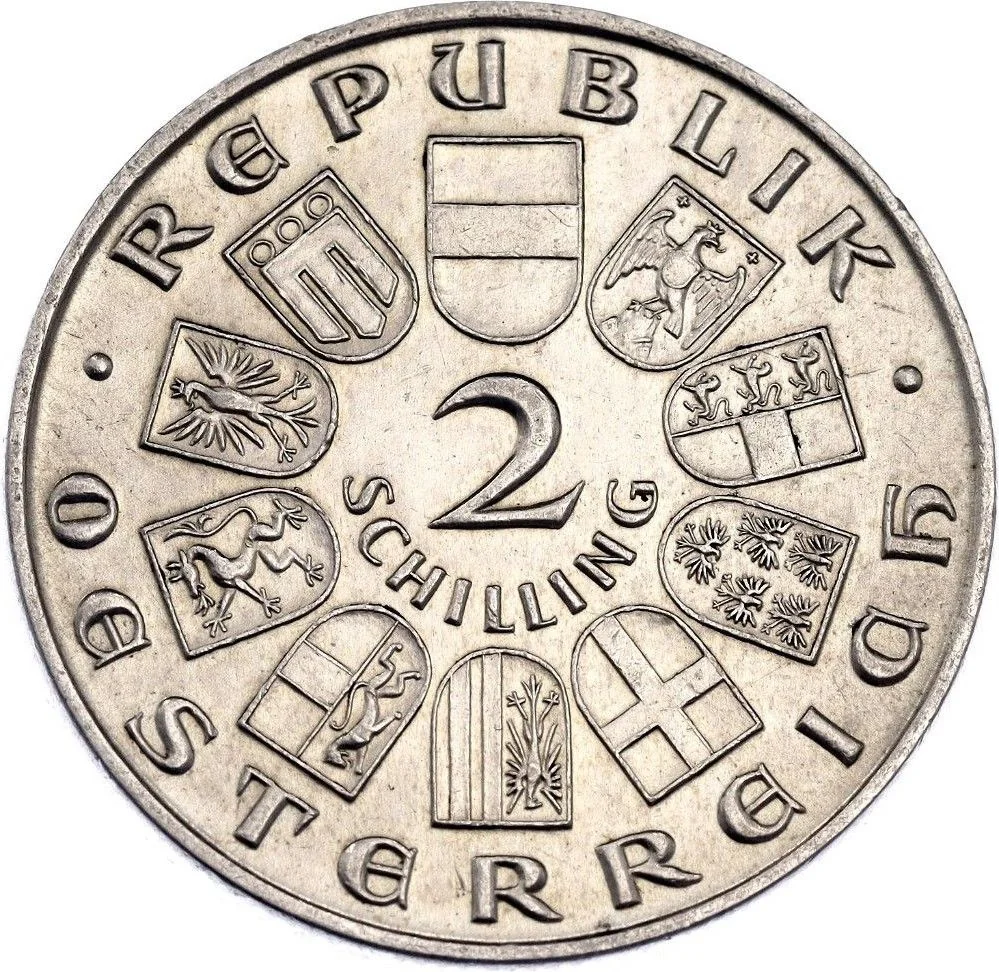
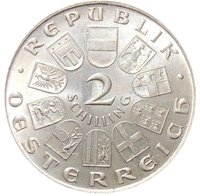
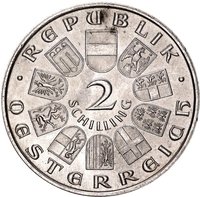
Reverse
Description:
Dr. Theodor Billroth, left. Date below.
Inscription:
THEODOR BILLROTH GEB 1829
1929
1929
Script: Latin
Engraver: Edwin Grienauer
Edge
Reeded
Categories
| Symbols> Coat of Arms |
| Event> Birth anniversary |
| Health |
Mints
| Name | Mark |
|---|---|
| Münze Österreich | — |
Mintings
| Year | Mint Mark | Mintage | Quality | Collection |
|---|---|---|---|---|
| 1929 | — | 2,000,000 |
Historical background
By 1929, Austria's currency, the Schilling, was a symbol of fragile stability amidst deep-seated economic vulnerability. Introduced in 1925 to replace the utterly destroyed Krone of the hyperinflation period (1921-1922), the Schilling was pegged to gold and backed by foreign loans, primarily from the League of Nations. This "hard currency" policy successfully ended inflation and restored international confidence, but it came at a severe cost. To defend the peg, the government maintained a strict policy of high interest rates and austerity, which stifled domestic investment and kept unemployment persistently high even during the relative calm of the late 1920s.
The Austrian economy was structurally weak, burdened by the legacy of the collapsed Habsburg Empire. Key industries like textiles and ironworks faced overcapacity and fierce competition, while the vital banking sector was dangerously unstable. The country's largest bank, the Creditanstalt, was essentially "too big to fail," holding over half of Austria's deposits and industrial assets. Its balance sheet was weighed down by non-performing loans to struggling domestic industries, creating a hidden crisis within the financial system. The currency's strength, therefore, masked a profound mismatch between a rigid monetary regime and a fundamentally unsound real economy.
Consequently, when the New York Stock Exchange crashed in October 1929, Austria was acutely exposed. The global credit contraction threatened the foreign capital propping up the Schilling, while collapsing international trade hit its already weak export industries. The underlying weaknesses—the fragile banks, uncompetitive industry, and high unemployment—meant Austria had no buffer. The currency situation of 1929 was a calm before the storm; the Schilling's stability was entirely dependent on continuous foreign goodwill and capital, conditions that were about to vanish, setting the stage for the catastrophic Creditanstalt collapse of 1931 and the eventual abandonment of the gold standard.
The Austrian economy was structurally weak, burdened by the legacy of the collapsed Habsburg Empire. Key industries like textiles and ironworks faced overcapacity and fierce competition, while the vital banking sector was dangerously unstable. The country's largest bank, the Creditanstalt, was essentially "too big to fail," holding over half of Austria's deposits and industrial assets. Its balance sheet was weighed down by non-performing loans to struggling domestic industries, creating a hidden crisis within the financial system. The currency's strength, therefore, masked a profound mismatch between a rigid monetary regime and a fundamentally unsound real economy.
Consequently, when the New York Stock Exchange crashed in October 1929, Austria was acutely exposed. The global credit contraction threatened the foreign capital propping up the Schilling, while collapsing international trade hit its already weak export industries. The underlying weaknesses—the fragile banks, uncompetitive industry, and high unemployment—meant Austria had no buffer. The currency situation of 1929 was a calm before the storm; the Schilling's stability was entirely dependent on continuous foreign goodwill and capital, conditions that were about to vanish, setting the stage for the catastrophic Creditanstalt collapse of 1931 and the eventual abandonment of the gold standard.
🌱 Common