

2 schilling (Franz Schubert) – Austria
Add to wishlist
Circulating commemorative coins
Commemoration: 100th Anniversary of the Death of Franz Schubert
Austria
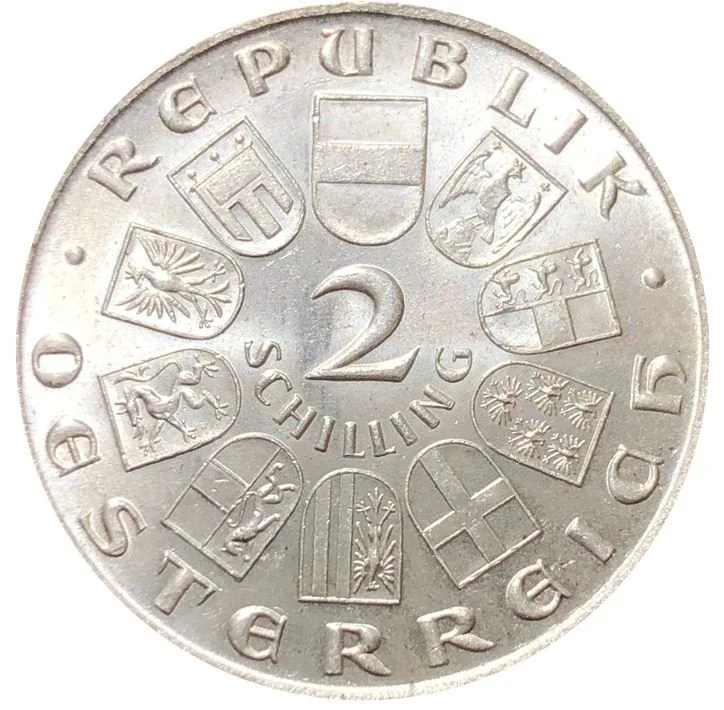
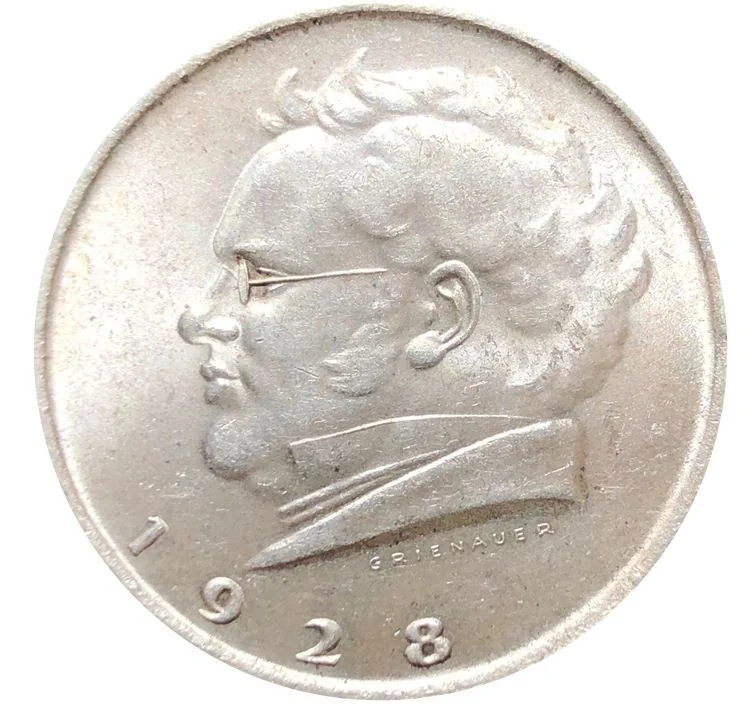
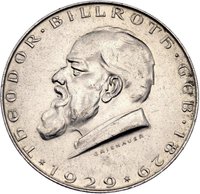
Obverse
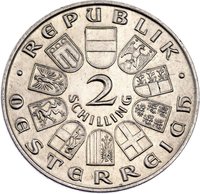
Reverse
Description:
Franz Schubert, left. Date at bottom left.
Inscription:
1928
GRIENAUER
GRIENAUER
Script: Latin
Engraver: Edwin Grienauer
Edge
Reeded
Categories
| Event> Death anniversary |
| Person> Artist |
| Symbols> Coat of Arms |
| Art> Music |
Mints
| Name | Mark |
|---|---|
| Münze Österreich | — |
Mintings
| Year | Mint Mark | Mintage | Quality | Collection |
|---|---|---|---|---|
| 1928 | — | 6,900,000 |
Historical background
By 1928, Austria's currency situation was one of fragile stability, underpinned by significant international intervention. The hyperinflation of the early 1920s, which had utterly destroyed the value of the old Austrian Crown, was a recent and traumatic memory. To rescue the economy, the League of Nations oversaw a comprehensive stabilization program in 1922, which included the introduction of a new currency, the Austrian Schilling, in 1925. Pegged to gold and backed by foreign loans, the Schilling was successfully established as a stable and trusted unit of exchange, bringing an end to the monetary chaos.
This stability, however, came at a high political and economic cost. The reconstruction was financed through substantial League of Nations loans, which mandated strict austerity measures, including drastic cuts to public spending and the restructuring of state-owned industries. Furthermore, the new Austrian National Bank (OeNB) was established with its independence legally guaranteed, limiting the government's ability to finance itself through money printing. While this institutional framework secured the currency, it also constrained fiscal policy and contributed to persistent unemployment and social tensions throughout the 1920s.
Consequently, the Austrian economy in 1928 was characterized by a paradox: a strong and stable currency existing alongside a weak and vulnerable economic structure. The nation's financial system was heavily dependent on short-term foreign capital inflows, particularly from the United States, to maintain liquidity and service its debts. This left Austria acutely exposed to shifts in international investor confidence. The apparent calm of 1928 was therefore precarious, setting the stage for severe crisis when the Great Depression began in 1929 and that foreign capital rapidly withdrew.
This stability, however, came at a high political and economic cost. The reconstruction was financed through substantial League of Nations loans, which mandated strict austerity measures, including drastic cuts to public spending and the restructuring of state-owned industries. Furthermore, the new Austrian National Bank (OeNB) was established with its independence legally guaranteed, limiting the government's ability to finance itself through money printing. While this institutional framework secured the currency, it also constrained fiscal policy and contributed to persistent unemployment and social tensions throughout the 1920s.
Consequently, the Austrian economy in 1928 was characterized by a paradox: a strong and stable currency existing alongside a weak and vulnerable economic structure. The nation's financial system was heavily dependent on short-term foreign capital inflows, particularly from the United States, to maintain liquidity and service its debts. This left Austria acutely exposed to shifts in international investor confidence. The apparent calm of 1928 was therefore precarious, setting the stage for severe crisis when the Great Depression began in 1929 and that foreign capital rapidly withdrew.
🌱 Common