

40 batzen – Helvetic Republic
Add to wishlist
Switzerland
Context
Year: 1798
Country: Switzerland
Issuer: Helvetic Republic
Period:
(1798—1803)
Currency:
(1798—1803)
Demonetized: Yes
Material
References
KM: #
Numista: #200505
Value
Bullion value: $65.93
Obverse
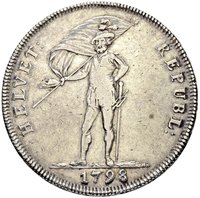
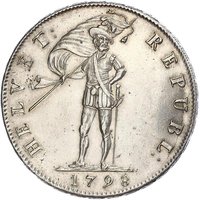
Description:
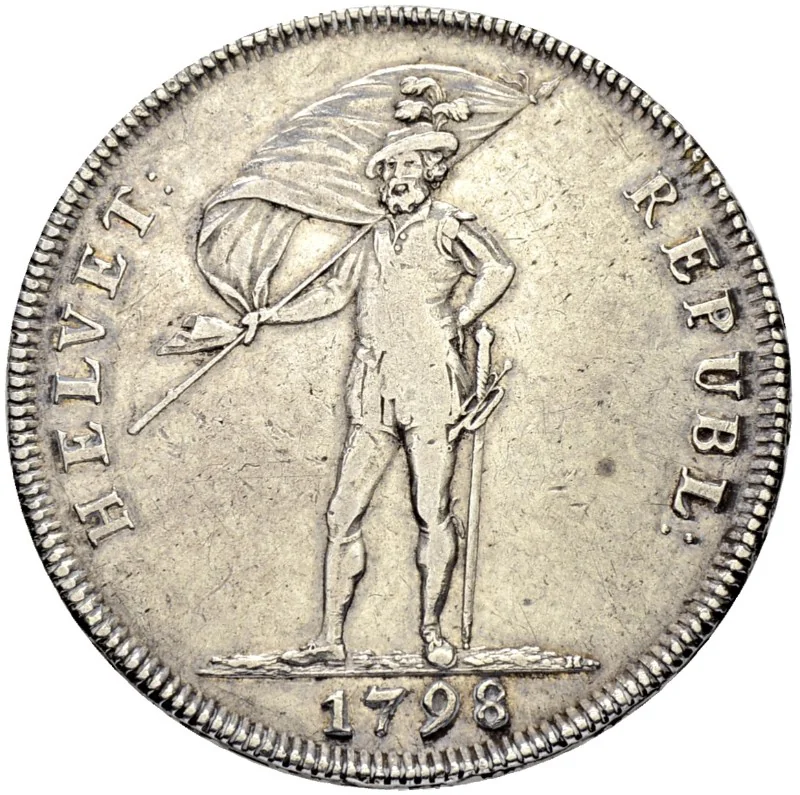
Old Swiss soldier in full profile, feathered hat, flag on shoulder, sword at hip.
Inscription:
HELVET : BEPUBL :
1798
1798
Script: Latin
Engraver: Johann Franz Huber
Reverse
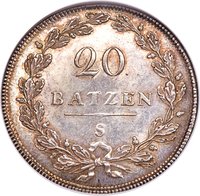
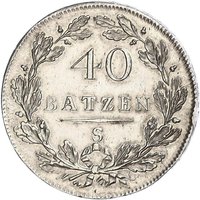
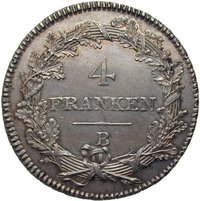
Description:
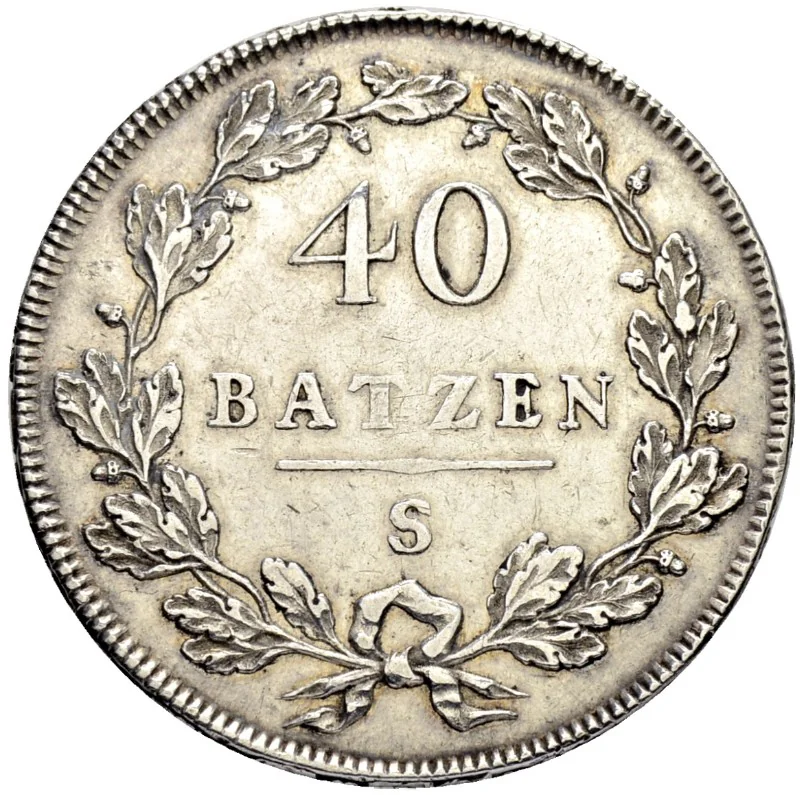
Oak wreath with acorns, ribbon-tied.
Inscription:
40
BATZEN
⸻
S
BATZEN
⸻
S
Script: Latin
Engraver: Johann Franz Huber
Edge
Historical background
The Helvetic Republic, proclaimed in April 1798, was a French sister republic imposed upon the Swiss Confederacy following its invasion by French Revolutionary forces. This radical, unitary state replaced the ancient decentralized patchwork of cantons, subjecting it to a centralized administration modeled on France. This political upheaval directly precipitated a severe currency crisis, as the new republic inherited a chaotic monetary landscape with over 800 different coins from foreign and domestic authorities in circulation, alongside a plethora of cantonal banknotes.
The French Directory, insisting the new republic pay for its own occupation, demanded massive war contributions and imposed a French-style monetary system. In 1799, the Helvetic Republic attempted to introduce a new national currency, the franc, based on the French standard, aiming to unify and control the economy. However, this reform was disastrously implemented amidst widespread resistance, economic collapse, and ongoing internal warfare. The government lacked the bullion reserves to back its issues, leading to rapid depreciation of the new currency and the parallel rejection of its notes by a distrustful population.
Consequently, the period was marked by extreme financial chaos. Old cantonal coins, French coins, and various foreign currencies continued to circulate at fluctuating values, while the new Helvetic franc quickly became nearly worthless. This monetary disintegration, coupled with forced requisitions and a collapsed economy, plunged much of the population into severe hardship and became a key factor in the widespread resentment that ultimately led to the republic's dissolution in 1803.
The French Directory, insisting the new republic pay for its own occupation, demanded massive war contributions and imposed a French-style monetary system. In 1799, the Helvetic Republic attempted to introduce a new national currency, the franc, based on the French standard, aiming to unify and control the economy. However, this reform was disastrously implemented amidst widespread resistance, economic collapse, and ongoing internal warfare. The government lacked the bullion reserves to back its issues, leading to rapid depreciation of the new currency and the parallel rejection of its notes by a distrustful population.
Consequently, the period was marked by extreme financial chaos. Old cantonal coins, French coins, and various foreign currencies continued to circulate at fluctuating values, while the new Helvetic franc quickly became nearly worthless. This monetary disintegration, coupled with forced requisitions and a collapsed economy, plunged much of the population into severe hardship and became a key factor in the widespread resentment that ultimately led to the republic's dissolution in 1803.



✨ Legendary