

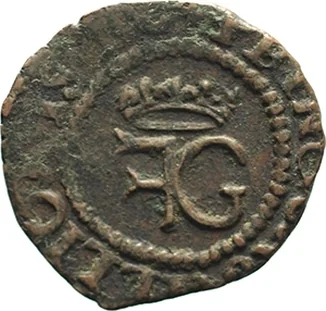
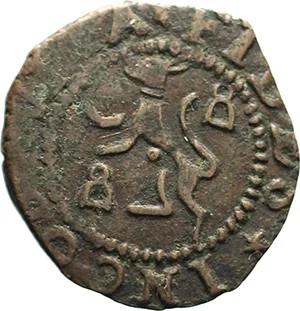
½ Soldo – Castiglione Delle Stiviere
Italy
Obverse
Description:
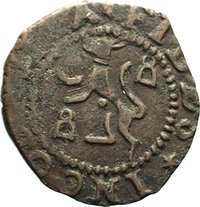
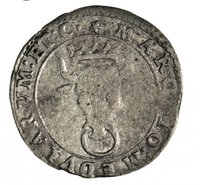
Crowned FG monogram in retrograde, encircled by legend.
Inscription:
PRIC. CASTILLIONIS. EC.
ꟻG
ꟻG
Script: Latin
Reverse
Edge
Mints
| Name | Mark |
|---|---|
| Castiglione delle Stiviere | — |
Mintings
| Year | Mint Mark | Mintage | Quality | Collection |
|---|---|---|---|---|
| — | — | — |
Historical background
In 1609, Castiglione delle Stiviere was a small but significant autonomous lordship within the Duchy of Mantua, ruled by the Gonzaga family branch of the princes of Castiglione. Its currency situation was complex and not autonomous, being fundamentally tied to the monetary systems of its larger neighbours. The primary circulating coins were those of the Mantuan mint, which itself operated under the influence of the wider Italian and European monetary landscape, particularly the Spanish silver reales and the gold scudi that dominated Mediterranean trade.
The local economy would have experienced a proliferation of different coins, a common feature of the early modern period. Alongside Mantuan issues like the scudo and the soldo, coins from the Republic of Venice (such as the ducat and lira), the Duchy of Milan, and even Spanish pieces of eight would have been present, used by merchants and soldiers. This necessitated constant exchange and assay, with money-changers playing a crucial role in verifying the often-debased silver content and establishing exchange rates, which were subject to fluctuation and local decree.
For everyday transactions in the market, smaller denomination coins were essential. These likely included copper denari and low-value silver soldi minted in Mantua or nearby states. The stability of these coins, and thus the purchasing power of the town's inhabitants, was vulnerable to the monetary policies of the main Gonzaga line in Mantua and the broader economic pressures of the time, including the influx of New World silver into Europe, which was causing gradual price inflation across the continent.
The local economy would have experienced a proliferation of different coins, a common feature of the early modern period. Alongside Mantuan issues like the scudo and the soldo, coins from the Republic of Venice (such as the ducat and lira), the Duchy of Milan, and even Spanish pieces of eight would have been present, used by merchants and soldiers. This necessitated constant exchange and assay, with money-changers playing a crucial role in verifying the often-debased silver content and establishing exchange rates, which were subject to fluctuation and local decree.
For everyday transactions in the market, smaller denomination coins were essential. These likely included copper denari and low-value silver soldi minted in Mantua or nearby states. The stability of these coins, and thus the purchasing power of the town's inhabitants, was vulnerable to the monetary policies of the main Gonzaga line in Mantua and the broader economic pressures of the time, including the influx of New World silver into Europe, which was causing gradual price inflation across the continent.

✨ Legendary