

grossetto – Castiglione Delle Stiviere
Add to wishlist
Italy
Context
Years: 1593–1616
Country: Italy
Issuer: Castiglione Delle Stiviere
Currency:
Subdivision: grossetto = 4 Soldi
Demonetized: Yes
Material
Diameter: 17 mm
Weight: 0.8 g
Shape: Irregular round
Composition: Billon
Technique: Hammered
Alignment: Medal alignment
flip
References
KM: #
Numista: #396486
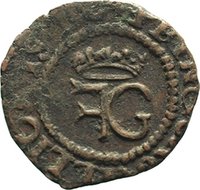
Obverse
Description:
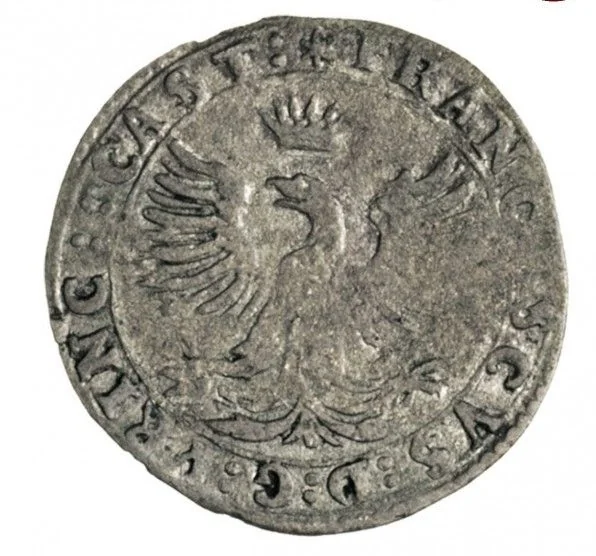
Crowned eagle in left profile, wings outstretched.
Inscription:
* FRANCISCVS : D : G : PRIN :: CAST :
Script: Latin
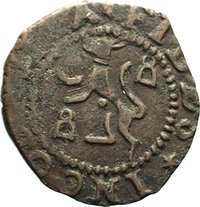
Reverse
Edge
Mints
| Name | Mark |
|---|---|
| Castiglione delle Stiviere | — |
Mintings
| Year | Mint Mark | Mintage | Quality | Collection |
|---|---|---|---|---|
| — | — | — |
Historical background
In 1593, Castiglione delle Stiviere was a small but significant feudo (fiefdom) within the Duchy of Mantua, ruled by the Gonzaga family. Its monetary system was not autonomous but was directly integrated into and controlled by the Mantuan state. The primary circulating currency was the Mantuan scudo, a silver coin, alongside a variety of smaller fractional coins minted in Mantua, such as soldi and denari. However, the monetary landscape was highly complex due to the pervasive circulation of foreign coins, a common reality across the Italian peninsula. Traders and residents would have routinely handled coins from neighboring states like the Venetian Republic (ducats), the Duchy of Milan, and the Papal States, with their value often assessed by weight and silver content rather than face value.
The period was one of significant monetary instability and "bad money" problems across Europe. The Mantuan mint, like many others, occasionally engaged in the debasement of its coinage—reducing the precious metal content to stretch state finances, especially amid the costs of frequent regional wars and the Gonzaga's lavish court expenditures. This practice led to fluctuations in the real value of local coinage and complicated trade. For a market town like Castiglione delle Stiviere, which served an agricultural hinterland and lay on important transit routes, these instabilities created daily challenges. Merchants and peasants at the market had to be wary of the mix of coins in their purses, often relying on money-changers (campsores) to verify and exchange the myriad of coins in circulation.
Furthermore, the local economy was primarily agrarian, with many transactions conducted through barter or credit recorded in local ledgers, mitigating some dependence on physical coinage for everyday life. The monetary policy was set in Mantua, leaving Castiglione with no control over its currency fate. This situation would persist until the town was elevated to the status of a principality in 1595, granting its ruling branch of the Gonzaga family slightly more autonomy, though still within the broader and turbulent monetary system of Northern Italy, which was increasingly feeling the strain of incoming Spanish silver from the Americas and ongoing regional conflicts.
The period was one of significant monetary instability and "bad money" problems across Europe. The Mantuan mint, like many others, occasionally engaged in the debasement of its coinage—reducing the precious metal content to stretch state finances, especially amid the costs of frequent regional wars and the Gonzaga's lavish court expenditures. This practice led to fluctuations in the real value of local coinage and complicated trade. For a market town like Castiglione delle Stiviere, which served an agricultural hinterland and lay on important transit routes, these instabilities created daily challenges. Merchants and peasants at the market had to be wary of the mix of coins in their purses, often relying on money-changers (campsores) to verify and exchange the myriad of coins in circulation.
Furthermore, the local economy was primarily agrarian, with many transactions conducted through barter or credit recorded in local ledgers, mitigating some dependence on physical coinage for everyday life. The monetary policy was set in Mantua, leaving Castiglione with no control over its currency fate. This situation would persist until the town was elevated to the status of a principality in 1595, granting its ruling branch of the Gonzaga family slightly more autonomy, though still within the broader and turbulent monetary system of Northern Italy, which was increasingly feeling the strain of incoming Spanish silver from the Americas and ongoing regional conflicts.
✨ Legendary