

6 Kreuzers – Austrian Empire
Austria
Context
Year: 1604
Country: Austria 
Issuer: Austrian Empire
Ruler: Rudolph II
Currency:
(1520—1754)
Demonetized: Yes
References
KM: #Click to copy to clipboard53
Numista: #199520
Obverse
Description:
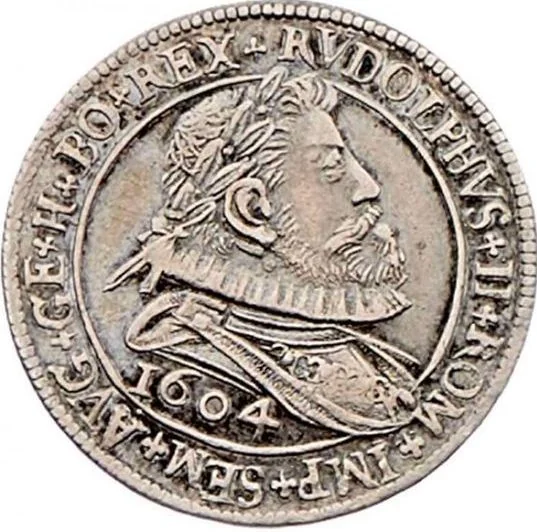
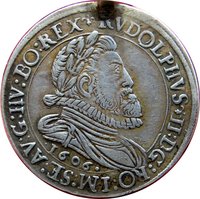
Laureate bust right in ruffled collar, within circle and surrounding legend.
Inscription:
RVDOLPHVS II ROM IMP SEM AVG GE H BO REX
1604
1604
Script: Latin
Reverse
Description:
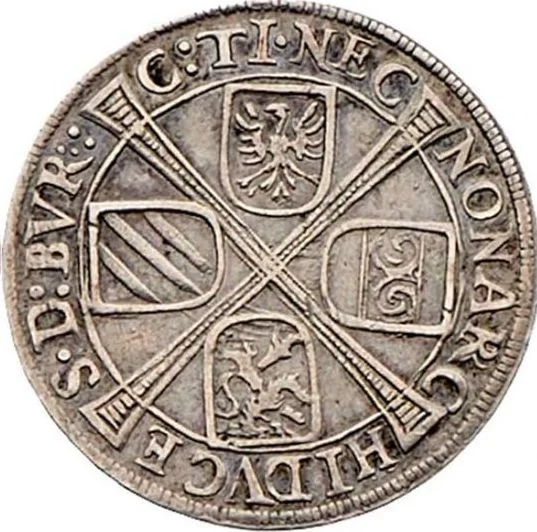
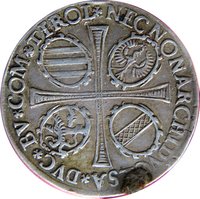
Four shields divided by a cross, encircled by legend.
Inscription:
NEC / NON ARC / HIDUCE / S D BVR / C TI
Script: Latin
Edge
Mints
| Name | Mark |
|---|---|
| Hall | — |
Mintings
| Year | Mint Mark | Mintage | Quality | Collection |
|---|---|---|---|---|
| 1604 | — | — |
Historical background
In 1604, the currency system of the Habsburg-ruled Austrian Empire was a complex and fragile patchwork, deeply strained by the financial demands of the Long Turkish War (1593–1606). The conflict against the Ottoman Empire had drained the imperial treasury, leading to chronic fiscal shortfalls. To meet these expenses, the central minting authority, under Emperor Rudolf II, repeatedly engaged in the debasement of coinage. This involved reducing the precious metal content—particularly silver—in newly minted coins like the thaler and smaller denominations (kreuzers), while officially maintaining their old face value. This practice created a severe imbalance between the empire's various regional currencies and those of its trading partners.
The result was a classic and disruptive phenomenon: Gresham's Law, where "bad money drives out good." Older, higher-quality coins with intact silver content were hoarded by the public or exported, while the newly minted, inferior coins flooded the market. This triggered sharp inflation, price instability, and a loss of public trust in the currency. The situation was exacerbated by the empire's decentralized structure; individual crown lands (like Austria, Bohemia, and Hungary) had their own minting rights and monetary traditions, leading to a confusing multiplicity of circulating coins of varying worth, further complicating trade and taxation.
Consequently, the year 1604 fell within a period of significant monetary reform efforts. Emperor Rudolf II had issued currency ordinances in 1603 and would do so again, attempting to standardize and stabilize the system by setting official exchange rates and regulating minting outputs. However, these measures were largely reactive and struggled against the relentless financial pressure of the ongoing war. Thus, the currency situation remained a source of economic weakness and social tension, reflecting the broader challenges of governing a financially overstretched and administratively fragmented empire.
The result was a classic and disruptive phenomenon: Gresham's Law, where "bad money drives out good." Older, higher-quality coins with intact silver content were hoarded by the public or exported, while the newly minted, inferior coins flooded the market. This triggered sharp inflation, price instability, and a loss of public trust in the currency. The situation was exacerbated by the empire's decentralized structure; individual crown lands (like Austria, Bohemia, and Hungary) had their own minting rights and monetary traditions, leading to a confusing multiplicity of circulating coins of varying worth, further complicating trade and taxation.
Consequently, the year 1604 fell within a period of significant monetary reform efforts. Emperor Rudolf II had issued currency ordinances in 1603 and would do so again, attempting to standardize and stabilize the system by setting official exchange rates and regulating minting outputs. However, these measures were largely reactive and struggled against the relentless financial pressure of the ongoing war. Thus, the currency situation remained a source of economic weakness and social tension, reflecting the broader challenges of governing a financially overstretched and administratively fragmented empire.
✨ Legendary