

6 Kreuzers – Austrian Empire
Austria
Context
Years: 1602–1606
Year: 1602
Country: Austria 
Issuer: Austrian Empire
Ruler: Rudolph II
Currency:
(1520—1754)
Demonetized: Yes
References
KM: #Click to copy to clipboard33
Numista: #107627
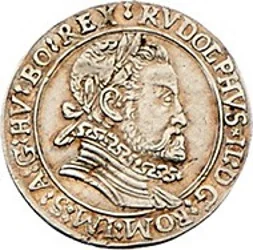
Obverse
Description:
Portrait within inner circle, legend surrounding.
Inscription:
RVDOLPHVS II D G ROM IM S A G HV BO REX
Script: Latin
Reverse
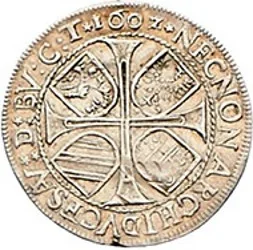
Description:
Shields of Tyrol, Austria, Burgundy, and Styria divided by a cross pattée. Braided inner circle. Date in legend.
Inscription:
NECNON ARCHIDUCES AV D BV C T 160Z
Script: Latin
Edge
Mints
| Name | Mark |
|---|---|
| Hall | — |
Mintings
| Year | Mint Mark | Mintage | Quality | Collection |
|---|---|---|---|---|
| 1602 | — | — | ||
| — | — | — |
Historical background
In 1602, the currency situation within the Habsburg-ruled Austrian Empire was one of profound instability and complexity, rooted in the empire's decentralized structure and the financial strains of the Long Turkish War (1593–1606). The empire was not a unified monetary zone; instead, various territories minted their own coins according to local standards, leading to a chaotic circulation of domestic and foreign currencies. The most important silver coin was the Reichsthaler, but its value and silver content fluctuated significantly against the ubiquitous smaller Kreuzer coins used in daily transactions. This fragmentation, combined with the practice of "clipping" coins to reduce their precious metal content, eroded public trust in the currency.
The primary driver of monetary crisis was the immense cost of the ongoing war against the Ottoman Empire, which drained the imperial treasury. To meet expenses, the Habsburg authorities, particularly under Emperor Rudolf II, repeatedly engaged in debasement. This involved reducing the silver content in newly minted coins while mandating they retain the same face value, a form of short-term revenue raising that sparked severe inflation. Prices for basic goods soared, disproportionately harming wage earners and peasants, while creditors and those on fixed incomes found their assets severely diminished. The situation created widespread economic hardship and social tension across the lands.
Attempts at reform were largely ineffective. Imperial ordinances, like those issued from the Hofkammer (Treasury), sought to fix exchange rates and regulate minting, but enforcement across the empire's diverse estates and autonomous mints was nearly impossible. The result was a vicious cycle: war demanded more money, leading to debasement, which caused inflation and hoarding of good coin, further reducing the quality of money in circulation. Consequently, 1602 fell within a period of chronic monetary disorder that would persist for decades, undermining the Habsburg economy and highlighting the fiscal limitations of the fragmented imperial state.
The primary driver of monetary crisis was the immense cost of the ongoing war against the Ottoman Empire, which drained the imperial treasury. To meet expenses, the Habsburg authorities, particularly under Emperor Rudolf II, repeatedly engaged in debasement. This involved reducing the silver content in newly minted coins while mandating they retain the same face value, a form of short-term revenue raising that sparked severe inflation. Prices for basic goods soared, disproportionately harming wage earners and peasants, while creditors and those on fixed incomes found their assets severely diminished. The situation created widespread economic hardship and social tension across the lands.
Attempts at reform were largely ineffective. Imperial ordinances, like those issued from the Hofkammer (Treasury), sought to fix exchange rates and regulate minting, but enforcement across the empire's diverse estates and autonomous mints was nearly impossible. The result was a vicious cycle: war demanded more money, leading to debasement, which caused inflation and hoarding of good coin, further reducing the quality of money in circulation. Consequently, 1602 fell within a period of chronic monetary disorder that would persist for decades, undermining the Habsburg economy and highlighting the fiscal limitations of the fragmented imperial state.

✨ Legendary