

4 Baiocchi – Ferrara
Italy
Context
Years: 1708–1709
Country: Italy 
Issuer: Ferrara
Ruler: Clement XI
Currency:
(1534—1835)
Demonetized: Yes
Material
References
KM: #Click to copy to clipboard101
Numista: #199240
Obverse
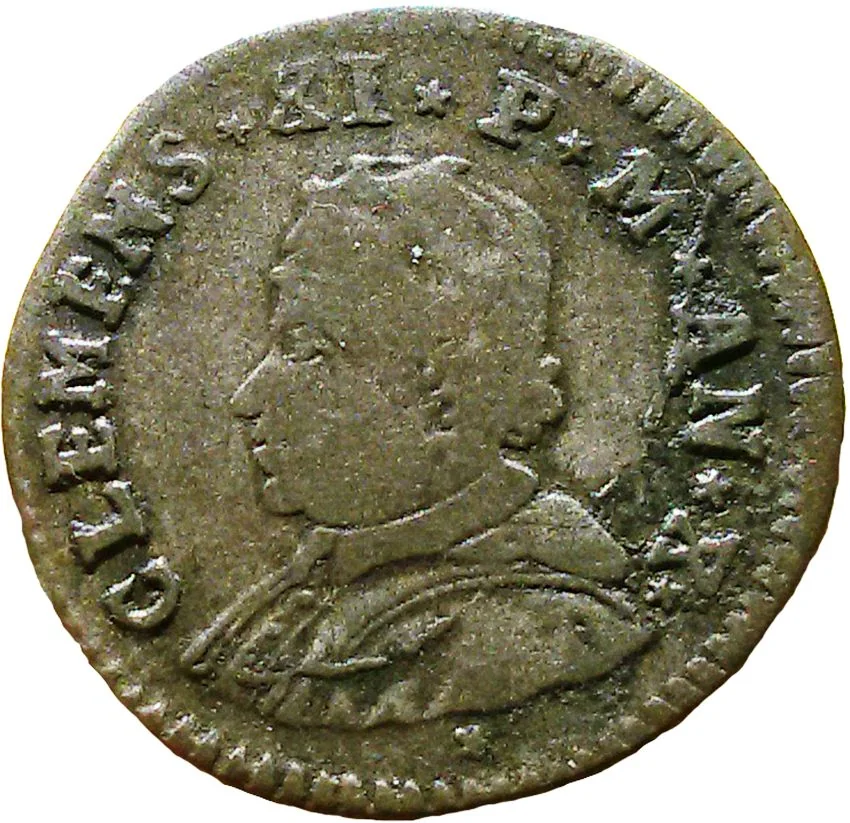
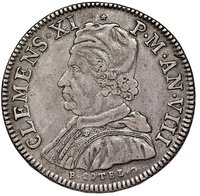
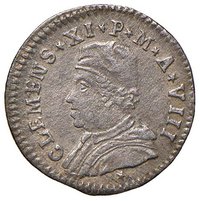
Description:
Capped bust left, star beneath.
Inscription:
CLEMENS ☆ XI ☆ P ☆ M ☆ AN ☆ X
Script: Latin
Reverse
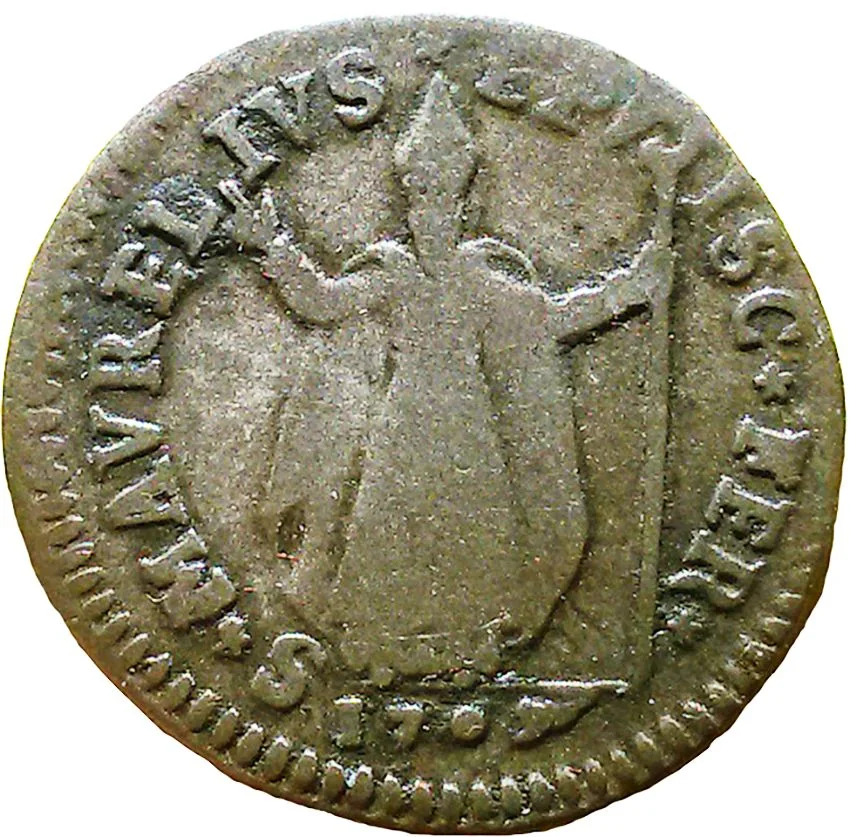
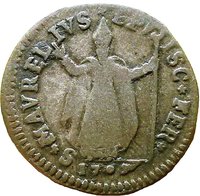
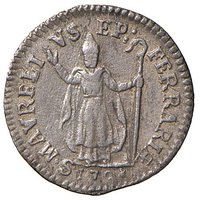
Description:
Saint Maurelio in mitre, arms open, blessing with his right hand and holding a crosier in his left. Date below.
Inscription:
S ☆ MAVRELIVS ☆ EPISC ☆ FER
1709
1709
Script: Latin
Edge
Plain
Categories
| Person> Monarch |
| Person> Religious figure |
| Symbol> Hand |
| Object> Hat |
| Religion> Religious objects |
Mints
| Name | Mark |
|---|---|
| Ferrara | — |
Mintings
| Year | Mint Mark | Mintage | Quality | Collection |
|---|---|---|---|---|
| 1708 | — | — | ||
| 1709 | — | — |
Historical background
In 1708, the Duchy of Ferrara found itself in a complex and precarious monetary situation, directly resulting from its recent political annexation. Following the death of the last Este duke, Alfonso II, in 1597, and a prolonged period of papal administration, Ferrara was formally incorporated into the Papal States in 1707 by Pope Clement XI. This political shift meant Ferrara’s currency was no longer governed by an independent ducal mint but was subsumed into the broader, and often troubled, monetary system of the Papal States, which struggled with uniformity across its territories.
The currency in circulation was a heterogeneous mix, reflecting its layered history. Older Ferrarese coins from the Este era, such as sesini and soldi, still circulated alongside the official papal coinage like giuli and scudi. Furthermore, due to Ferrara’s important position on the trade routes of the Po Valley, a significant amount of foreign currency, particularly Venetian ducats and lire, Austrian thalers, and French écus, was used in commerce. This proliferation of different coins, each with fluctuating intrinsic metal values, created chronic confusion in exchange rates and facilitated widespread debasement and counterfeiting.
Consequently, the primary challenges in 1708 were monetary instability and a lack of unitary authority. The papal government faced the difficult task of imposing its standard, the scudo, on a resistant local economy accustomed to a diverse coinage. This often led to severe liquidity crises, as merchants and citizens hoarded older or more reliable foreign coins. The situation stifled trade and complicated taxation, embodying the economic growing pains of a city-state adjusting to its loss of sovereignty and integration into a larger, bureaucratic papal monetary regime.
The currency in circulation was a heterogeneous mix, reflecting its layered history. Older Ferrarese coins from the Este era, such as sesini and soldi, still circulated alongside the official papal coinage like giuli and scudi. Furthermore, due to Ferrara’s important position on the trade routes of the Po Valley, a significant amount of foreign currency, particularly Venetian ducats and lire, Austrian thalers, and French écus, was used in commerce. This proliferation of different coins, each with fluctuating intrinsic metal values, created chronic confusion in exchange rates and facilitated widespread debasement and counterfeiting.
Consequently, the primary challenges in 1708 were monetary instability and a lack of unitary authority. The papal government faced the difficult task of imposing its standard, the scudo, on a resistant local economy accustomed to a diverse coinage. This often led to severe liquidity crises, as merchants and citizens hoarded older or more reliable foreign coins. The situation stifled trade and complicated taxation, embodying the economic growing pains of a city-state adjusting to its loss of sovereignty and integration into a larger, bureaucratic papal monetary regime.
✨ Legendary