

1 Dam – Mughal Empire
India
Context
Years: 1574–1581
Country: India 
Issuer: Mughal Empire
Ruler: Akbar
Currency:
(1540—1842)
Demonetized: Yes
Material
Diameter: 20 mm
Weight: 19.7 g
Thickness: 7 mm
Shape: Irregular round
Composition: Copper
Magnetic: No
References
KM: #Click to copy to clipboard28.21
Numista: #108794
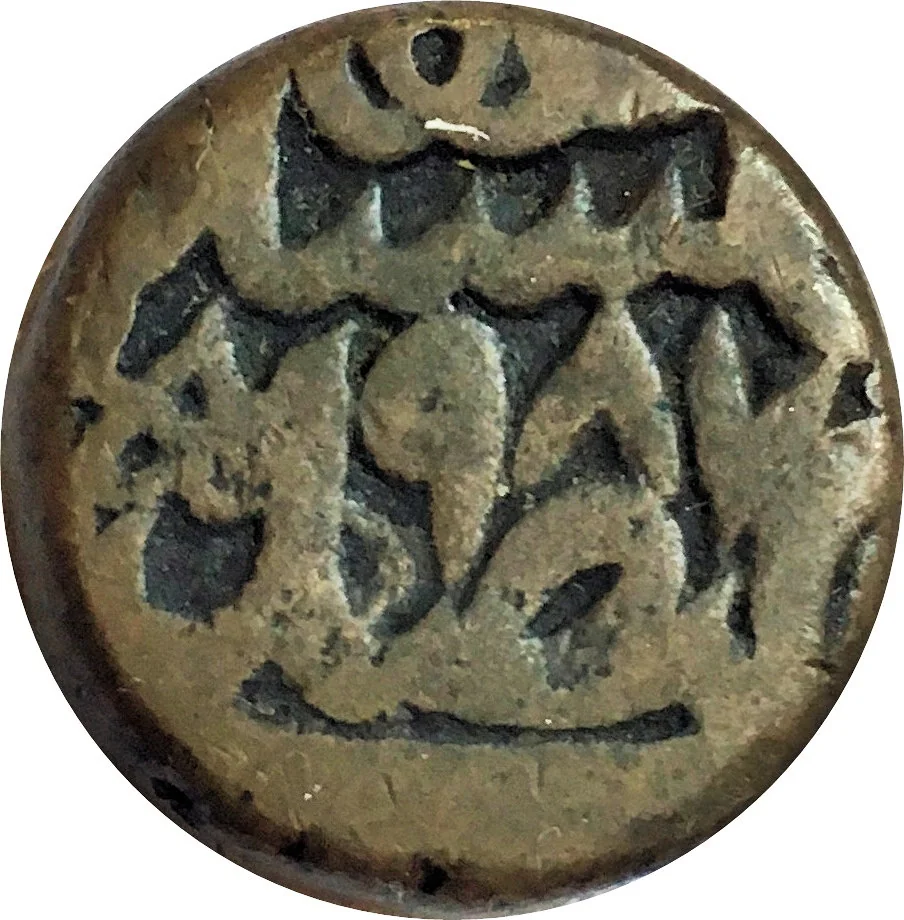
Obverse
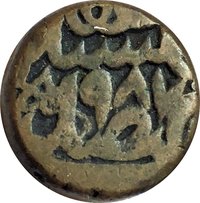
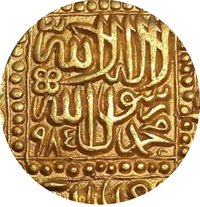
Inscription:
Dar-ul-Sultanat
AH 987
AH 987
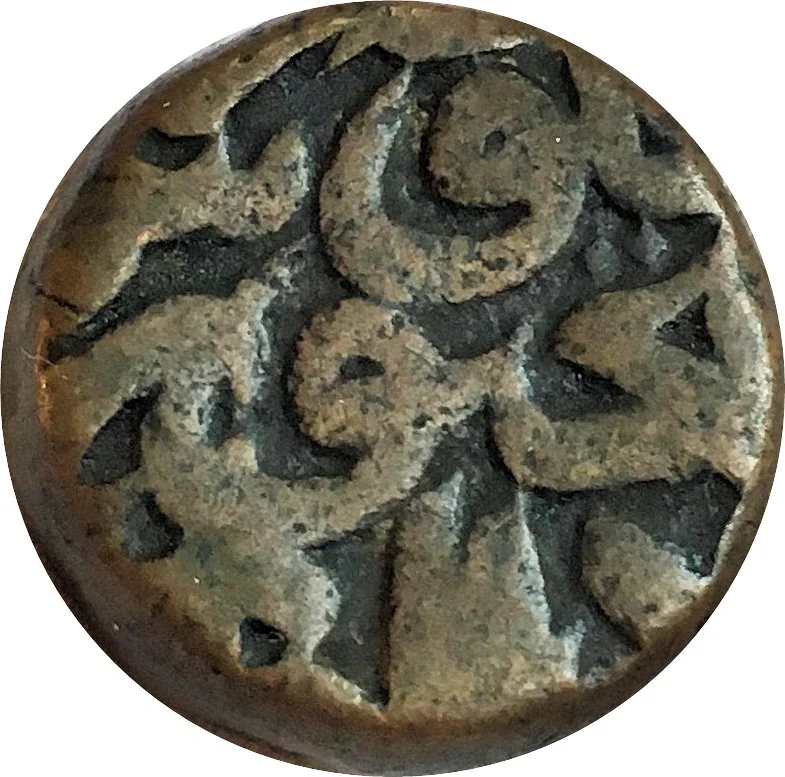
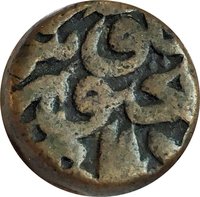
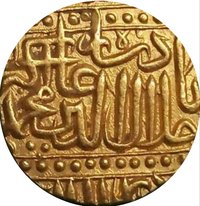
Reverse
Edge
Mintings
| Year | Mint Mark | Mintage | Quality | Collection |
|---|---|---|---|---|
| 1574 | — | — | ||
| 1575 | — | — | ||
| 1578 | — | — | ||
| 1579 | — | — | ||
| 1579 | — | — | ||
| 1580 | — | — | ||
| 1581 | — | — |
Historical background
In 1574, the Mughal Empire's currency system was in a formative phase under Emperor Akbar (r. 1556–1605), who was actively consolidating imperial control and standardizing administration. The monetary landscape was a complex mix of inherited systems, with various regional and predecessor coins still in circulation. The dominant currency was the silver rupee (or rupaiya), but its weight and purity were not yet uniformly standardized across the empire's expanding territories, which then stretched from Kabul to Bengal. Alongside the rupee, the gold mohur and copper dam (worth 1/40th of a rupee) formed the trimetallic system, facilitating large state transactions, elite hoarding, and everyday local trade, respectively.
Akbar was in the early stages of a profound monetary reform that would reach its peak with the establishment of the imperial mint system and the Ilahi calendar in the 1580s. In 1574, his focus was on securing the vast silver inflows from the New World, which entered the Indian economy via trade with the Portuguese and other Europeans, and from war booty, particularly after the conquest of Gujarat in 1573. This bullion was crucial for minting new coins to pay the army and bureaucracy, asserting economic sovereignty, and displacing the myriad local issues. The administrative machinery for systematic minting and assaying was being developed, with the Darogha-i-Mint (superintendent of the mint) playing a key role in ensuring quality.
Thus, the currency situation in 1574 was one of transition from fragmentation to imperial uniformity. While the basic trimetallic structure was established, Akbar's vision of a centralized, trustworthy, and empire-wide currency was still being implemented. The year falls within a critical decade where the state was actively harnessing fiscal and monetary policy to underpin its political power, fund its military ambitions, and integrate a diverse economy, setting the stage for the more rigid and celebrated standardization that would characterize the later Mughal economy.
Akbar was in the early stages of a profound monetary reform that would reach its peak with the establishment of the imperial mint system and the Ilahi calendar in the 1580s. In 1574, his focus was on securing the vast silver inflows from the New World, which entered the Indian economy via trade with the Portuguese and other Europeans, and from war booty, particularly after the conquest of Gujarat in 1573. This bullion was crucial for minting new coins to pay the army and bureaucracy, asserting economic sovereignty, and displacing the myriad local issues. The administrative machinery for systematic minting and assaying was being developed, with the Darogha-i-Mint (superintendent of the mint) playing a key role in ensuring quality.
Thus, the currency situation in 1574 was one of transition from fragmentation to imperial uniformity. While the basic trimetallic structure was established, Akbar's vision of a centralized, trustworthy, and empire-wide currency was still being implemented. The year falls within a critical decade where the state was actively harnessing fiscal and monetary policy to underpin its political power, fund its military ambitions, and integrate a diverse economy, setting the stage for the more rigid and celebrated standardization that would characterize the later Mughal economy.
✨ Legendary