

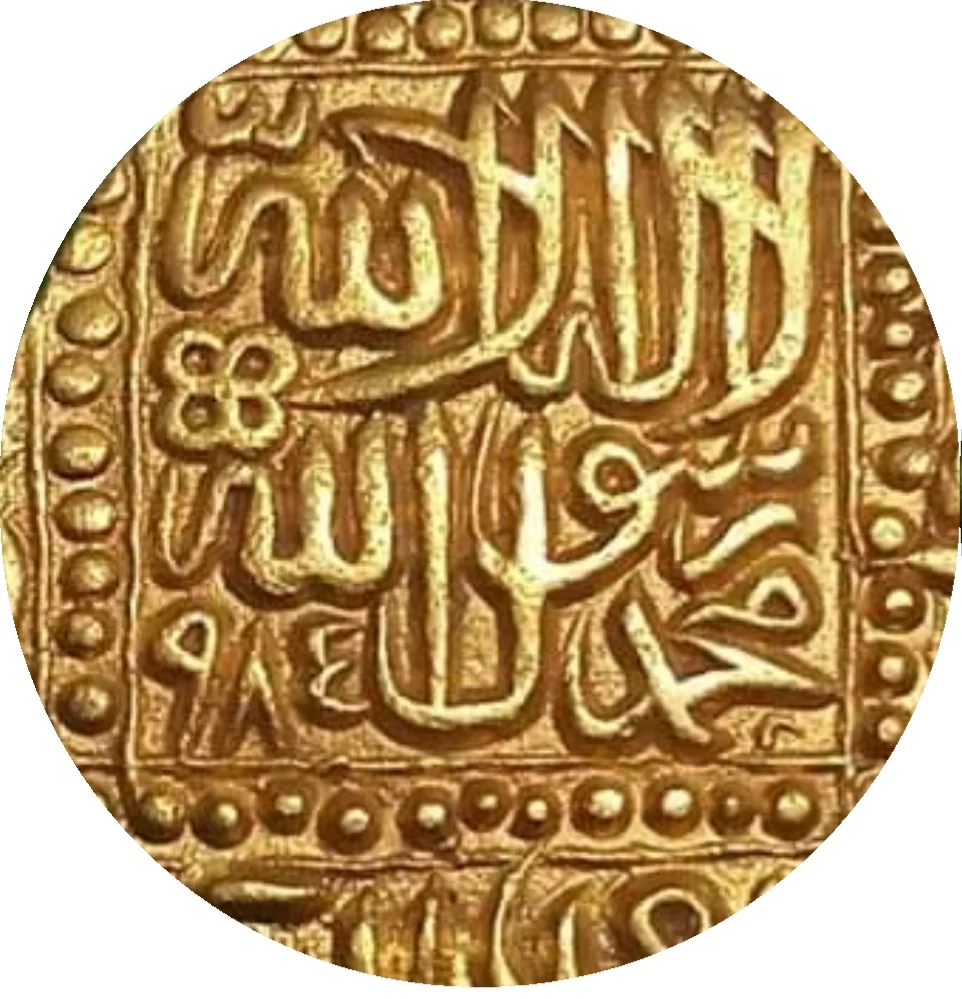
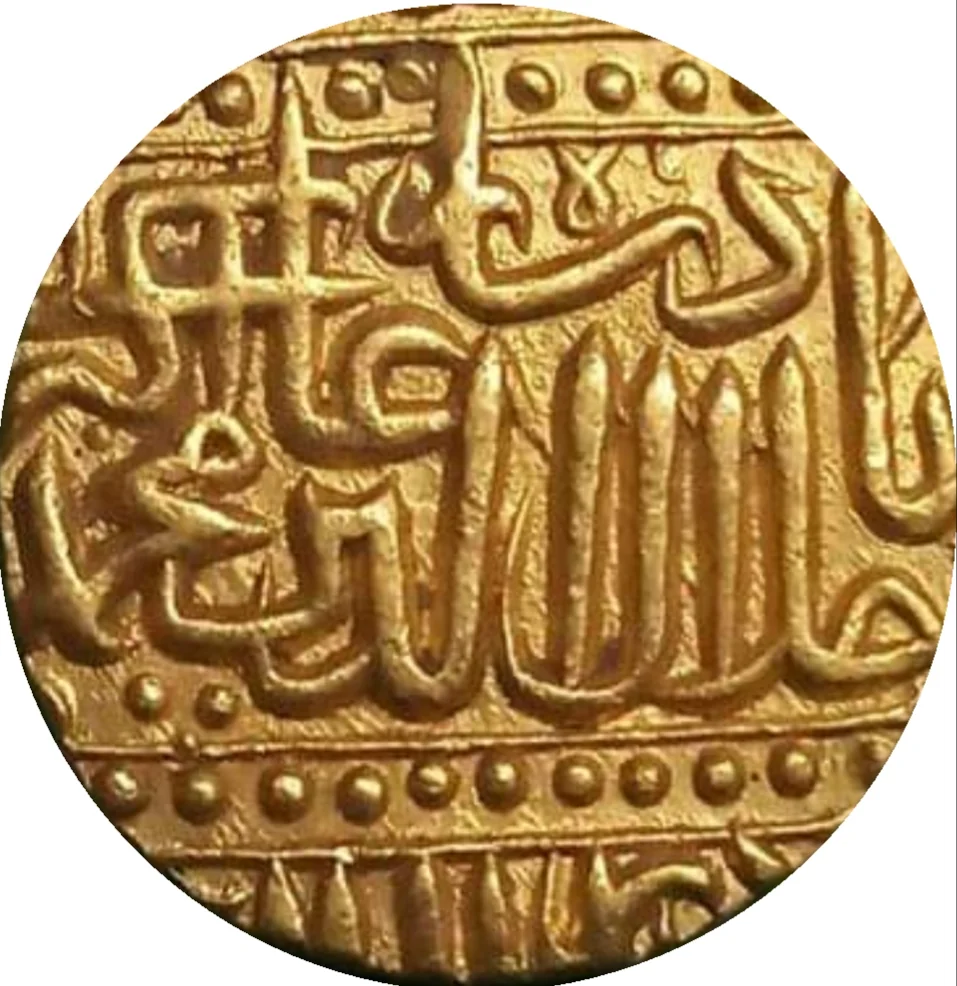
1 Mohur – Mughal Empire
India
Context
Years: 1575–1579
Country: India 
Issuer: Mughal Empire
Ruler: Akbar
Currency:
(1540—1842)
Demonetized: Yes
Material
References
KM: #Click to copy to clipboard108.2
Numista: #30169
Value
Bullion value: $1801.42
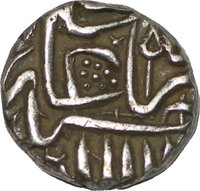
Obverse
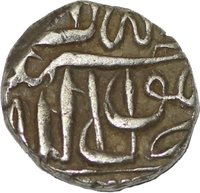
Reverse
Edge
Mintings
| Year | Mint Mark | Mintage | Quality | Collection |
|---|---|---|---|---|
| 1575 | — | — | ||
| 1576 | — | — | ||
| 1577 | — | — | ||
| 1578 | — | — | ||
| 1579 | — | — | ||
| 1579 | — | — |
Historical background
By 1575, the Mughal Empire under Emperor Akbar was in the midst of consolidating its vast territories and establishing a centralized administrative system. The currency situation reflected this process of imperial integration. The monetary system was a complex mosaic, inheriting and circulating a variety of coins from preceding Sultanates and regional kingdoms, including the silver tanka and copper dam of the Delhi Sultanate, along with Afghan and local issues. This heterogeneity posed challenges for trade, taxation, and the projection of uniform imperial authority across the subcontinent.
Recognizing this, Akbar had already initiated significant monetary reforms, though the full standardization of his system was still underway. The foundation was a trimetallic system based on the silver rupiya (the precursor to the modern rupee), the gold mohur, and the copper dam. The rupiya, introduced by Sher Shah Suri and adopted by Akbar, was becoming the primary unit of account and trade. Crucially, Akbar’s mints, particularly the major one in Delhi, began enforcing strict weight and purity standards. His coins from this period started to feature elaborate Persian inscriptions, including the Kalima (Islamic creed) and the names of the first four caliphs, which served both as a statement of faith and a tool of political legitimacy.
However, in 1575, the system was not yet fully uniform. Older coins remained in circulation, and the empire's control over minting, while expanding, was not absolute. The copper dam, essential for smaller, everyday transactions, was minted in numerous provincial mints, leading to some variability. Furthermore, the empire's thriving international trade, especially with the Ottoman Empire and Safavid Persia, meant that foreign coins like the Spanish silver real (arriving via the Americas) and the Persian shahi also circulated in port cities, adding another layer to the monetary landscape. Thus, the currency situation of 1575 was one of transition—moving decisively from fragmented regional systems toward a centralized imperial standard that would become a hallmark of Mughal economic power.
Recognizing this, Akbar had already initiated significant monetary reforms, though the full standardization of his system was still underway. The foundation was a trimetallic system based on the silver rupiya (the precursor to the modern rupee), the gold mohur, and the copper dam. The rupiya, introduced by Sher Shah Suri and adopted by Akbar, was becoming the primary unit of account and trade. Crucially, Akbar’s mints, particularly the major one in Delhi, began enforcing strict weight and purity standards. His coins from this period started to feature elaborate Persian inscriptions, including the Kalima (Islamic creed) and the names of the first four caliphs, which served both as a statement of faith and a tool of political legitimacy.
However, in 1575, the system was not yet fully uniform. Older coins remained in circulation, and the empire's control over minting, while expanding, was not absolute. The copper dam, essential for smaller, everyday transactions, was minted in numerous provincial mints, leading to some variability. Furthermore, the empire's thriving international trade, especially with the Ottoman Empire and Safavid Persia, meant that foreign coins like the Spanish silver real (arriving via the Americas) and the Persian shahi also circulated in port cities, adding another layer to the monetary landscape. Thus, the currency situation of 1575 was one of transition—moving decisively from fragmented regional systems toward a centralized imperial standard that would become a hallmark of Mughal economic power.
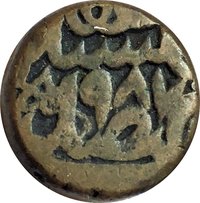
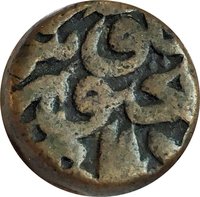
✨ Legendary