

4 Heller – Austrian Empire
Austria
Context
Years: 1601–1606
Country: Austria 
Issuer: Austrian Empire
Ruler: Rudolph II
Currency:
(1520—1754)
Demonetized: Yes
References
KM: #Click to copy to clipboard10
Numista: #116958
Obverse
Description:
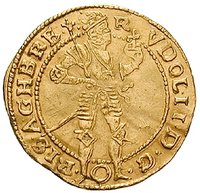
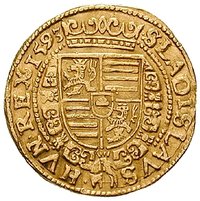
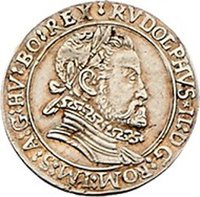
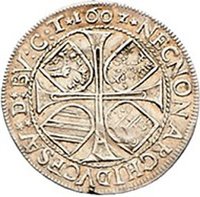
Legend-encircled arms
Reverse
Description:
Eagle within a circle.
Edge
Mints
| Name | Mark |
|---|---|
| Hall | — |
Mintings
| Year | Mint Mark | Mintage | Quality | Collection |
|---|---|---|---|---|
| 1601 | — | — | ||
| 1603 | — | — | ||
| 1604 | — | — | ||
| 1605 | — | — | ||
| 1606 | — | — |
Historical background
In 1601, the currency situation within the Habsburg-ruled Austrian Empire was complex and strained, caught between the legacy of medieval coinage systems and the pressures of early modern state finance. The empire did not have a unified currency; instead, a multitude of silver and gold coins minted by various territorial authorities (such as the Reichsthaler, Guldengroschen, and Kreuzer) circulated alongside foreign coins. The official standard was based on the silver Reichsthaler, but its value in relation to the smaller denominations used in daily life (like Kreuzer and Pfennige) was unstable and subject to frequent manipulation.
This instability was exacerbated by the Long Turkish War (1593-1606), which placed an enormous financial burden on the Habsburg treasury. To fund the military campaign, the authorities, particularly under Emperor Rudolf II, repeatedly engaged in Kipper- und Wipperzeit practices—clipping coins and debasing the silver content of smaller denominations while hoarding full-weight specie. This led to severe inflation, a loss of public trust in the currency, and economic hardship, as prices for basic goods soared while wages lagged behind.
Consequently, 1601 fell within a period of monetary crisis. Efforts to regulate the currency, such as imperial ordinances, proved largely ineffective against the decentralized minting rights and the urgent need for war funding. The situation created a two-tier system: stable large silver coins for state and international transactions, and a rapidly depreciating small change used by the common populace. This monetary disorder reflected the broader challenges of governing a fragmented empire and would contribute to ongoing fiscal weaknesses throughout the 17th century.
This instability was exacerbated by the Long Turkish War (1593-1606), which placed an enormous financial burden on the Habsburg treasury. To fund the military campaign, the authorities, particularly under Emperor Rudolf II, repeatedly engaged in Kipper- und Wipperzeit practices—clipping coins and debasing the silver content of smaller denominations while hoarding full-weight specie. This led to severe inflation, a loss of public trust in the currency, and economic hardship, as prices for basic goods soared while wages lagged behind.
Consequently, 1601 fell within a period of monetary crisis. Efforts to regulate the currency, such as imperial ordinances, proved largely ineffective against the decentralized minting rights and the urgent need for war funding. The situation created a two-tier system: stable large silver coins for state and international transactions, and a rapidly depreciating small change used by the common populace. This monetary disorder reflected the broader challenges of governing a fragmented empire and would contribute to ongoing fiscal weaknesses throughout the 17th century.
✨ Legendary