

1 Mark – Sweden
Sweden
Context

Material
References
KM: #Click to copy to clipboard61
Numista: #107524
Value
Bullion value: $11.58
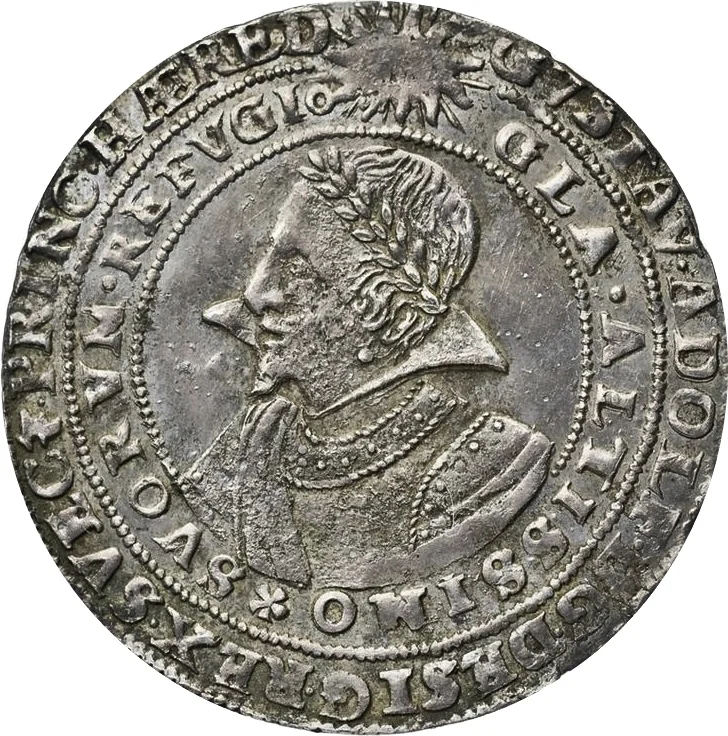
Obverse
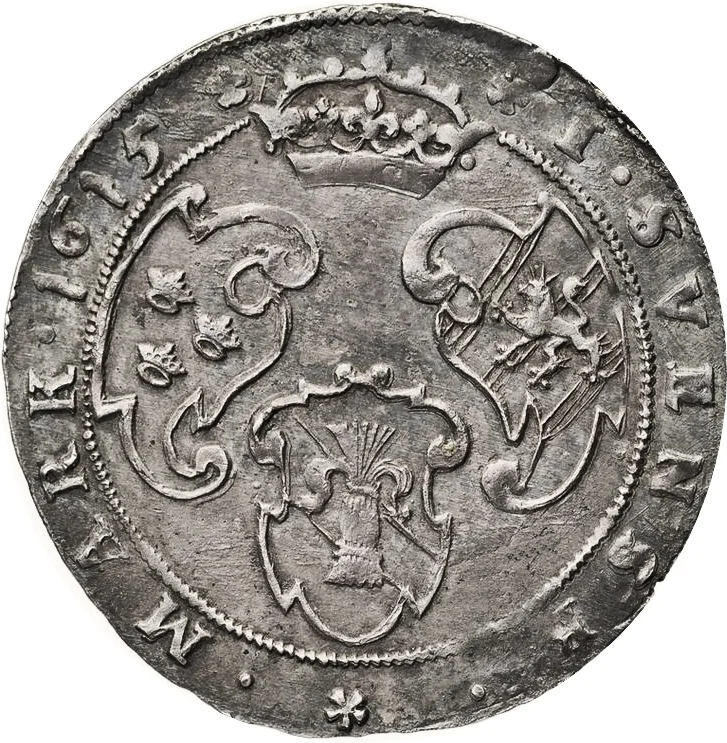
Reverse
Description:
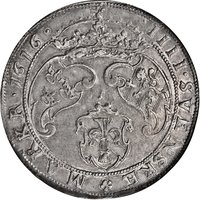
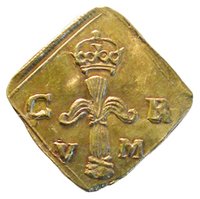
Crown above three shields in a triangular frame: the top two (Sweden's Three Crowns and the Folkungs Lion) bend inward, above a shield with the Vasa Arms. This central motif is encircled by beads, with the value and date around the outside.
Inscription:
* I · SVENSKA · * · MARK · 1615 *
Script: Latin
Edge
Mintings
| Year | Mint Mark | Mintage | Quality | Collection |
|---|---|---|---|---|
| 1613 | — | — | ||
| 1614 | — | — | ||
| 1615 | — | — | ||
| 1616 | — | — | ||
| 1617 | — | — |
Historical background
In 1613, Sweden was grappling with a severe monetary crisis rooted in the preceding decades of war. To finance its conflicts, particularly against Poland and Russia, the state had repeatedly debased the coinage, notably the silver öre and copper klipping coins. This meant reducing the precious metal content, flooding the market with coins of low intrinsic value and causing rampant inflation. The public's trust in the currency collapsed, leading to economic instability, hoarding of older, purer coins, and widespread hardship as prices soared.
Recognizing the crisis, the newly crowned King Gustavus Adolphus and his chancellor, Axel Oxenstierna, initiated a major monetary reform in 1613. The cornerstone was the introduction of a new, standardized silver coinage based on the riksdaler as the primary unit. The goal was to restore confidence by guaranteeing the silver content and weight of the new coins, thereby stabilizing their value. This reform was a critical early step in establishing a modern, state-controlled fiscal system.
The situation was further complicated by Sweden's unique position as a major copper producer. While the 1613 reform focused on silver, the groundwork was being laid for a later, distinctive experiment: the world's first successful copper standard. Within a few years, large, cumbersome copper plate money (plåtmynt) would be introduced, effectively making copper a official monetary metal alongside silver. Thus, the currency situation in 1613 represents a pivotal moment of post-war recovery and the foundation for Sweden's unconventional but influential 17th-century monetary policy.
Recognizing the crisis, the newly crowned King Gustavus Adolphus and his chancellor, Axel Oxenstierna, initiated a major monetary reform in 1613. The cornerstone was the introduction of a new, standardized silver coinage based on the riksdaler as the primary unit. The goal was to restore confidence by guaranteeing the silver content and weight of the new coins, thereby stabilizing their value. This reform was a critical early step in establishing a modern, state-controlled fiscal system.
The situation was further complicated by Sweden's unique position as a major copper producer. While the 1613 reform focused on silver, the groundwork was being laid for a later, distinctive experiment: the world's first successful copper standard. Within a few years, large, cumbersome copper plate money (plåtmynt) would be introduced, effectively making copper a official monetary metal alongside silver. Thus, the currency situation in 1613 represents a pivotal moment of post-war recovery and the foundation for Sweden's unconventional but influential 17th-century monetary policy.
✨ Legendary