

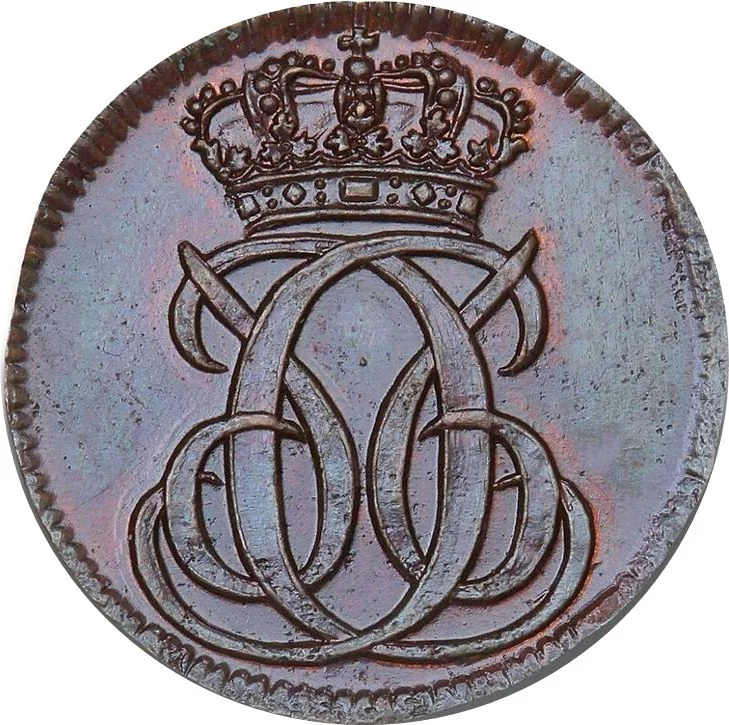
½ skilling – Denmark
Add to wishlist
Denmark
Context
Year: 1745
Issuer: Denmark
Ruler: Christian VI
Currency:
(1625—1813)
Demonetization: 1 May 1775
Total mintage: 192,000
Material
References
KM: #
Numista: #192930
Obverse
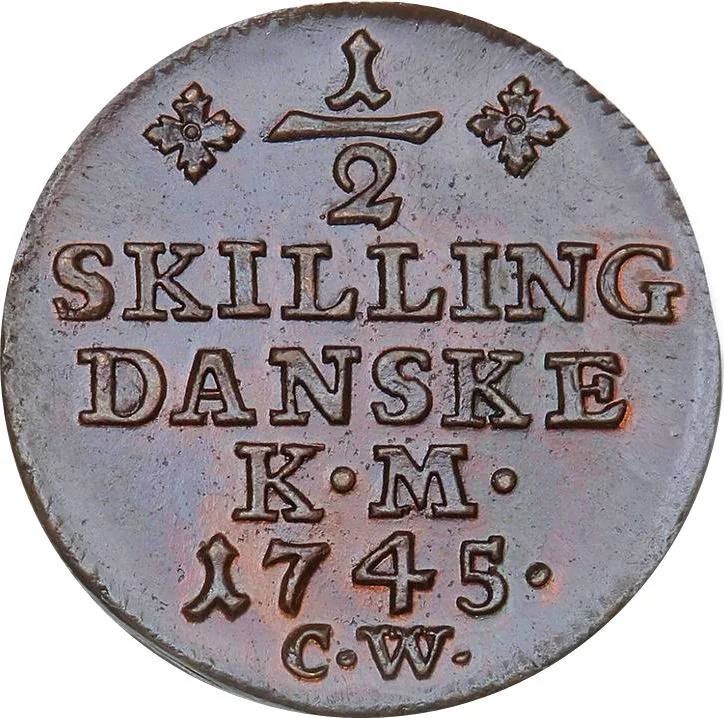
Reverse
Description:
Value and date stacked.
Mintmark beneath.
Mintmark beneath.
Inscription:
✣ 1/2 ✣
SKILLING
DANSKE
K · M ·
1745 ·
C·W·
SKILLING
DANSKE
K · M ·
1745 ·
C·W·
Script: Latin
Edge
Plain
Mints
| Name | Mark |
|---|---|
| Royal Danish Mint | CW |
Mintings
| Year | Mint Mark | Mintage | Quality | Collection |
|---|---|---|---|---|
| 1745 | CW | 192,000 |
Historical background
In 1745, Denmark operated under a silver-based monetary system, yet the kingdom was grappling with significant currency instability. The root cause was a prolonged period of debasement, where successive governments had reduced the silver content in coins to fund state expenses, particularly the costly wars of the early 18th century. This created a chaotic situation where older, purer coins were hoarded or melted down for their intrinsic metal value, while the newer, inferior coins flooded circulation, leading to a loss of public trust and confusing exchange rates between different coin types.
The situation was further complicated by the use of multiple currency units. The principal units were the rigsdaler (rix-dollar), divided into 96 skilling, but the actual physical coins in circulation included not only Danish issues but also a plethora of foreign coins, especially German and Dutch, which circulated at negotiated values. This fragmented system hindered trade and economic calculation. Furthermore, the state often issued expedient "credit paper" or kreditivesedler to cover debts, an early form of fiat money that was not always fully backed by silver, adding another layer of fragility.
Recognizing the economic damage, the Danish monarchy under King Christian VI (and subsequently Frederick V) was actively seeking reform. The year 1745 fell within a period of investigation and planning that would lead to a major monetary reform in 1747. This reform aimed to standardize the coinage, introduce a new species rigsdaler with fixed silver content, and regulate the relationship between silver coins and the paper credit notes. Therefore, the currency situation in 1745 was one of entrenched disorder, but at a turning point, with the authorities preparing a systematic, if not immediately fully successful, effort to restore stability to the monetary system.
The situation was further complicated by the use of multiple currency units. The principal units were the rigsdaler (rix-dollar), divided into 96 skilling, but the actual physical coins in circulation included not only Danish issues but also a plethora of foreign coins, especially German and Dutch, which circulated at negotiated values. This fragmented system hindered trade and economic calculation. Furthermore, the state often issued expedient "credit paper" or kreditivesedler to cover debts, an early form of fiat money that was not always fully backed by silver, adding another layer of fragility.
Recognizing the economic damage, the Danish monarchy under King Christian VI (and subsequently Frederick V) was actively seeking reform. The year 1745 fell within a period of investigation and planning that would lead to a major monetary reform in 1747. This reform aimed to standardize the coinage, introduce a new species rigsdaler with fixed silver content, and regulate the relationship between silver coins and the paper credit notes. Therefore, the currency situation in 1745 was one of entrenched disorder, but at a turning point, with the authorities preparing a systematic, if not immediately fully successful, effort to restore stability to the monetary system.
💎 Very Rare