

1 ducat – Denmark
Add to wishlist
Denmark
Context
Material
References
KM: #
Numista: #322523
Value
Bullion value: $520.43
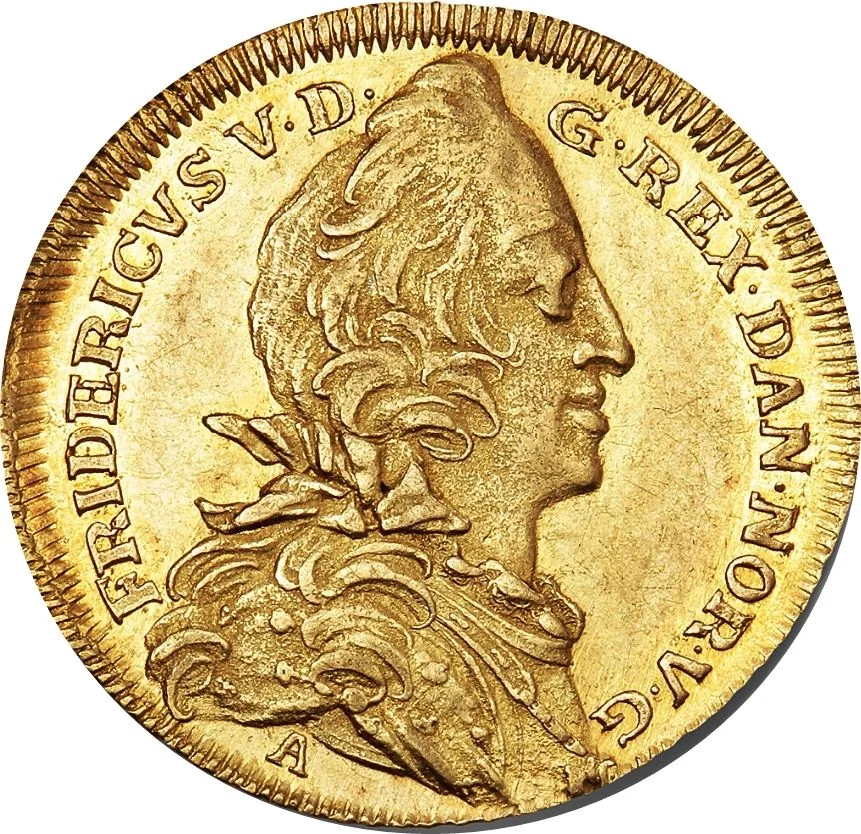
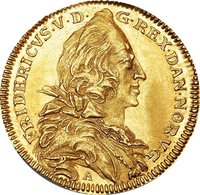
Obverse
Description:
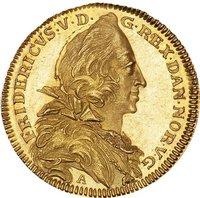
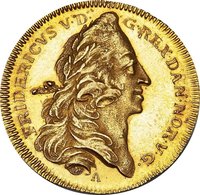
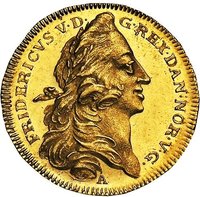
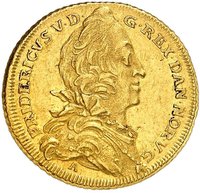
King Frederik V in profile, armored bust. Engraver's initial below neck.
Inscription:
FRIDERICVS • V • D • | G • REX • DAN • NOR • V • G •
A
A
Script: Latin
Engraver: Magnus Gustav Arbien
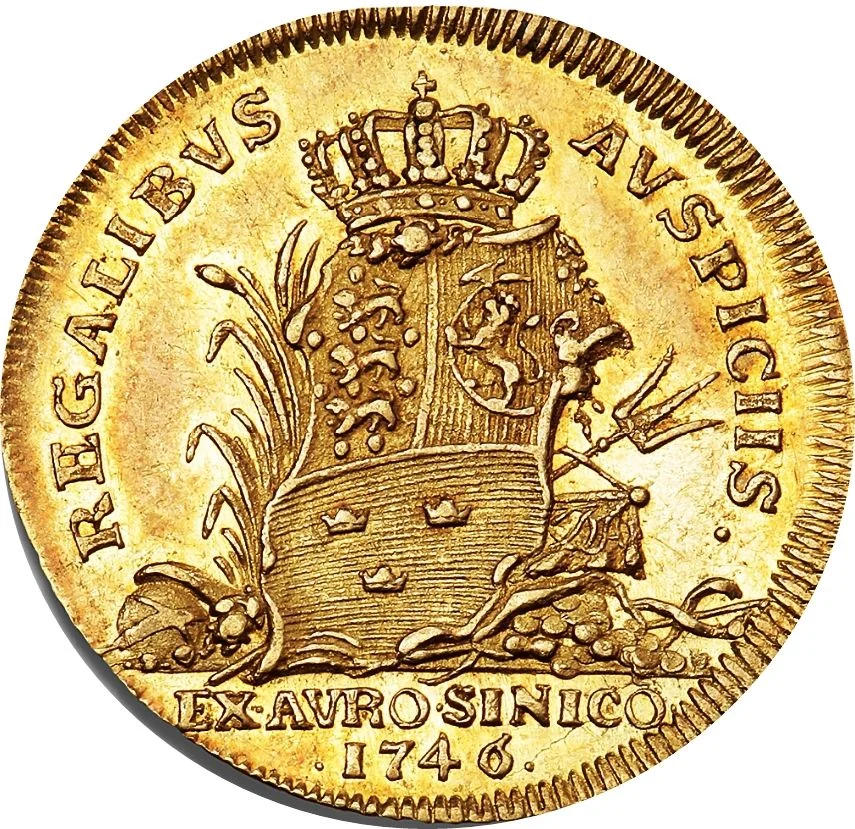
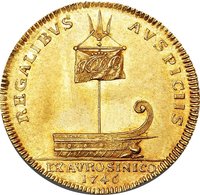
Reverse
Description:
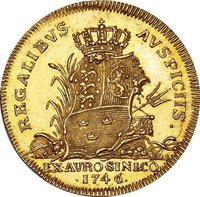
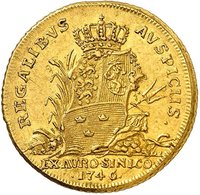
A crowned shield bearing the arms of Denmark, Norway, and Sweden tilts right, flanked by a branch and assorted arms and armor.
Inscription:
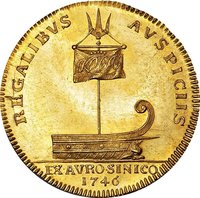
REGALIBVS AVSPICIIS
________________
EX AURO SINICO
.1746.
________________
EX AURO SINICO
.1746.
Script: Latin
Edge
Categories
| Symbols> Coat of Arms |
Mints
| Name | Mark |
|---|---|
| Royal Danish Mint | — |
Mintings
| Year | Mint Mark | Mintage | Quality | Collection |
|---|---|---|---|---|
| 1746 | — | — |
Historical background
In 1746, Denmark operated under a silver standard, with the rigsdaler specie as the primary unit of account. However, the monetary system was complex and strained. The state treasury, heavily indebted from wars and expansive projects earlier in the century, had historically resorted to debasing the circulating coinage—reducing its silver content—to generate short-term revenue. This practice had led to a proliferation of different coins, both domestic and foreign, with varying intrinsic values, creating confusion and undermining public trust in the currency.
The situation was further complicated by the existence of two parallel systems: the rigsdaler courant, used for everyday transactions, and the rigsdaler specie, used for international trade and large contracts. The rigsdaler courant was a debased currency not fully backed by silver, and its value against the specie fluctuated. By 1746, the exchange rate had become unfavourable, causing economic friction. Merchants and the public had to navigate this dual system, and the gap between the two values effectively acted as a hidden tax, harming commerce and creating instability.
Recognizing the need for reform, the Danish government, under King Christian VI and later his successor Frederick V, was in a period of fiscal consolidation. The year 1746 falls within a broader preparatory phase where the state aimed to stabilize its finances to eventually restore the currency's integrity. While a major monetary reform was still a few years away (culminating in the establishment of the Rigsbank in 1736 and more substantial reforms later), the economic pressures of the mid-1740s underscored the urgent need for a uniform and reliable silver-based currency to foster economic growth and restore state credit.
The situation was further complicated by the existence of two parallel systems: the rigsdaler courant, used for everyday transactions, and the rigsdaler specie, used for international trade and large contracts. The rigsdaler courant was a debased currency not fully backed by silver, and its value against the specie fluctuated. By 1746, the exchange rate had become unfavourable, causing economic friction. Merchants and the public had to navigate this dual system, and the gap between the two values effectively acted as a hidden tax, harming commerce and creating instability.
Recognizing the need for reform, the Danish government, under King Christian VI and later his successor Frederick V, was in a period of fiscal consolidation. The year 1746 falls within a broader preparatory phase where the state aimed to stabilize its finances to eventually restore the currency's integrity. While a major monetary reform was still a few years away (culminating in the establishment of the Rigsbank in 1736 and more substantial reforms later), the economic pressures of the mid-1740s underscored the urgent need for a uniform and reliable silver-based currency to foster economic growth and restore state credit.
Series: 1746 Denmark circulation coins
✨ Legendary