

3 krone – Denmark
Add to wishlist
Denmark
Context
Year: 1726
Issuer: Denmark
Ruler: Frederick IV
Currency:
(1625—1813)
Subdivision: 3 krone = 2 Speciedaler
Demonetized: Yes
Total mintage: 86
Material
References
KM: #
Numista: #190127
Value
Bullion value: $110.20
Obverse
Description:
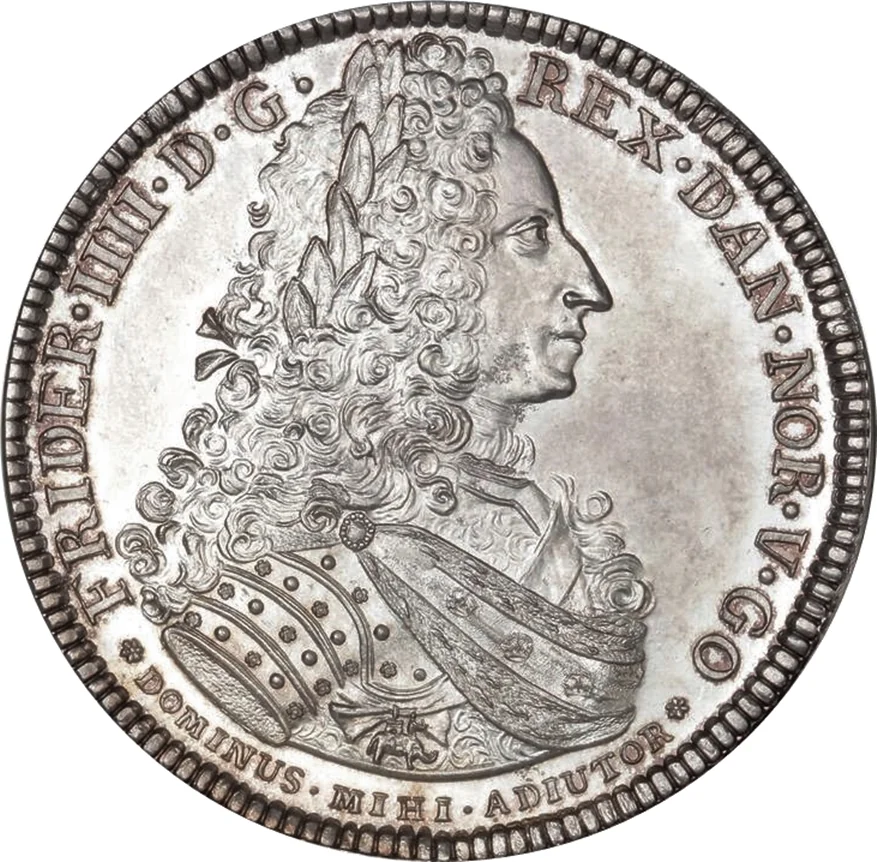
Armored bust of Frederick IV with his motto below.
Inscription:
FRIDER • IIII • D • G • REX • DAN • NOR • V • GO •
* DOMINUS • MIHI • ADIUTOR *
* DOMINUS • MIHI • ADIUTOR *
Script: Latin
Reverse
Description:
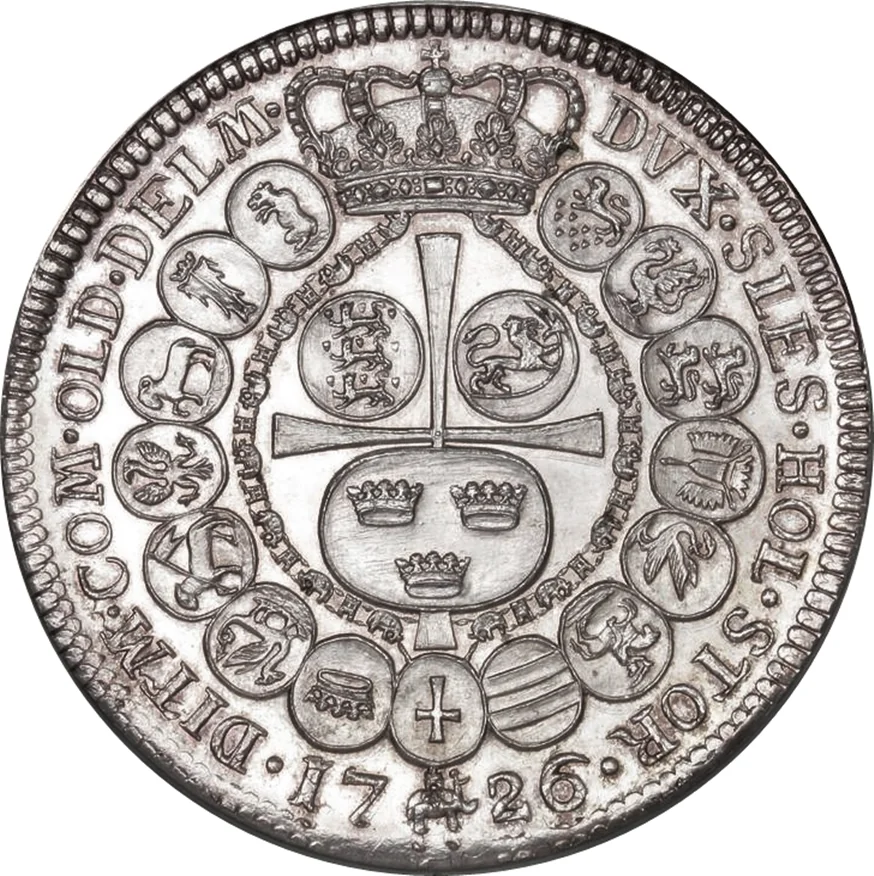
A crowned circle of three crossed arms (Denmark, Sweden, Norway) within an Order collar, surrounded by 15 shields. The date is divided by the Order of the Elephant's pendant.
Inscription:
DVX · SLES · HOL · STOR · DITM · COM · OLD · DELM
17 26
17 26
Script: Latin
Edge
Diagonal coarse milling
Mints
| Name | Mark |
|---|---|
| Copenhagen | — |
Mintings
| Year | Mint Mark | Mintage | Quality | Collection |
|---|---|---|---|---|
| 1726 | — | 86 |
Historical background
In 1726, Denmark operated under a silver standard, with the rigsdaler specie as the primary unit of account. However, the monetary system was strained and complex. A chronic shortage of physical silver coinage, particularly small change for daily transactions, plagued the economy. This scarcity was exacerbated by the widespread circulation of underweight and clipped coins, alongside a variety of foreign currencies, leading to confusion and facilitating fraud. The state's finances were still recovering from the immense costs of the Great Northern War (1700-1721), which had placed a heavy burden on the treasury and disrupted trade.
To address these issues, King Frederik IV and his government initiated a significant monetary reform in 1726. The cornerstone of this reform was the introduction of a new currency, the kurant rigsdaler, which was not a physical silver coin but a unit of account backed by government credit. The state issued paper notes, known as kreditivesedler, which circulated alongside the limited silver coins. This marked a pivotal, albeit cautious, step toward a fiduciary system where value was based on trust in the royal authority rather than solely on precious metal content.
The reform of 1726 was only partially successful. While it aimed to stabilize the currency and simplify transactions, the new paper notes quickly began to depreciate against the older silver rigsdaler specie. Public trust in the paper currency was limited, and the underlying economic weaknesses persisted. Consequently, Denmark entered a period of a dual-currency system with fluctuating exchange rates between the silver-based and paper-based rigsdaler, a situation that would create ongoing economic challenges for decades to come.
To address these issues, King Frederik IV and his government initiated a significant monetary reform in 1726. The cornerstone of this reform was the introduction of a new currency, the kurant rigsdaler, which was not a physical silver coin but a unit of account backed by government credit. The state issued paper notes, known as kreditivesedler, which circulated alongside the limited silver coins. This marked a pivotal, albeit cautious, step toward a fiduciary system where value was based on trust in the royal authority rather than solely on precious metal content.
The reform of 1726 was only partially successful. While it aimed to stabilize the currency and simplify transactions, the new paper notes quickly began to depreciate against the older silver rigsdaler specie. Public trust in the paper currency was limited, and the underlying economic weaknesses persisted. Consequently, Denmark entered a period of a dual-currency system with fluctuating exchange rates between the silver-based and paper-based rigsdaler, a situation that would create ongoing economic challenges for decades to come.
✨ Legendary