

1 krone – Denmark
Add to wishlist
Denmark
Context
Material
References
KM: #
Numista: #113309
Value
Bullion value: $37.05
Obverse
Description:
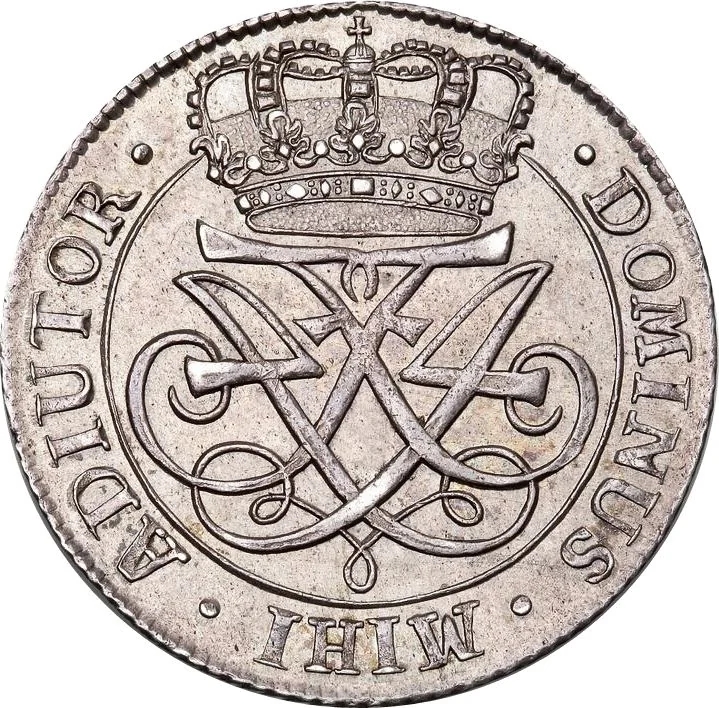
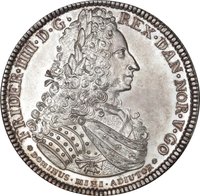
King's monogram within a circle, motto encircling it near the rim.
Inscription:
4FF4
• DOMINUS • MIHI • ADIUTOR •
• DOMINUS • MIHI • ADIUTOR •
Script: Latin
Reverse
Description:
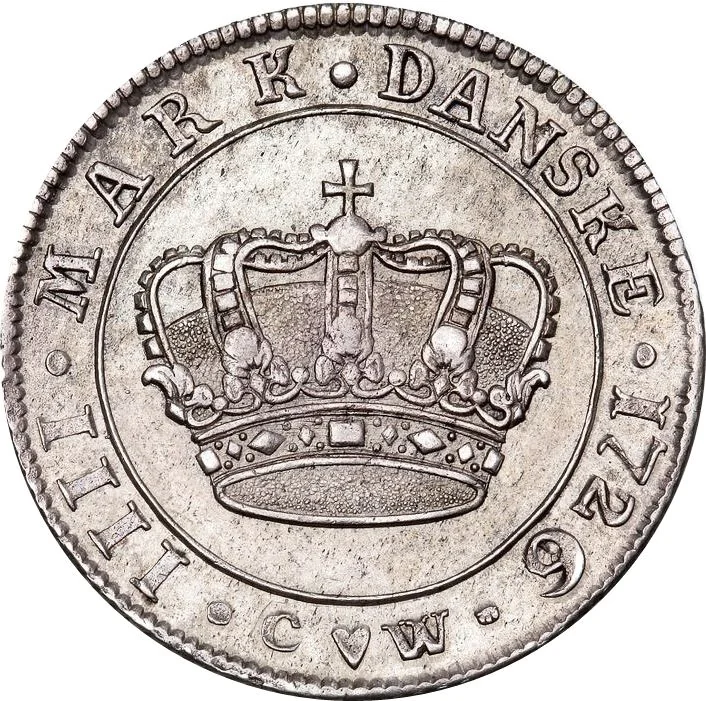
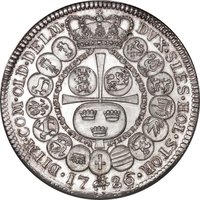
Crown in circle, value in letters with date. Mintmark at bottom, split by a small heart.
Inscription:
• IIII • MARK • DANSKE • 1726 •
C ♥ W
C ♥ W
Script: Latin
Edge
Diagonal coarse milling
Mints
| Name | Mark |
|---|---|
| Copenhagen | ♥ |
Mintings
| Year | Mint Mark | Mintage | Quality | Collection |
|---|---|---|---|---|
| 1724 | CW; | — | ||
| 1726 | CW; | — |
Historical background
In 1724, Denmark operated under a silver-based monetary system, yet the state was grappling with the severe and chronic consequences of a currency devaluation that had begun decades earlier. The primary unit was the rigsdaler, divided into 96 skilling, but the actual circulating coinage was a complex mix of older, full-valued coins and newer, debased issues. This crisis stemmed from the Great Nordic War (1700-1721), during which King Frederick IV had financed the conflict by drastically reducing the silver content in newly minted coins, a practice that created a chaotic "two-tier" currency system and fueled rampant inflation.
The economic fallout was profound. Good, older coins with high silver content were hoarded or exported, leaving the debased "light" coins as the common medium of exchange. This led to a loss of public trust, price instability, and difficulties in both domestic and international trade. Merchants and the public faced confusion and loss, as the real value of a coin depended not on its face value but on its minting date and metal content. The state's finances were also strained, as tax revenues collected in poor coinage had less purchasing power.
Recognizing the crisis, the royal government had already begun a cautious stabilization process. A pivotal monetary ordinance in 1723 aimed to reset the system by introducing new, full-value silver coins and setting fixed exchange rates between old and new money. Therefore, the situation in 1724 was one of fragile transition, with authorities actively attempting to restore confidence and a uniform silver standard after a long period of monetary disorder, laying essential groundwork for the more stable kurant system that would be fully established later in the 1730s.
The economic fallout was profound. Good, older coins with high silver content were hoarded or exported, leaving the debased "light" coins as the common medium of exchange. This led to a loss of public trust, price instability, and difficulties in both domestic and international trade. Merchants and the public faced confusion and loss, as the real value of a coin depended not on its face value but on its minting date and metal content. The state's finances were also strained, as tax revenues collected in poor coinage had less purchasing power.
Recognizing the crisis, the royal government had already begun a cautious stabilization process. A pivotal monetary ordinance in 1723 aimed to reset the system by introducing new, full-value silver coins and setting fixed exchange rates between old and new money. Therefore, the situation in 1724 was one of fragile transition, with authorities actively attempting to restore confidence and a uniform silver standard after a long period of monetary disorder, laying essential groundwork for the more stable kurant system that would be fully established later in the 1730s.
✨ Legendary