

4 Skilling – Denmark
Denmark
Context

Material
References
KM: #Click to copy to clipboard526
Numista: #43457
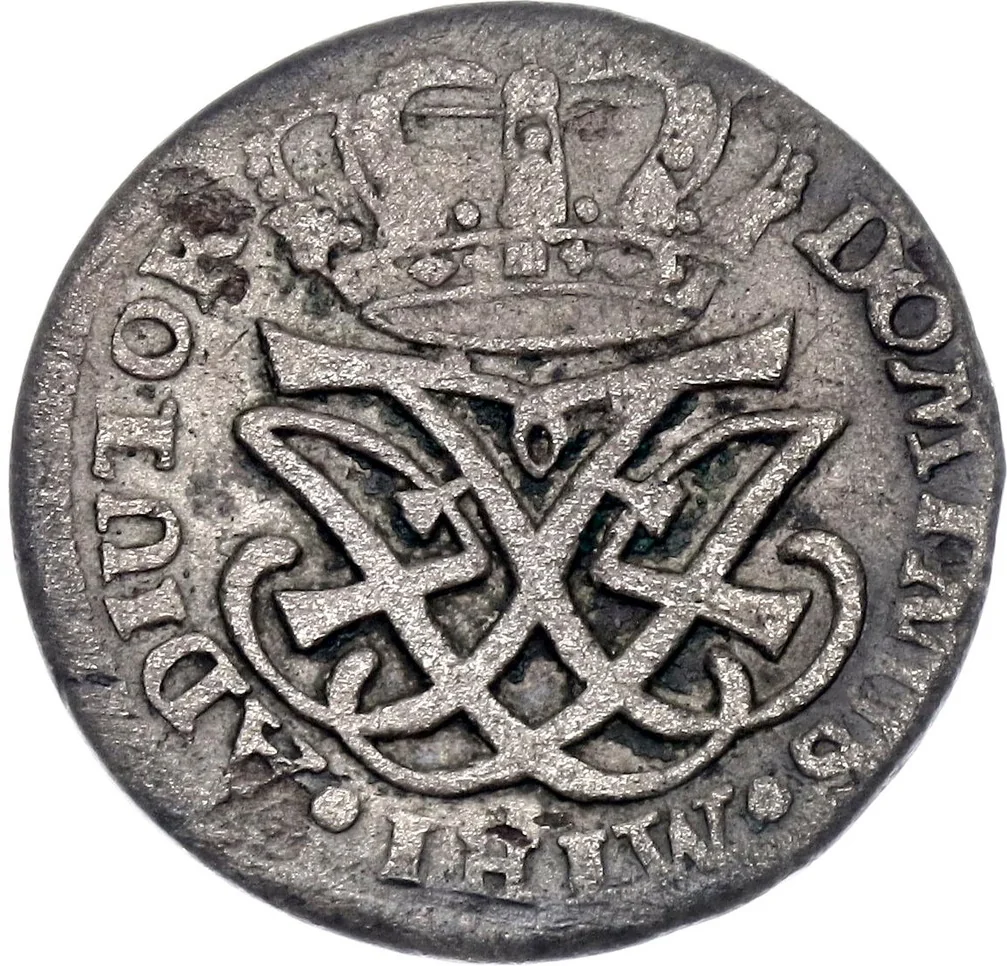
Obverse
Description:
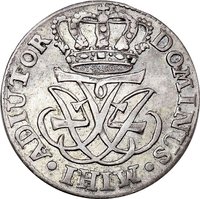
Crowned double monogram with motto.
Inscription:
DOMINVS · MIHI · ADIVTOR ·
Script: Latin
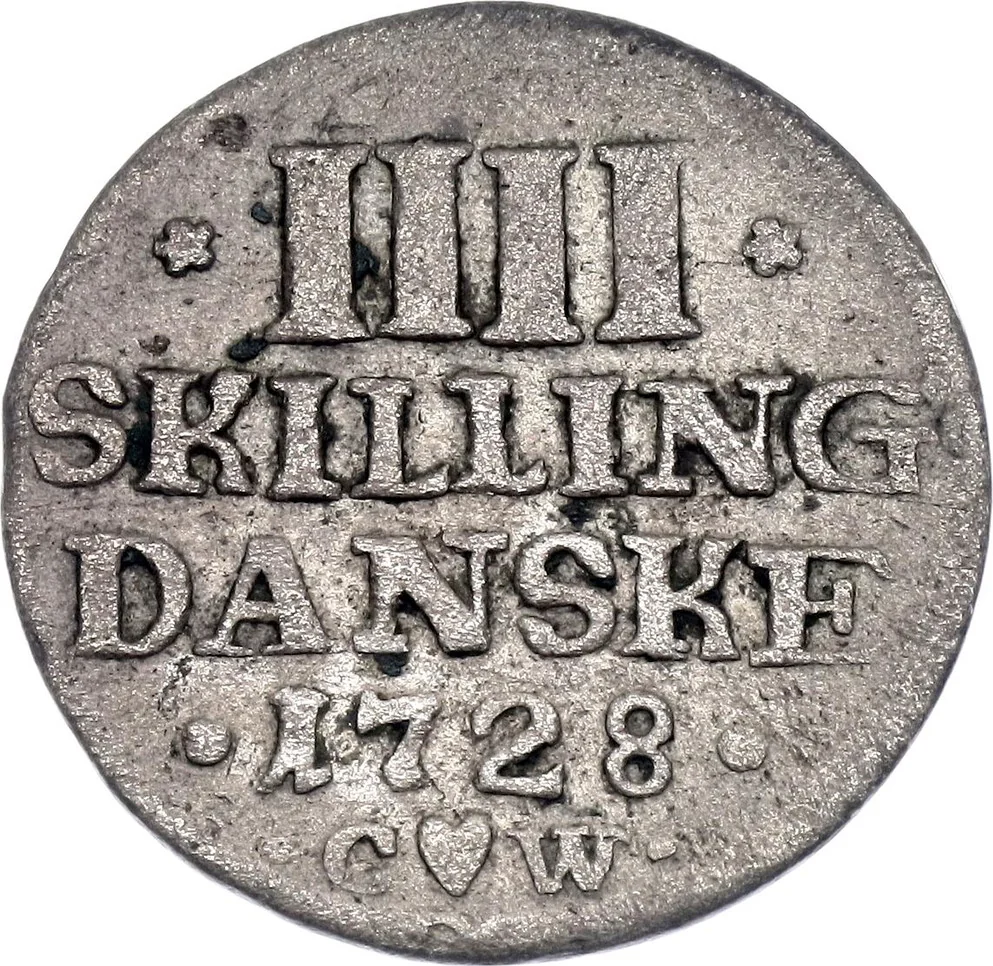
Reverse
Description:
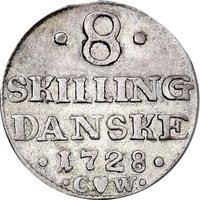
Value and date in letters and Roman numerals on four lines. Below, the mintmark with a central heart.
Inscription:
*IIII*
SKILLING
DANSKE
·1729·
·C ♥ W·
SKILLING
DANSKE
·1729·
·C ♥ W·
Script: Latin
Edge
Mints
| Name | Mark |
|---|---|
| Copenhagen | ♥ |
Mintings
| Year | Mint Mark | Mintage | Quality | Collection |
|---|---|---|---|---|
| 1727 | — | — | ||
| 1728 | — | — | ||
| 1729 | — | — | ||
| 1730 | — | — |
Historical background
In 1727, Denmark operated under a silver-based monetary system, yet the state of its currency was one of significant instability and complexity. The primary unit was the rigsdaler, subdivided into marks and skilling, but the circulating medium was a confusing mix of older, physically degraded coins and newer, full-weight issues. This led to a severe problem of "bad money driving out good," as described by Gresham's Law. People hoarded newer, high-silver coins for their intrinsic value or for foreign trade, while using clipped and worn older coins for daily transactions, creating a chronic shortage of reliable specie and eroding public trust in the currency.
This monetary confusion was exacerbated by the financial strains of the Great Northern War (1700-1721), which had depleted the royal treasury. To raise funds, the monarchy had repeatedly debased the coinage—reducing the silver content while maintaining the same face value—a form of hidden taxation. By 1727, the kingdom was still grappling with the inflationary aftermath and a heavy debt burden. Furthermore, the monetary system was not unified; the Duchy of Schleswig used different systems, and the state often struggled to control the circulation of foreign coins, particularly from Hamburg and the Netherlands, which were essential for commerce but further complicated the domestic picture.
Consequently, 1727 fell within a period of ongoing monetary experimentation and distress. The authorities recognized the need for reform, but comprehensive action was slow. Efforts focused on recalling old, debased coins for reminting, but these were often incomplete and met with public resistance. The situation created practical difficulties for merchants and peasants alike, distorting prices and hampering economic activity. Thus, the Danish currency landscape of 1727 was characterized less by a single crisis and more by a prolonged and challenging struggle to maintain a stable medium of exchange in the face of wartime debts, legacy debasements, and the relentless logic of commodity-based money.
This monetary confusion was exacerbated by the financial strains of the Great Northern War (1700-1721), which had depleted the royal treasury. To raise funds, the monarchy had repeatedly debased the coinage—reducing the silver content while maintaining the same face value—a form of hidden taxation. By 1727, the kingdom was still grappling with the inflationary aftermath and a heavy debt burden. Furthermore, the monetary system was not unified; the Duchy of Schleswig used different systems, and the state often struggled to control the circulation of foreign coins, particularly from Hamburg and the Netherlands, which were essential for commerce but further complicated the domestic picture.
Consequently, 1727 fell within a period of ongoing monetary experimentation and distress. The authorities recognized the need for reform, but comprehensive action was slow. Efforts focused on recalling old, debased coins for reminting, but these were often incomplete and met with public resistance. The situation created practical difficulties for merchants and peasants alike, distorting prices and hampering economic activity. Thus, the Danish currency landscape of 1727 was characterized less by a single crisis and more by a prolonged and challenging struggle to maintain a stable medium of exchange in the face of wartime debts, legacy debasements, and the relentless logic of commodity-based money.
⭐ Somewhat Rare