

1 Ducat – Hungary
Hungary

Obverse
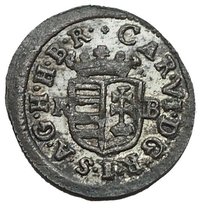
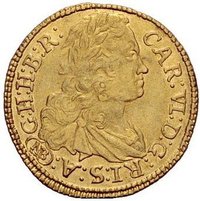
Description:
Crowned monarch facing right, holding scepter and orb. N B mintmark is high. Effigy interrupts inscription; CAROLVS begins at head. No inner pearl circle.
Inscription:
CAROL : VI : D : G : R : I : S : A : G : H : H : B : R
N B
N B
Reverse
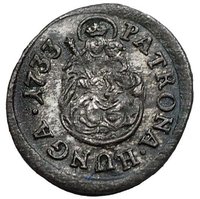
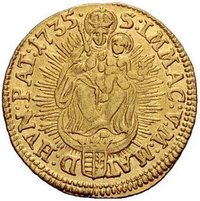
Description:
A crowned Madonna, radiant but without a mandorla, holds a scepter and the Child on a crescent moon. Below is a crowned, quartered Hungarian shield. The inscription ends with a date and the altered sequence "HVNG PAT."
Inscription:
S · IMMAC · V · M · MAT · D · HVN · PAT · 17 34 ·
Edge
Plain
Mints
| Name | Mark |
|---|---|
| Baia Mare | NB |
Mintings
| Year | Mint Mark | Mintage | Quality | Collection |
|---|---|---|---|---|
| 1734 | N | — |
Historical background
In 1734, the currency situation in the Habsburg-ruled Kingdom of Hungary was characterized by chronic instability and a complex, degraded monetary system. The primary unit was the Hungarian forint (or florin), a silver coin theoretically aligned with the Convention standard used elsewhere in the Habsburg Monarchy. However, decades of heavy spending, particularly on the wars against the Ottoman Empire and in Europe, had led the Vienna court to repeatedly debase the coinage. This meant reducing the precious metal content in coins while maintaining their face value, a practice that generated short-term revenue for the state treasury but eroded public trust and sparked inflation.
The circulation was a chaotic mix of domestic and foreign coins of varying quality. Alongside the official but often debased domestic coins, older, higher-silver thaler coins from the previous century were hoarded or used for large transactions, while a flood of underweight and counterfeit coins, particularly low-denomination kreuzers and denars, plagued everyday trade. This created a two-tier system where "good money" (full-weight silver) was reserved for savings and foreign trade, while "bad money" circulated locally, harming peasants and wage-earners who faced rising prices for goods.
This monetary confusion severely hampered economic development and caused frequent grievances within the Hungarian Diet. The estates repeatedly petitioned Vienna for a stable, uniform coinage minted within Hungary itself, seeing monetary reform as a key to economic sovereignty. While some limited reforms would be attempted later under Maria Theresa, the year 1734 fell within a prolonged period of monetary disorder, where the state's fiscal demands consistently undermined the integrity of the currency, burdening the local economy and straining political relations between Hungary and the central Habsburg administration.
The circulation was a chaotic mix of domestic and foreign coins of varying quality. Alongside the official but often debased domestic coins, older, higher-silver thaler coins from the previous century were hoarded or used for large transactions, while a flood of underweight and counterfeit coins, particularly low-denomination kreuzers and denars, plagued everyday trade. This created a two-tier system where "good money" (full-weight silver) was reserved for savings and foreign trade, while "bad money" circulated locally, harming peasants and wage-earners who faced rising prices for goods.
This monetary confusion severely hampered economic development and caused frequent grievances within the Hungarian Diet. The estates repeatedly petitioned Vienna for a stable, uniform coinage minted within Hungary itself, seeing monetary reform as a key to economic sovereignty. While some limited reforms would be attempted later under Maria Theresa, the year 1734 fell within a prolonged period of monetary disorder, where the state's fiscal demands consistently undermined the integrity of the currency, burdening the local economy and straining political relations between Hungary and the central Habsburg administration.
✨ Legendary