

6 kreuzers – Hungary
Add to wishlist
Hungary
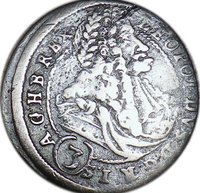
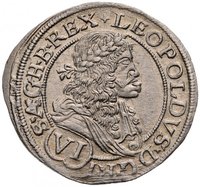
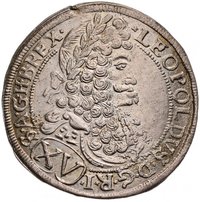
Obverse
Description:
Small laureate bust right within pearl circle. Value (6) below divides legend.
Inscription:
LEOPOLDVS · D · G · R · (6) I · S · A · GE · HV · B · REX ·
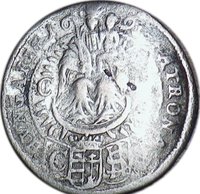
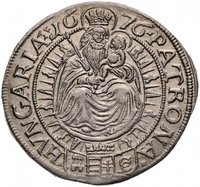
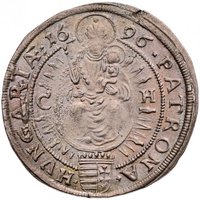
Reverse
Description:
Radiant Madonna and child flank the mint mark "K B" within a circle. A small Hungarian shield splits the lower legend, with the date at the inscription's end.
Inscription:
PATRONA . HVNGARIAE 1673 +
K B
K B
Edge
Plain
Mints
| Name | Mark |
|---|---|
| Kremnica | KB |
Mintings
| Year | Mint Mark | Mintage | Quality | Collection |
|---|---|---|---|---|
| 1675 | K | — | ||
| 1685 | K | — |
Historical background
In 1675, Hungary’s currency situation was chaotic and deeply unstable, a direct consequence of its political fragmentation and ongoing warfare. The Kingdom of Hungary was divided into three parts: the Ottoman-occupied central region, the Principality of Transylvania (a Ottoman vassal), and Royal Hungary under Habsburg rule. This tripartite division meant there was no unified monetary policy. The Habsburg-ruled territories primarily used silver thalers (Reichsthaler) and copper kreutzers minted by the imperial authorities in Vienna, Kremnica (Körmöcbánya), and Nagybánya. However, the value and quality of these coins were in severe decline.
The primary issue was rampant inflation driven by the Habsburg monarchy's desperate need to finance the ongoing wars against the Ottoman Empire, particularly the Austro-Turkish War (1663-1664) and the looming Great Turkish War (from 1683). To raise funds quickly, the Viennese court repeatedly authorized the debasement of coinage, especially the small-denomination copper kreutzer. By 1675, these coins were minted with such low intrinsic metal content that their face value far exceeded their actual worth, leading to a classic "bad money drives out good" scenario (Gresham's Law). Older, full-weight silver coins were hoarded or melted down, leaving the economy flooded with unreliable copper.
This monetary crisis crippled everyday economic life in Royal Hungary. Prices for basic goods soared, causing hardship for peasants, soldiers, and urban dwellers alike. Trade was disrupted as merchants struggled to assess real values, and distrust in the currency was widespread. The situation also fueled political resentment against Habsburg fiscal policies, adding to the existing tensions that would later erupt into the anti-Habsburg uprisings led by figures like Imre Thököly. Thus, in 1675, Hungary's currency was not merely an economic problem but a symptom of the broader instability and conflict that defined the region in the late 17th century.
The primary issue was rampant inflation driven by the Habsburg monarchy's desperate need to finance the ongoing wars against the Ottoman Empire, particularly the Austro-Turkish War (1663-1664) and the looming Great Turkish War (from 1683). To raise funds quickly, the Viennese court repeatedly authorized the debasement of coinage, especially the small-denomination copper kreutzer. By 1675, these coins were minted with such low intrinsic metal content that their face value far exceeded their actual worth, leading to a classic "bad money drives out good" scenario (Gresham's Law). Older, full-weight silver coins were hoarded or melted down, leaving the economy flooded with unreliable copper.
This monetary crisis crippled everyday economic life in Royal Hungary. Prices for basic goods soared, causing hardship for peasants, soldiers, and urban dwellers alike. Trade was disrupted as merchants struggled to assess real values, and distrust in the currency was widespread. The situation also fueled political resentment against Habsburg fiscal policies, adding to the existing tensions that would later erupt into the anti-Habsburg uprisings led by figures like Imre Thököly. Thus, in 1675, Hungary's currency was not merely an economic problem but a symptom of the broader instability and conflict that defined the region in the late 17th century.
Series: 1675 Hungary circulation coins

✨ Legendary