

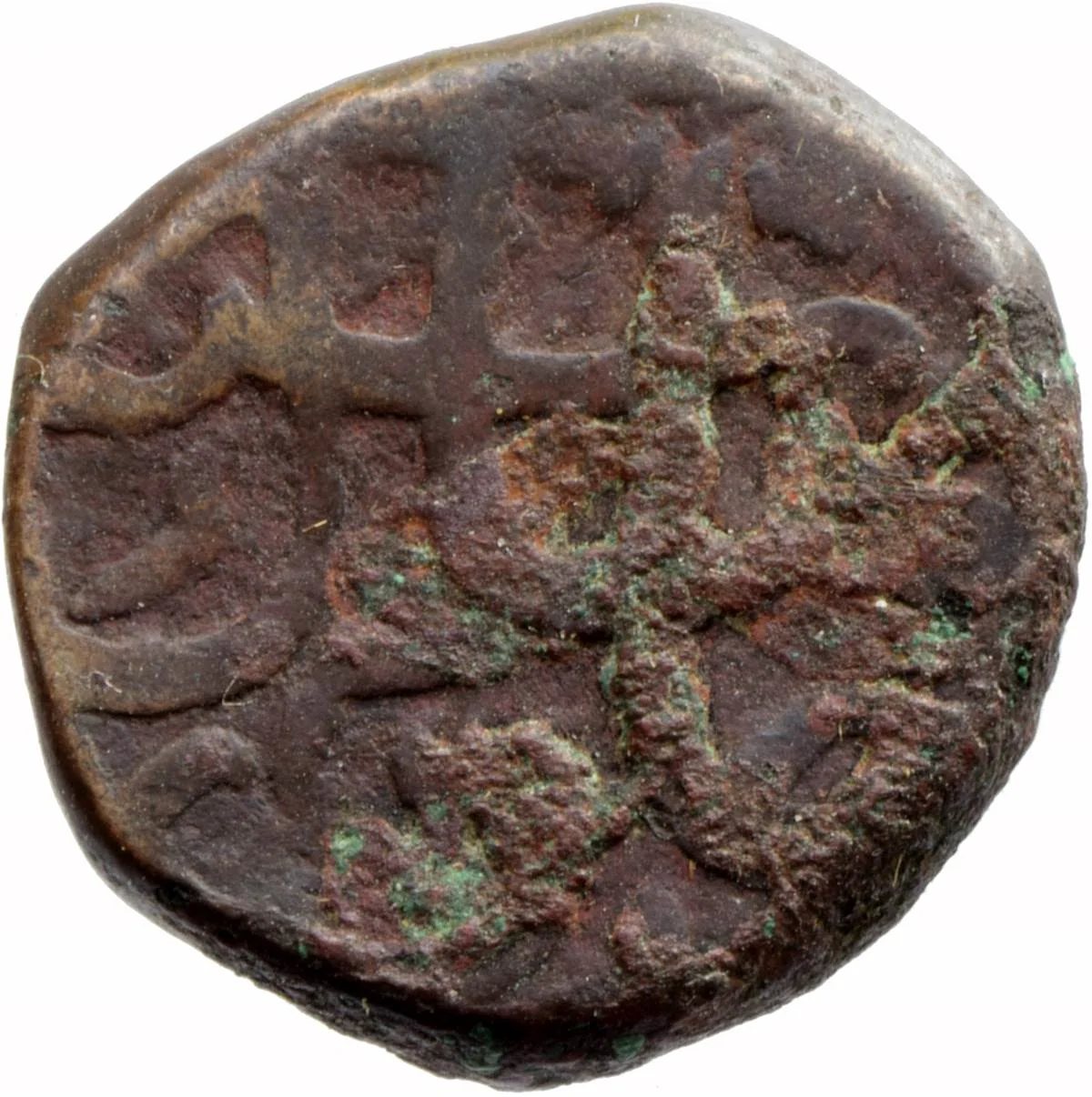
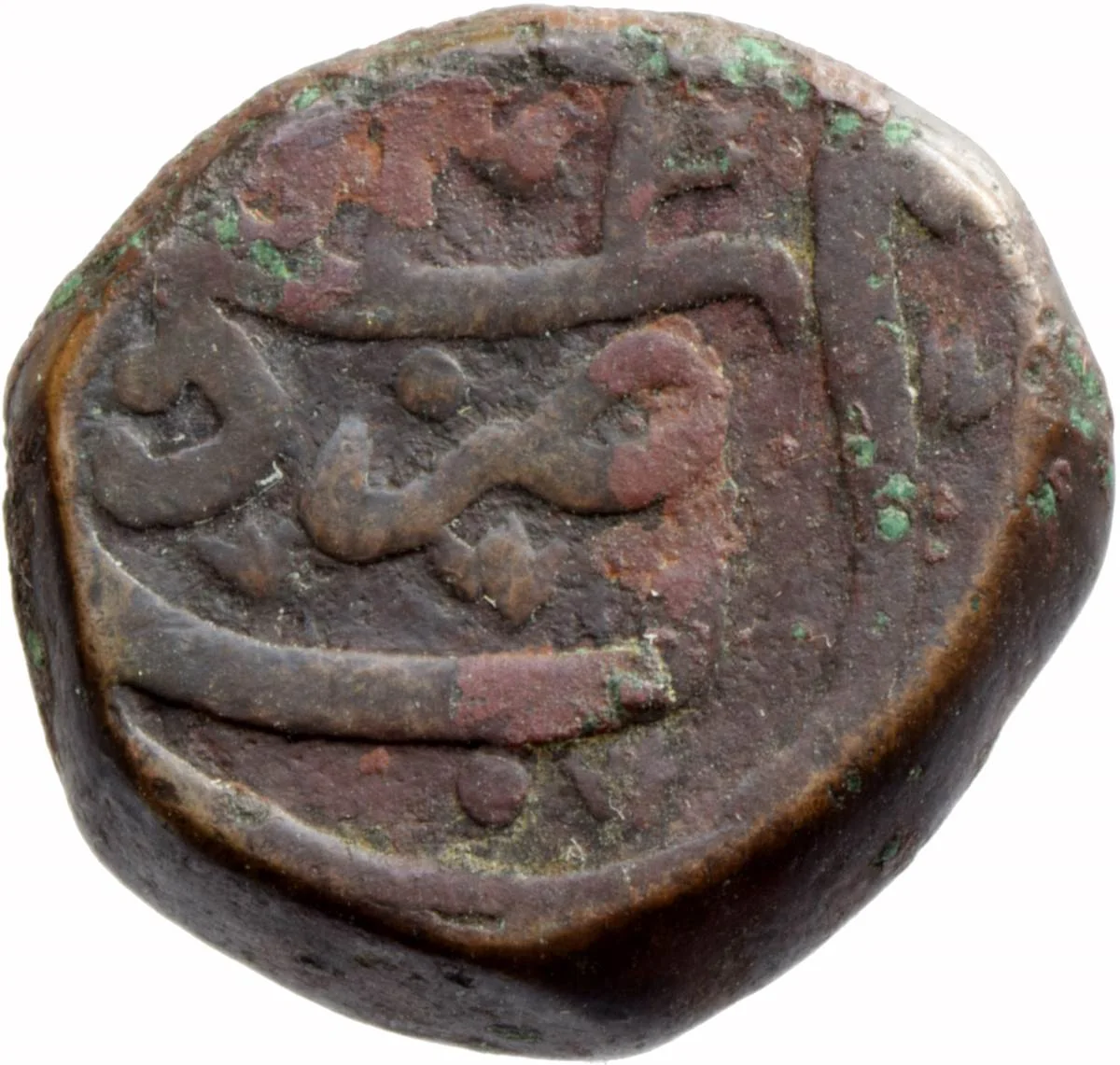
1 Paisa – Mughal Empire
India
Context
Years: 1102–1705
Country: India 
Issuer: Mughal Empire
Ruler: Aurangzeb
Currency:
(1540—1842)
Demonetized: Yes
Material
References
KM: #Click to copy to clipboard285.3
Numista: #188820
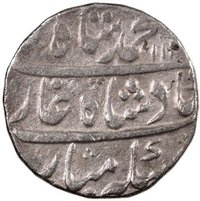
Obverse
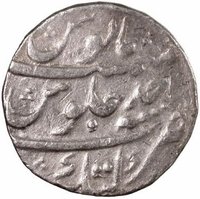
Reverse
Edge
Plain
Mints
| Name | Mark |
|---|---|
| Hyderabad | — |
Mintings
| Year | Mint Mark | Mintage | Quality | Collection |
|---|---|---|---|---|
| — | — | — | ||
| — | 32 | — | ||
| 1691 | — | — | ||
| 1692 | — | — | ||
| 1693 | — | — | ||
| 1695 | — | — | ||
| 1696 | — | — | ||
| 1697 | — | — | ||
| 1698 | — | — | ||
| 1700 | — | — | ||
| 1701 | — | — | ||
| 1702 | — | — | ||
| 1705 | — | — |
Historical background
The year 1102 AH in the Islamic calendar corresponds to approximately 1690-1691 CE during the reign of the Mughal Emperor Aurangzeb Alamgir. By this period, the Mughal Empire's currency system was highly sophisticated and standardized, built upon the reforms of Emperor Akbar a century earlier. The primary currency was the silver rupee (or rupya), which served as the stable backbone of the economy. It was supplemented by the gold mohur, used for high-value transactions and hoarding, and copper dam, the everyday coin for smaller trade. The imperial mints (dar-ul-zarb) across the subcontinent struck coins with strict uniformity in weight and purity, a key factor in the empire's economic integration and administrative control.
However, the monetary landscape of 1102 AH was under growing strain due to Aurangzeb's prolonged and costly military campaigns, particularly the draining war in the Deccan against the Marathas. While the currency itself remained trusted, the immense expenditure was depleting the imperial treasury and increasing the pressure on revenue extraction. Furthermore, the empire was beginning to feel the early effects of a global silver drain, as increasing amounts of bullion were exported to pay for imports, potentially affecting the minting of new rupees. Despite these underlying fiscal pressures, the system itself was not in crisis; the rupee's integrity was maintained, and it continued to circulate widely alongside a variety of older, yet still accepted, coins from previous reigns.
In essence, the currency situation in 1102 AH reflected the zenith of Mughal administrative systems functioning under the severe weight of imperial overextension. The coins in a merchant's hand in Delhi, Lahore, or Surat were symbols of a unified economic space and state authority. Yet, the financial demands of Aurangzeb's ambitions were slowly stretching the system's resilience, foreshadowing the monetary and fiscal challenges that would become more acute in the 18th century following his death.
However, the monetary landscape of 1102 AH was under growing strain due to Aurangzeb's prolonged and costly military campaigns, particularly the draining war in the Deccan against the Marathas. While the currency itself remained trusted, the immense expenditure was depleting the imperial treasury and increasing the pressure on revenue extraction. Furthermore, the empire was beginning to feel the early effects of a global silver drain, as increasing amounts of bullion were exported to pay for imports, potentially affecting the minting of new rupees. Despite these underlying fiscal pressures, the system itself was not in crisis; the rupee's integrity was maintained, and it continued to circulate widely alongside a variety of older, yet still accepted, coins from previous reigns.
In essence, the currency situation in 1102 AH reflected the zenith of Mughal administrative systems functioning under the severe weight of imperial overextension. The coins in a merchant's hand in Delhi, Lahore, or Surat were symbols of a unified economic space and state authority. Yet, the financial demands of Aurangzeb's ambitions were slowly stretching the system's resilience, foreshadowing the monetary and fiscal challenges that would become more acute in the 18th century following his death.
✨ Legendary