

1 Rupee – Mughal Empire
India
Context
Years: 1071–1697
Country: India 
Issuer: Mughal Empire
Ruler: Aurangzeb
Currency:
(1540—1842)
Demonetized: Yes
Material
References
KM: #Click to copy to clipboard301.2
Numista: #87804
Value
Bullion value: $33.24
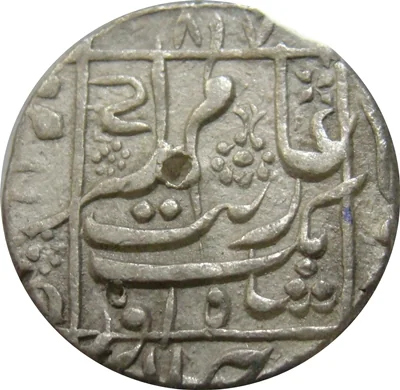
Obverse
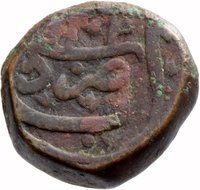
Description:
Couplet with ruler's name in brackets.
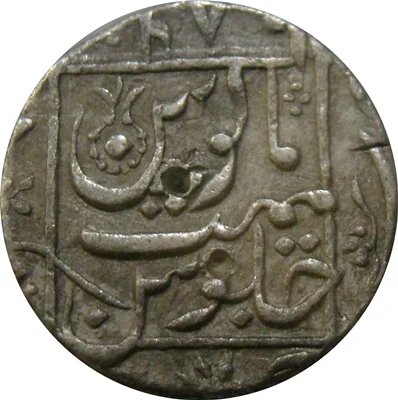
Reverse
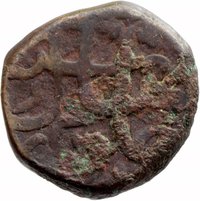
Description:
Jalus inscription: "maimamat manus"
Edge
Mintings
| Year | Mint Mark | Mintage | Quality | Collection |
|---|---|---|---|---|
| — | — | — | ||
| 1661 | — | — | ||
| 1662 | — | — | ||
| 1665 | — | — | ||
| 1667 | — | — | ||
| 1668 | — | — | ||
| 1669 | — | — | ||
| 1670 | — | — | ||
| 1671 | — | — | ||
| 1672 | — | — | ||
| 1673 | — | — | ||
| 1676 | — | — | ||
| 1682 | — | — | ||
| 1683 | — | — | ||
| 1684 | — | — | ||
| 1685 | — | — | ||
| 1686 | — | — | ||
| 1697 | — | — |
Historical background
The request for a background on the Mughal currency situation in "1071" contains a significant chronological error, as the Mughal Empire was founded in 1526. The year 1071 AH (Anno Hegirae) in the Islamic calendar corresponds to approximately 1660-1661 CE, which falls within the reign of Emperor Aurangzeb Alamgir (r. 1658-1707). This was a period of remarkable monetary stability and sophistication for the empire.
The Mughal currency system was bimetallic, based on the silver rupee and the gold mohur. The standard rupee, notably the high-purity "Rupiya" struck with the emperor's regnal year, was the primary unit for revenue assessment, trade, and large-scale transactions. Gold coins were used for hoarding, ceremonial purposes, and international trade. Copper dams served as the everyday currency for the common populace. The empire maintained a vast network of mints (dar-ul-zarb) across its territories, ensuring a uniform and reliable coinage that facilitated both internal commerce and external trade, particularly with European trading companies.
This stability was underpinned by a steady influx of American and Japanese silver bullion entering the Indian economy through trade, which Mughal mints converted into coinage. The system was centrally controlled, with strict standards for weight and purity, though provincial governors had some minting privileges. The currency's integrity was a key pillar of the empire's economic strength during this period, supporting its massive administrative and military apparatus. However, later in Aurangzeb's long reign, the costs of continuous military expansion in the Deccan would begin to strain the treasury, foreshadowing future fiscal challenges.
The Mughal currency system was bimetallic, based on the silver rupee and the gold mohur. The standard rupee, notably the high-purity "Rupiya" struck with the emperor's regnal year, was the primary unit for revenue assessment, trade, and large-scale transactions. Gold coins were used for hoarding, ceremonial purposes, and international trade. Copper dams served as the everyday currency for the common populace. The empire maintained a vast network of mints (dar-ul-zarb) across its territories, ensuring a uniform and reliable coinage that facilitated both internal commerce and external trade, particularly with European trading companies.
This stability was underpinned by a steady influx of American and Japanese silver bullion entering the Indian economy through trade, which Mughal mints converted into coinage. The system was centrally controlled, with strict standards for weight and purity, though provincial governors had some minting privileges. The currency's integrity was a key pillar of the empire's economic strength during this period, supporting its massive administrative and military apparatus. However, later in Aurangzeb's long reign, the costs of continuous military expansion in the Deccan would begin to strain the treasury, foreshadowing future fiscal challenges.
✨ Legendary