

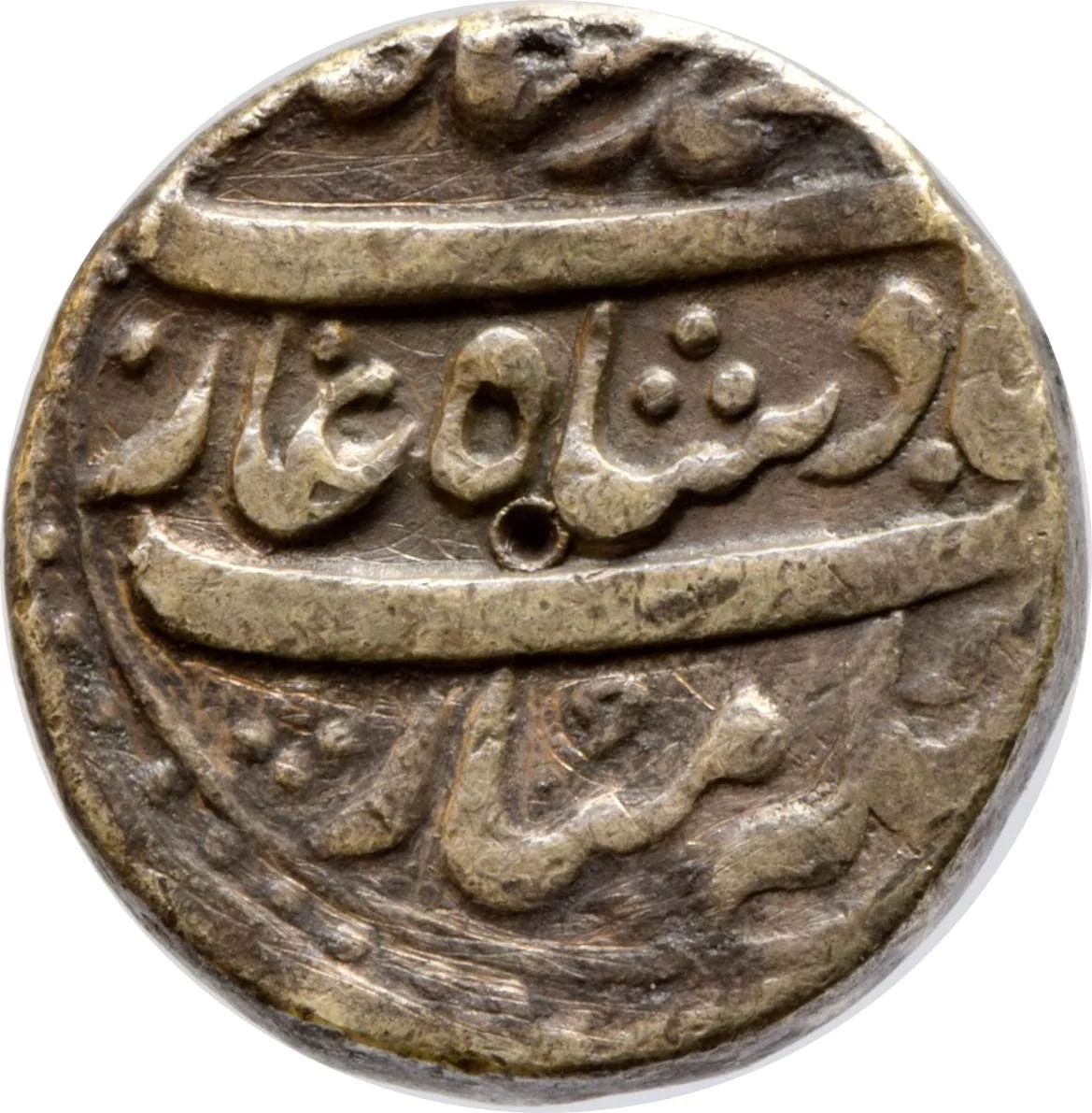
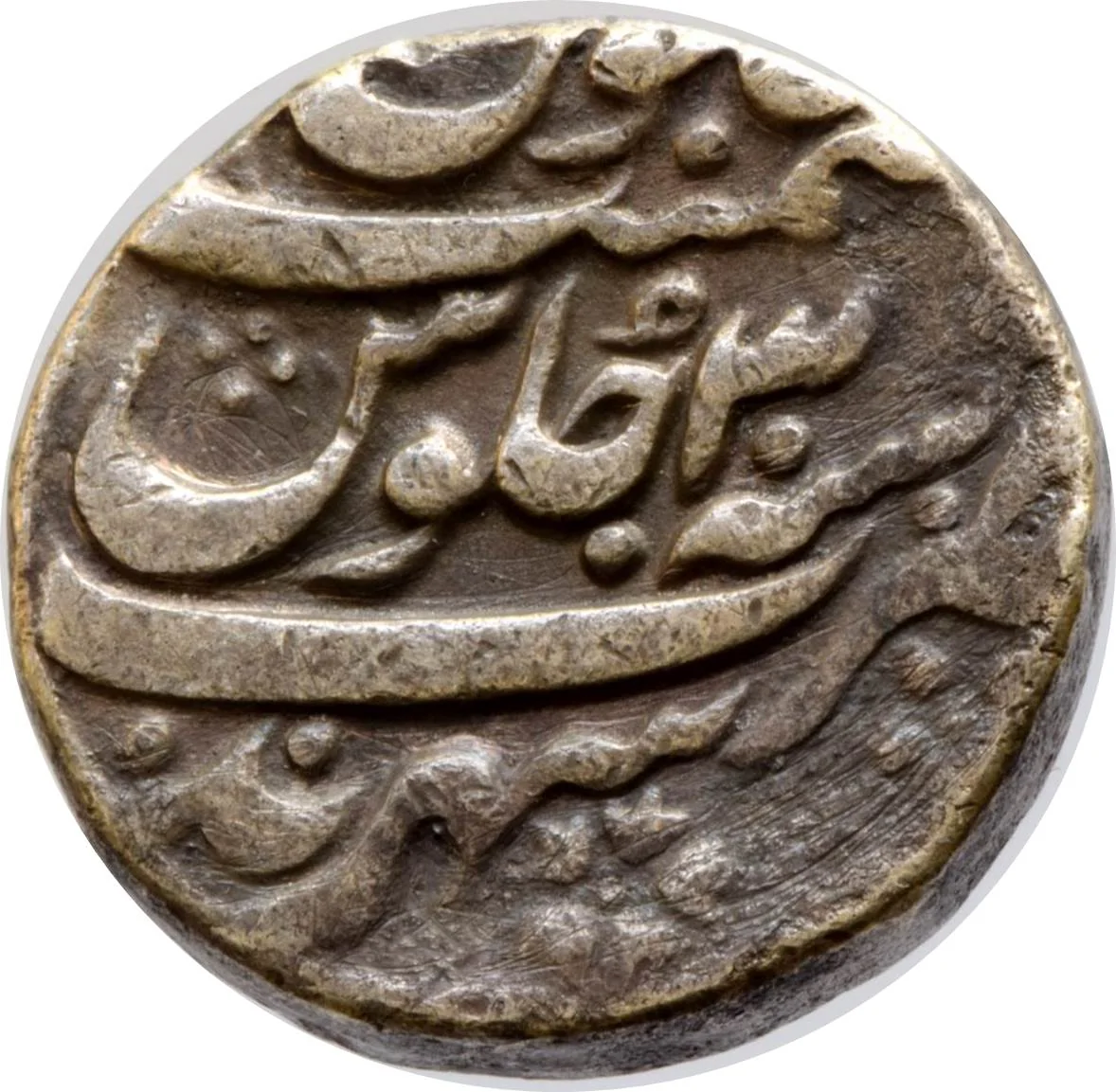
1 Rupee – Mughal Empire
India
Context
Years: 1130–1745
Country: India 
Issuer: Mughal Empire
Ruler: Muhammad Shah
Currency:
(1540—1842)
Demonetized: Yes
Material
Weight: 11.06 g
Silver weight: 11.06 g
Shape: Irregular round
Composition: Silver
Magnetic: No
Technique: Hammered
References
KM: #Click to copy to clipboard436.54
Numista: #188114
Value
Bullion value: $32.08
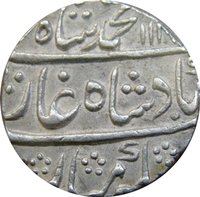
Obverse
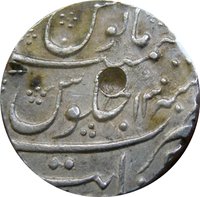
Reverse
Edge
Plain
Mintings
| Year | Mint Mark | Mintage | Quality | Collection |
|---|---|---|---|---|
| — | 1 | — | ||
| — | 10 | — | ||
| — | 12 | — | ||
| — | 13 | — | ||
| — | 18 | — | ||
| — | 20 | — | ||
| — | 21 | — | ||
| — | 29 | — | ||
| — | 30 | — | ||
| — | 5 | — | ||
| — | 6 | — | ||
| 1722 | — | — | ||
| 1734 | — | — | ||
| 1735 | — | — | ||
| 1741 | — | — | ||
| 1743 | — | — | ||
| 1745 | — | — |
Historical background
The year 1130 AH (approximately 1717-1718 CE) in the Mughal Empire fell within the later reign of Emperor Farrukhsiyar, a period marked by significant political instability and fiscal strain. The empire's currency system, however, still operated on the robust foundations established by Emperor Akbar in the late 16th century. The primary circulating coins were the silver rupee (the standard unit), the gold mohur, and the copper dam. These coins were renowned for their high purity and standardized weight, minted at imperial mints (mints) across the subcontinent, which facilitated vast and reliable trade.
Despite this strong legacy, the currency situation in 1130 was under severe pressure. The imperial treasury was depleted by endless wars of succession, lavish expenditures, and the growing practice of granting vast revenue assignments (jagirs) to a fractious nobility. This led to a critical shortage of precious metals for coinage. While the coins in circulation largely maintained their fineness, there was a decrease in the volume of new minting, and some provincial mints began to deviate from central standards. Furthermore, the empire's weakening authority encouraged regional potentates and bankers (sarrafs) to issue their own unofficial or local money, creating a more complex and less uniform monetary landscape.
Consequently, the currency system in 1130 AH reflected the empire's paradoxical state: a sophisticated and trusted metallic currency still functioned as the backbone of the economy, but it was increasingly strained by the central state's political and financial decay. The shortage of new specie and the rise of local issues foreshadowed the gradual fragmentation of the imperial monetary system, mirroring the political disintegration that would accelerate in the decades to follow.
Despite this strong legacy, the currency situation in 1130 was under severe pressure. The imperial treasury was depleted by endless wars of succession, lavish expenditures, and the growing practice of granting vast revenue assignments (jagirs) to a fractious nobility. This led to a critical shortage of precious metals for coinage. While the coins in circulation largely maintained their fineness, there was a decrease in the volume of new minting, and some provincial mints began to deviate from central standards. Furthermore, the empire's weakening authority encouraged regional potentates and bankers (sarrafs) to issue their own unofficial or local money, creating a more complex and less uniform monetary landscape.
Consequently, the currency system in 1130 AH reflected the empire's paradoxical state: a sophisticated and trusted metallic currency still functioned as the backbone of the economy, but it was increasingly strained by the central state's political and financial decay. The shortage of new specie and the rise of local issues foreshadowed the gradual fragmentation of the imperial monetary system, mirroring the political disintegration that would accelerate in the decades to follow.
✨ Legendary