

¼ Kreuzer – Hungary
Hungary
Context

Material
References
KM: #Click to copy to clipboard2050
Numista: #18791
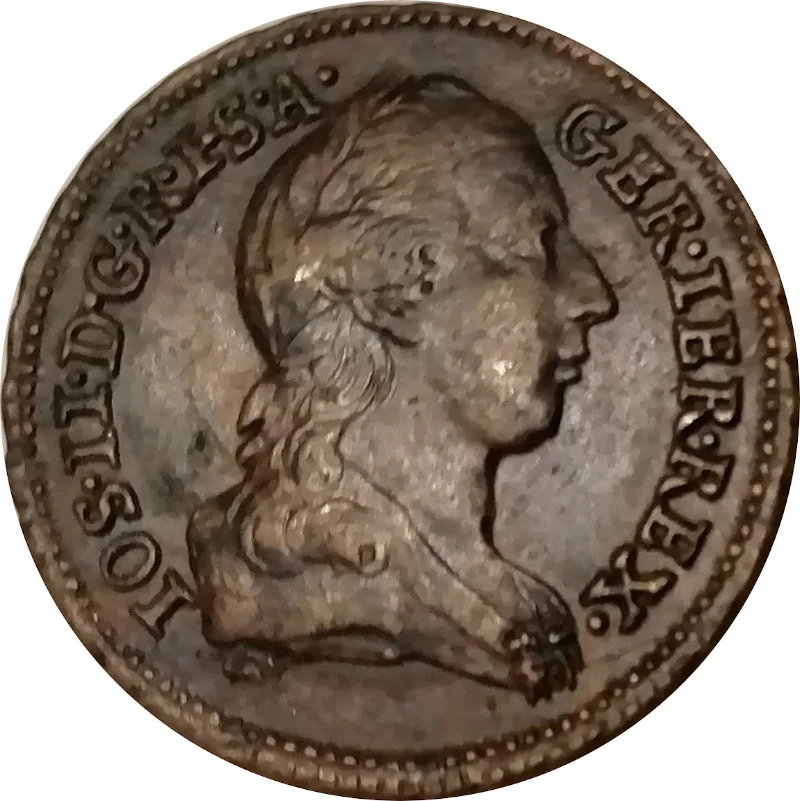
Obverse
Description:
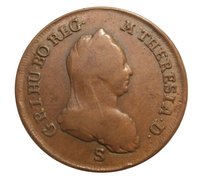
Right-facing portrait, legend encircling from 7 o'clock, divided by head.
Inscription:
IOS · II · D · G · R · I · S · A · GER · IER · REX ·
Script: Latin
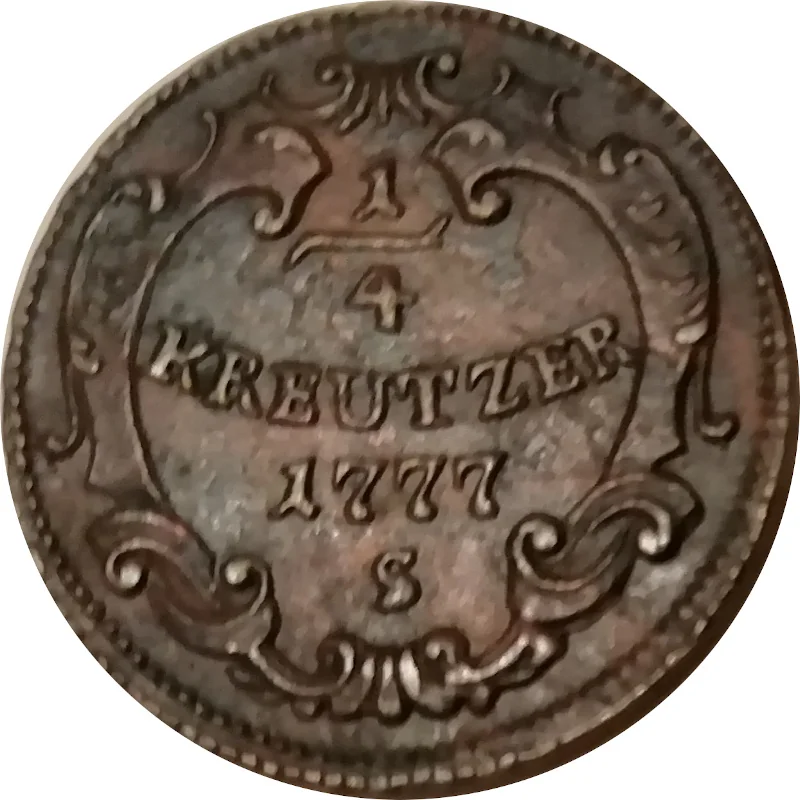
Reverse
Description:
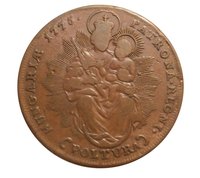
Curved cartouche with vertical value, date, and mintmark.
Inscription:
1/4
KREUTZER
1777
S.
KREUTZER
1777
S.
Script: Latin
Edge
Plain
Mints
| Name | Mark |
|---|---|
| Smolník / Szomolnok / Schmöllnitz | S |
Mintings
| Year | Mint Mark | Mintage | Quality | Collection |
|---|---|---|---|---|
| 1777 | S | — |
Historical background
In 1777, the currency situation in the Habsburg Monarchy, including Hungary, was defined by the aftermath of the great monetary reform initiated by Empress Maria Theresa in 1762. This reform sought to stabilize the chronically debased and chaotic coinage system by introducing a new, standardized silver Conventionsthaler (or Konvenciós forint in Hungary) as the central unit of account. The reform established a fixed minting standard of 10 thalers (or 20 forints) from one Cologne mark of fine silver, creating a stable and universally accepted currency across the empire's lands for large transactions and state finance.
However, a critical problem persisted: a severe shortage of small-denomination coins for everyday trade. This scarcity crippled local markets and forced communities and businesses to use makeshift solutions, including privately issued Scheidemünzen (small change tokens) and even cutting larger coins into pieces. Recognizing this, the state authorized the minting of new copper and silver fractional coins. Notably, the year 1777 saw the introduction of new copper Poltura and Denar coins in Hungary, struck at the Nagybánya (today Baia Mare, Romania) mint, which bore the distinctive "S.F." mintmark for Sancta Fiscus (Holy Treasury).
Thus, the currency background in 1777 was one of a dual reality: a successfully implemented stable silver standard for large-scale commerce and state purposes, coexisting with an ongoing struggle to supply a reliable and sufficient small coinage for the populace. The new copper issues of that year were a direct, though only partially successful, attempt to address this chronic shortage and to further consolidate state control over the entire monetary system, moving it away from local improvisation and toward centralized imperial authority.
However, a critical problem persisted: a severe shortage of small-denomination coins for everyday trade. This scarcity crippled local markets and forced communities and businesses to use makeshift solutions, including privately issued Scheidemünzen (small change tokens) and even cutting larger coins into pieces. Recognizing this, the state authorized the minting of new copper and silver fractional coins. Notably, the year 1777 saw the introduction of new copper Poltura and Denar coins in Hungary, struck at the Nagybánya (today Baia Mare, Romania) mint, which bore the distinctive "S.F." mintmark for Sancta Fiscus (Holy Treasury).
Thus, the currency background in 1777 was one of a dual reality: a successfully implemented stable silver standard for large-scale commerce and state purposes, coexisting with an ongoing struggle to supply a reliable and sufficient small coinage for the populace. The new copper issues of that year were a direct, though only partially successful, attempt to address this chronic shortage and to further consolidate state control over the entire monetary system, moving it away from local improvisation and toward centralized imperial authority.
💎 Extremely Rare