

3 Kreuzer – Hungary
Hungary
Context

Material
References
KM: #Click to copy to clipboard392
Numista: #48204
Value
Bullion value: $4.87
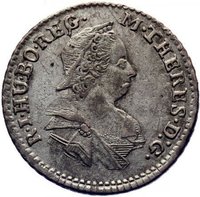
Obverse
Description:
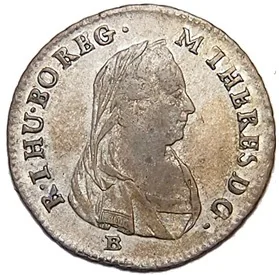
Veiled portrait facing right, legend above.
Inscription:
M · THERES · D · G · R · I · HU · BO · REG ·
Script: Latin
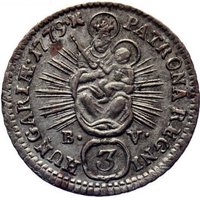
Reverse
Description:
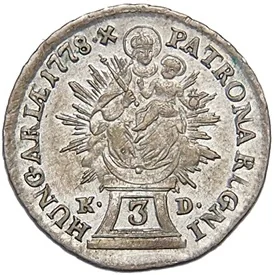
Madonna and child seated on crescent; no inner circle. Value 3 in pedestal divides mintmark N B.
Inscription:
PATRONA · REGNI · HUNGARIÆ · 1779 · X
Script: Latin
Edge
Plain
Mints
| Name | Mark |
|---|---|
| Kremnica | B |
Historical background
In 1778, the currency situation in the Habsburg Monarchy, which included Hungary, was defined by the enduring consequences of the Seven Years' War (1756-1763). The conflict had forced the state treasury in Vienna to finance the war through massive borrowing and, most critically, the severe debasement of the coinage. The government, under Empress Maria Theresa, had dramatically reduced the silver content in the circulating Conventionsthaler and the smaller kreuzer coins, leading to a proliferation of lightweight, poor-quality money. This practice, while providing short-term war funding, triggered rampant inflation, eroded public trust in the currency, and created chaotic exchange rates between the debased domestic coins and more stable foreign specie.
The Hungarian Kingdom, though a distinct entity within the monarchy, was fully integrated into this monetary system. The primary circulating coins in Hungary were the debased silver forint (florin) and copper krajcár (kreuzer). The disparity between the official face value of these coins and their intrinsic metal value caused significant economic disruption. Prices for goods and services soared, disproportionately harming peasants, soldiers on fixed pay, and creditors, while often benefiting debtors who could repay loans in devalued currency. This instability hampered commerce and state finances, creating a pressing need for monetary reform.
Recognizing the crisis, the Habsburg court had already initiated a major currency reform in the years leading up to 1778. The pivotal Münzfuß (coinage standard) of 1762 began the process of stabilization, but it was the comprehensive Coinage Patent of 1778 that marked a decisive turning point. This reform introduced a new, stable silver Conventionsthaler (valued at 2 Gulden or 1½ Austrian Guldens), which became the standard for the entire monarchy. For Hungary, this meant the reintroduction of a sound silver forint, restoring confidence and providing a much-needed foundation for economic recovery, though the full effects of withdrawing the old, debased coinage would take years to complete.
The Hungarian Kingdom, though a distinct entity within the monarchy, was fully integrated into this monetary system. The primary circulating coins in Hungary were the debased silver forint (florin) and copper krajcár (kreuzer). The disparity between the official face value of these coins and their intrinsic metal value caused significant economic disruption. Prices for goods and services soared, disproportionately harming peasants, soldiers on fixed pay, and creditors, while often benefiting debtors who could repay loans in devalued currency. This instability hampered commerce and state finances, creating a pressing need for monetary reform.
Recognizing the crisis, the Habsburg court had already initiated a major currency reform in the years leading up to 1778. The pivotal Münzfuß (coinage standard) of 1762 began the process of stabilization, but it was the comprehensive Coinage Patent of 1778 that marked a decisive turning point. This reform introduced a new, stable silver Conventionsthaler (valued at 2 Gulden or 1½ Austrian Guldens), which became the standard for the entire monarchy. For Hungary, this meant the reintroduction of a sound silver forint, restoring confidence and providing a much-needed foundation for economic recovery, though the full effects of withdrawing the old, debased coinage would take years to complete.
✨ Legendary