

1 poltura – Hungary
Add to wishlist
Hungary
Context
Material
References
KM: #
Numista: #48182
Obverse
Description:
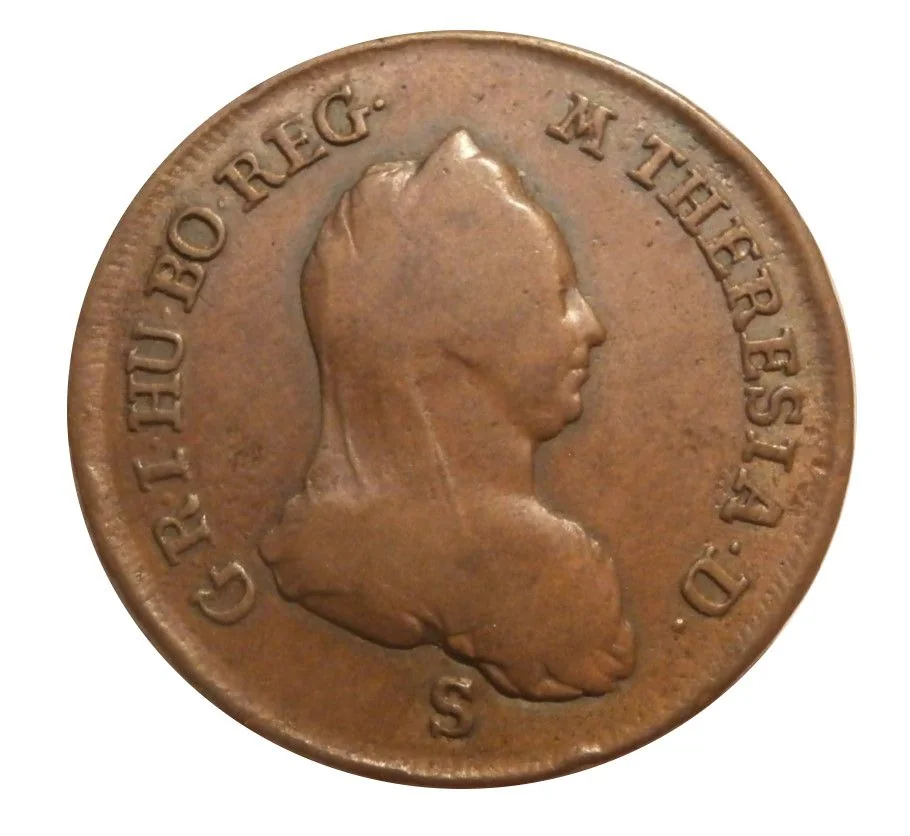
Veiled bust right, S below.
Inscription:
M · THERESIA · D · G · R · I · HU · BO · REG ·
S
S
Script: Latin
Reverse
Description:
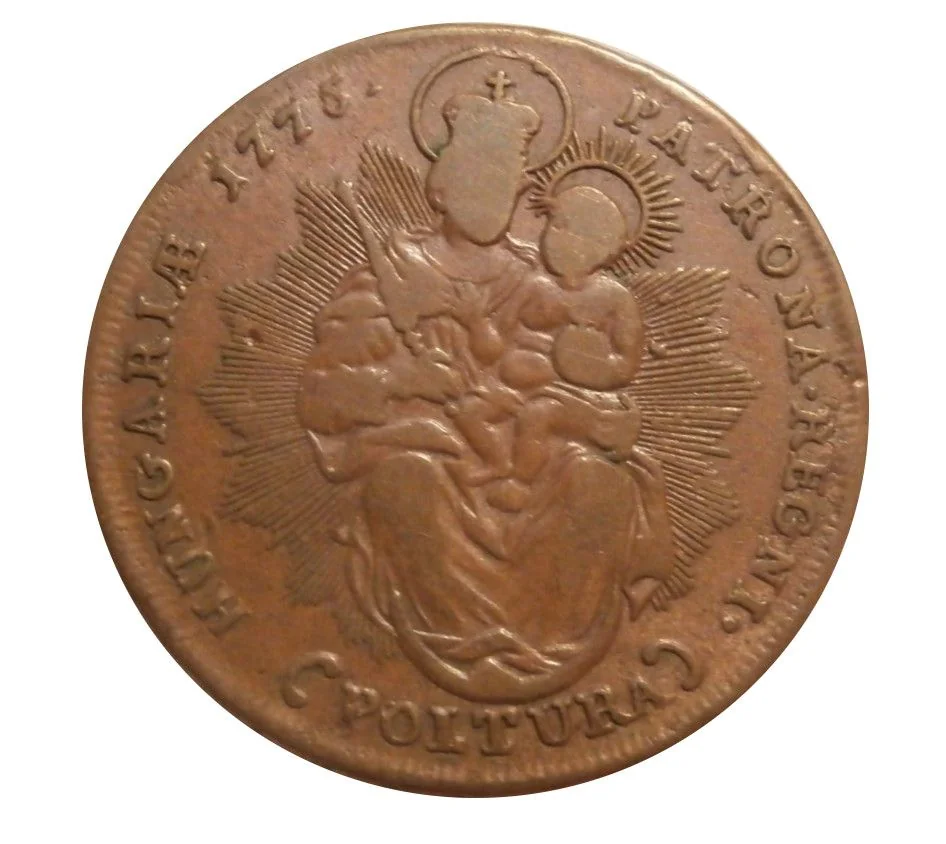
Glorified, crowned Madonna and Child seated on a crescent. Poltura below.
Inscription:
PATRONA · REGNI · HUNGARIÆ · 1775 ·
(POLTURA)
(POLTURA)
Script: Latin
Edge
Mints
| Name | Mark |
|---|---|
| Smolník / Szomolnok / Schmöllnitz | S |
Mintings
| Year | Mint Mark | Mintage | Quality | Collection |
|---|---|---|---|---|
| 1775 | S | — |
Historical background
In 1775, Hungary's currency situation was intrinsically tied to its position within the Habsburg Monarchy, operating under the monetary system dictated by Vienna. The primary circulating coin was the silver Conventionsthaler (or Konventionstaler), established by a 1753 monetary convention between Austria and Bavaria. This standard aimed to stabilize silver content across the realm, with Hungarian currency, including the forint (gulden) and krajcár, defined in relation to it. However, the system was perpetually strained by the monarchy's chronic fiscal demands, particularly the costs of the recent Seven Years' War (1756-1763) and ongoing military preparedness.
A significant feature of the period was the widespread circulation of depreciated paper money. To finance its wars, the state had issued substantial amounts of Bancozettel, or banknotes, from the Vienna-based Stadtbanco. These were not convertible to specie (coin) on demand and had begun to depreciate against silver, leading to a de facto dual system where coins were hoarded and paper money traded at a discount. This created economic friction, as prices and transactions often had to account for the difference between "bank money" and "coin money," undermining public trust in the currency.
Furthermore, Hungary's economy remained predominantly agrarian, with many transactions, especially in rural areas, conducted through barter or using small, often debased copper coins like the krajcár for local trade. The nobility and tax authorities, however, demanded payments in silver or its stable equivalent, placing a burden on the peasantry. Thus, the monetary landscape of 1775 Hungary was one of layered complexity: an official silver standard pressured by state debt, a growing sphere of depreciating paper money, and a local subsistence economy relying on inferior coinage, all reflecting the broader tensions between imperial centralization and the kingdom's economic realities.
A significant feature of the period was the widespread circulation of depreciated paper money. To finance its wars, the state had issued substantial amounts of Bancozettel, or banknotes, from the Vienna-based Stadtbanco. These were not convertible to specie (coin) on demand and had begun to depreciate against silver, leading to a de facto dual system where coins were hoarded and paper money traded at a discount. This created economic friction, as prices and transactions often had to account for the difference between "bank money" and "coin money," undermining public trust in the currency.
Furthermore, Hungary's economy remained predominantly agrarian, with many transactions, especially in rural areas, conducted through barter or using small, often debased copper coins like the krajcár for local trade. The nobility and tax authorities, however, demanded payments in silver or its stable equivalent, placing a burden on the peasantry. Thus, the monetary landscape of 1775 Hungary was one of layered complexity: an official silver standard pressured by state debt, a growing sphere of depreciating paper money, and a local subsistence economy relying on inferior coinage, all reflecting the broader tensions between imperial centralization and the kingdom's economic realities.
✨ Legendary