

5 Korun / Korún – Czechoslovakia
Context
Years: 1928–1932
Issuer: Czechoslovakia 
Period:
(1918—1938)
Currency:
(1919—1939)
Demonetized: Yes
Total mintage: 28,000,000
Material
References
KM: #Click to copy to clipboard11
Numista: #1227
Value
Bullion value: $10.11
Obverse
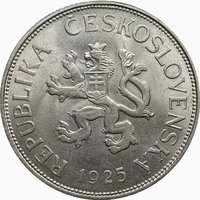
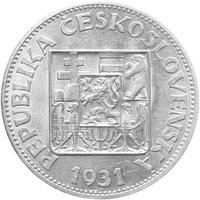
Description:
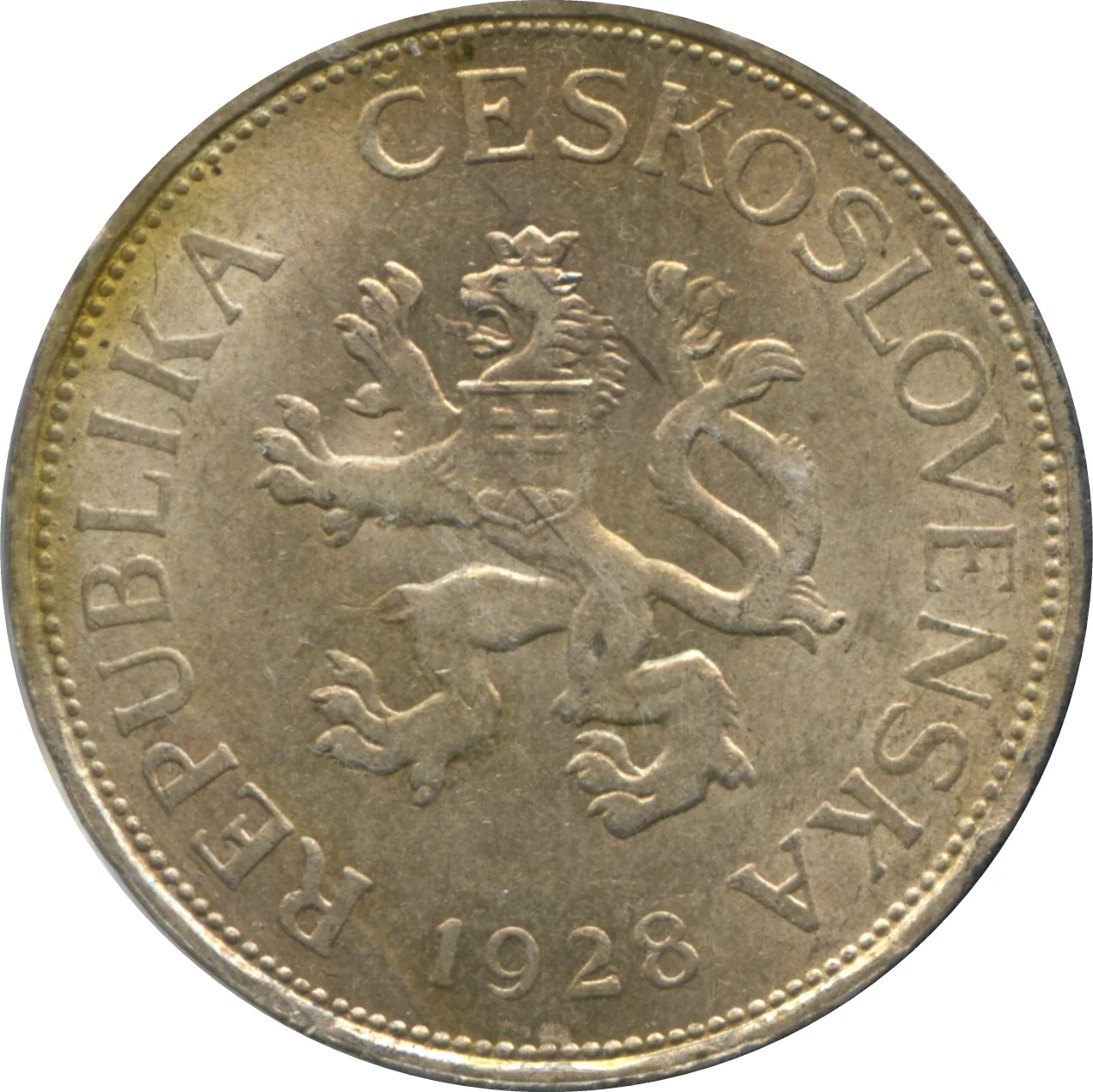
Czech lion rampant with Slovak shield, country name encircling.
Inscription:
REPUBLIKA ČESKOSLOVENSKÁ ·1928·
Translation:
REPUBLIC OF CZECHOSLOVAKIA ·1928·
Script: Latin
Language: Czech
Engraver: Otto Guttfreund
Reverse
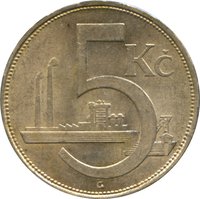
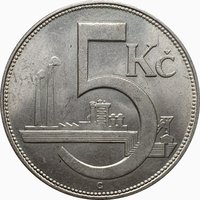
Description:
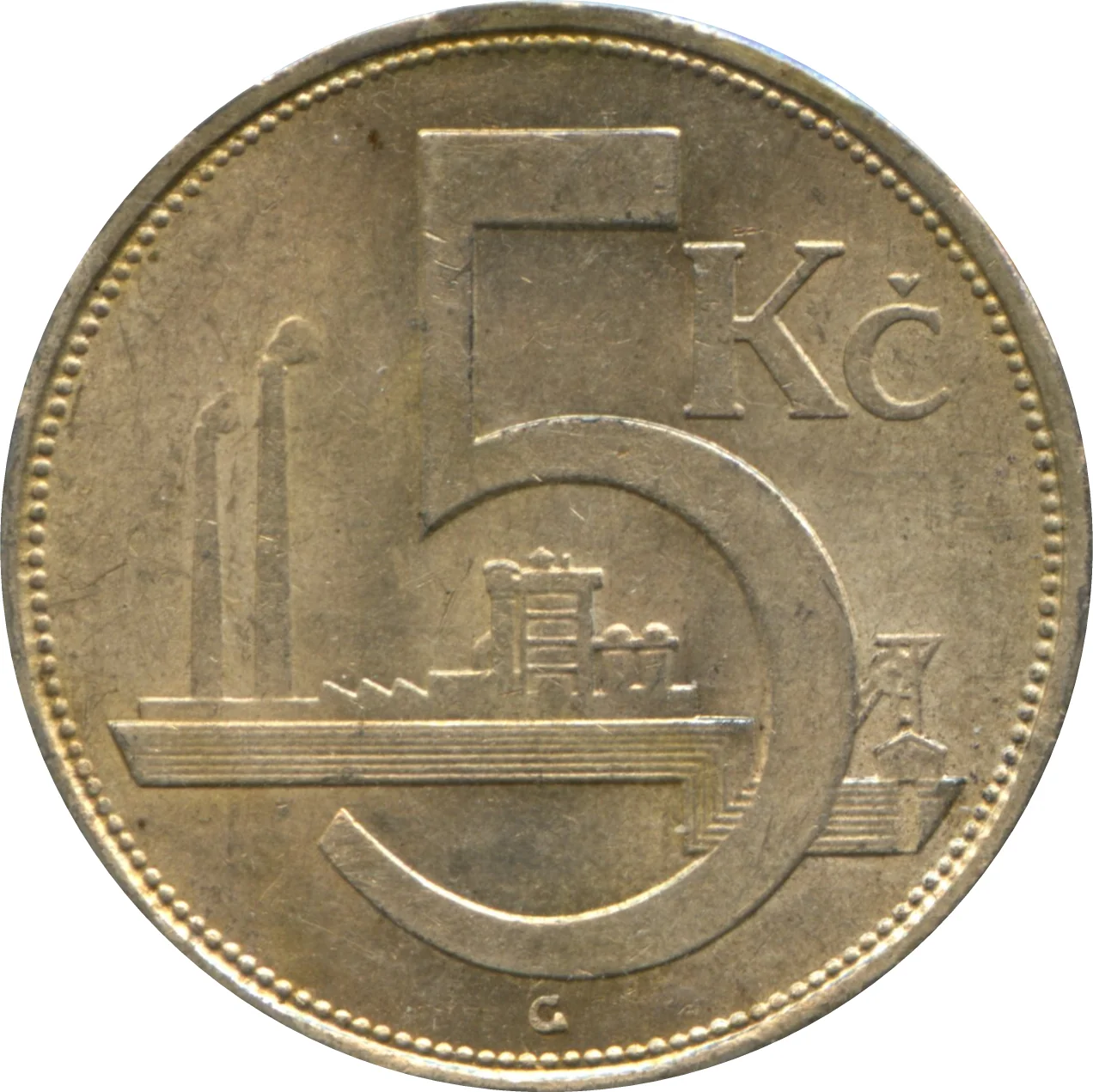
Industrial factory, large-font name.
Inscription:
5 Kč
G
G
Translation:
Five Crowns
Script: Latin
Language: Czech
Engraver: Otto Guttfreund
Edge
Plain with crosses and waves
Mints
| Name | Mark |
|---|---|
| Kremnica | — |
Mintings
| Year | Mint Mark | Mintage | Quality | Collection |
|---|---|---|---|---|
| 1928 | — | 1,710,000 | ||
| 1929 | — | 12,861,000 | ||
| 1930 | — | 10,429,000 | ||
| 1931 | — | 2,000,000 | ||
| 1932 | — | 1,000,000 |
Historical background
In 1928, Czechoslovakia stood out as a beacon of monetary and economic stability in Central Europe, a direct result of the successful financial reforms undertaken in the early years of the republic. The cornerstone was the 1919 currency reform, which replaced the fragmented Austro-Hungarian kronen with a new, distinct national currency, the Czechoslovak koruna (Kčs). Under the prudent leadership of the first Finance Minister, Alois Rašín, a policy of deliberate deflation and strict control over the money supply was implemented. This bold strategy, painful in the short term, successfully stabilized the koruna's value and laid the groundwork for international confidence.
By 1928, the Czechoslovak koruna was fully backed by gold and securely pegged to both the US dollar and the gold standard, operating under a currency board-like system managed by the independent Czechoslovak National Bank (established in 1926). This hard currency policy facilitated strong foreign investment, particularly from France and Britain, and fueled a period of robust industrial growth. The country was a leading exporter of manufactured goods, including armaments from Škoda, footwear from Baťa, and machinery, contributing to a consistent balance of payments surplus and substantial gold reserves.
Consequently, in the context of 1928, Czechoslovakia enjoyed a "hard koruna" with low inflation and full convertibility—a stark contrast to the monetary turbulence that had plagued the region in the early 1920s and would again in the 1930s. This financial strength was a source of national pride and a key pillar of the First Republic's political prestige and economic prosperity, providing a resilient buffer as the global economy began to show signs of strain in the lead-up to the Great Depression.
By 1928, the Czechoslovak koruna was fully backed by gold and securely pegged to both the US dollar and the gold standard, operating under a currency board-like system managed by the independent Czechoslovak National Bank (established in 1926). This hard currency policy facilitated strong foreign investment, particularly from France and Britain, and fueled a period of robust industrial growth. The country was a leading exporter of manufactured goods, including armaments from Škoda, footwear from Baťa, and machinery, contributing to a consistent balance of payments surplus and substantial gold reserves.
Consequently, in the context of 1928, Czechoslovakia enjoyed a "hard koruna" with low inflation and full convertibility—a stark contrast to the monetary turbulence that had plagued the region in the early 1920s and would again in the 1930s. This financial strength was a source of national pride and a key pillar of the First Republic's political prestige and economic prosperity, providing a resilient buffer as the global economy began to show signs of strain in the lead-up to the Great Depression.
🌱 Common