

5 Korun / Korún – Czechoslovakia
Context
Years: 1925–1927
Issuer: Czechoslovakia 
Period:
(1918—1938)
Currency:
(1919—1939)
Demonetization: 30 June 1931
Total mintage: 30,000,000
Material
Diameter: 30 mm
Weight: 10 g
Thickness: 1.9 mm
Shape: Round
Composition: Copper-nickel
Technique: Milled
Alignment: Medal alignment
flip
References
KM: #Click to copy to clipboard10
Numista: #1226
Obverse
Description:
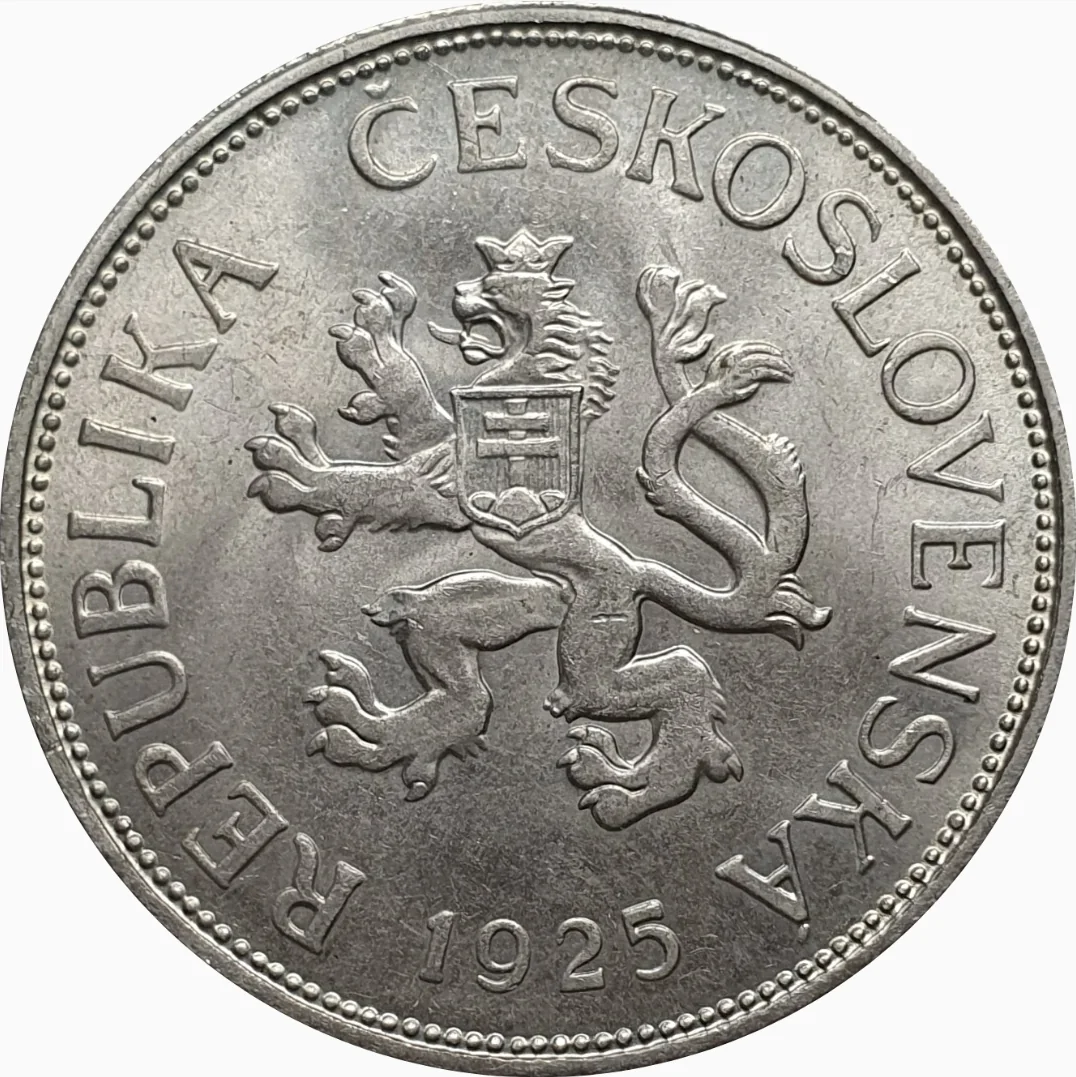
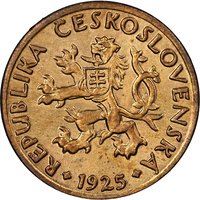
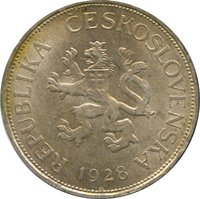
Czech lion, Slovak shield, encircled text, year beneath.
Inscription:
REPUBLIKA ČESKOSLOVENSKÁ
1925
1925
Translation:
REPUBLIC OF CZECHOSLOVAKIA
1925
1925
Script: Latin
Engraver: Otto Guttfreund
Reverse
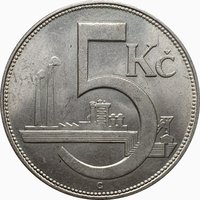
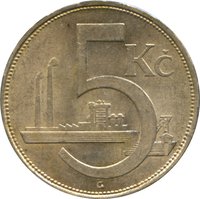
Description:
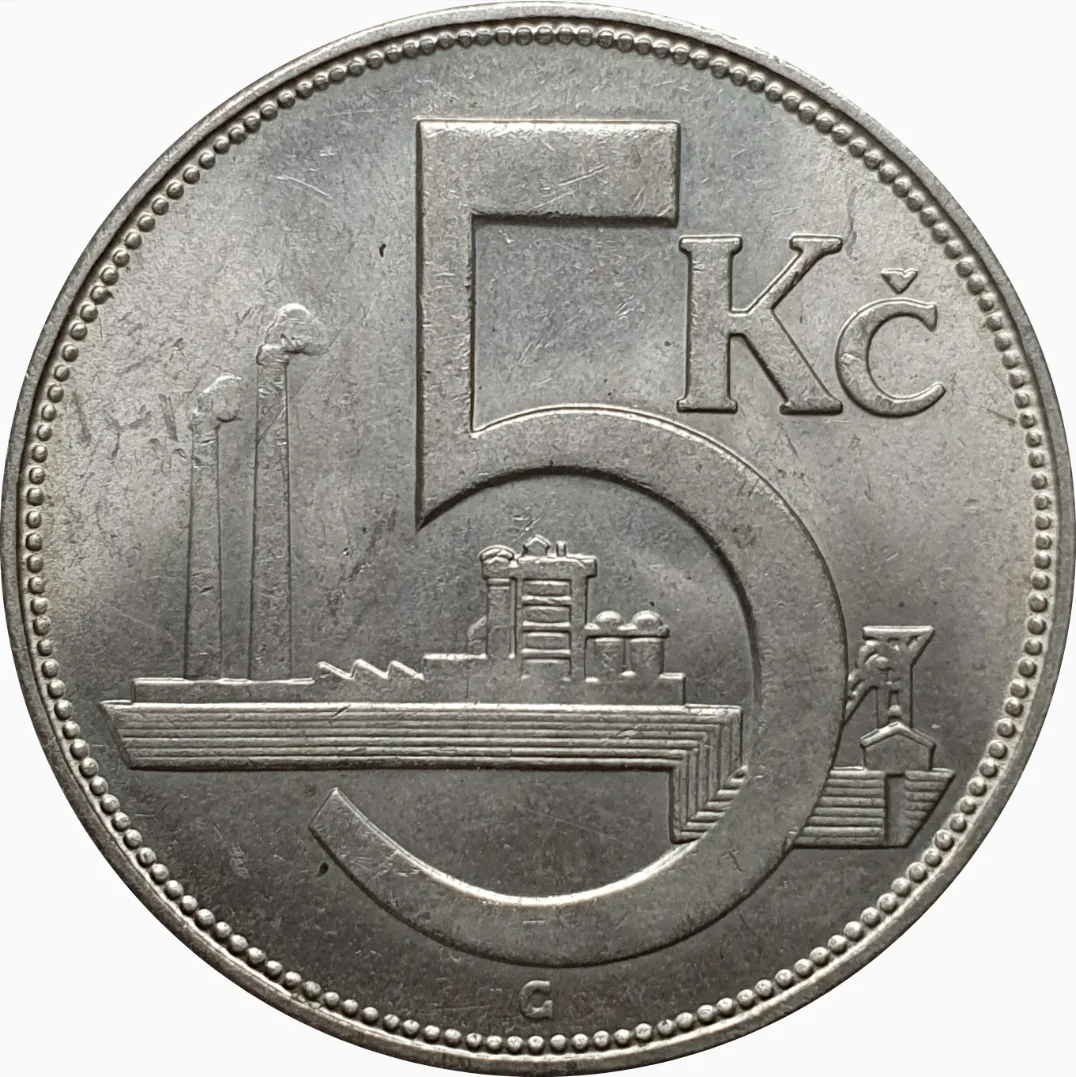
Industrial value factory.
Inscription:
5 Kč
Translation:
Five crowns
Script: Latin
Language: Czech
Engraver: Otto Guttfreund
Edge
Milled
Mints
| Name | Mark |
|---|---|
| Kremnica | — |
Mintings
| Year | Mint Mark | Mintage | Quality | Collection |
|---|---|---|---|---|
| 1925 | — | 16,474,500 | ||
| 1926 | — | 8,912,000 | ||
| 1927 | — | 4,613,500 |
Historical background
Following the devastation of the First World War and the dissolution of the Austro-Hungarian Empire, the newly established Czechoslovakia faced severe monetary chaos. Its territory was flooded with rapidly depreciating Austro-Hungarian banknotes, leading to hyperinflation. To secure economic sovereignty, the state took decisive action in 1919 by physically stamping these old notes to create a temporary, distinct Czechoslovak currency. This paved the way for the landmark 1922 Currency Separation Act, which legally established the Czechoslovak koruna (Kč) and laid the institutional groundwork for stability through the newly founded independent central bank.
By 1925, the koruna had emerged as one of Europe's strongest and most stable currencies, a remarkable achievement known as the "Czechoslovak currency miracle." This success was built upon the prudent fiscal and monetary policies of Finance Minister Alois Rašín and his successors, who prioritized a balanced budget, high interest rates to attract capital, and a deliberate policy of deflation to increase the koruna's purchasing power. The country's strong industrial base, particularly in arms, machinery, and consumer goods, generated a consistent positive trade balance, further bolstering foreign exchange reserves and confidence in the currency.
This hard-currency policy, however, came with significant social costs. The deliberate deflation made Czechoslovak exports more expensive abroad, and tight credit conditions contributed to economic stagnation and higher unemployment in some sectors during the mid-1920s. Furthermore, the stability attracted speculative "hot money" from abroad, which later posed risks. Nevertheless, in 1925, the koruna's strength was a source of immense national pride and a key pillar of Czechoslovakia's reputation as a democratic and economically robust successor state in Central Europe.
By 1925, the koruna had emerged as one of Europe's strongest and most stable currencies, a remarkable achievement known as the "Czechoslovak currency miracle." This success was built upon the prudent fiscal and monetary policies of Finance Minister Alois Rašín and his successors, who prioritized a balanced budget, high interest rates to attract capital, and a deliberate policy of deflation to increase the koruna's purchasing power. The country's strong industrial base, particularly in arms, machinery, and consumer goods, generated a consistent positive trade balance, further bolstering foreign exchange reserves and confidence in the currency.
This hard-currency policy, however, came with significant social costs. The deliberate deflation made Czechoslovak exports more expensive abroad, and tight credit conditions contributed to economic stagnation and higher unemployment in some sectors during the mid-1920s. Furthermore, the stability attracted speculative "hot money" from abroad, which later posed risks. Nevertheless, in 1925, the koruna's strength was a source of immense national pride and a key pillar of Czechoslovakia's reputation as a democratic and economically robust successor state in Central Europe.
🌱 Common