

2 lariat – Maldives
Add to wishlist
Maldives
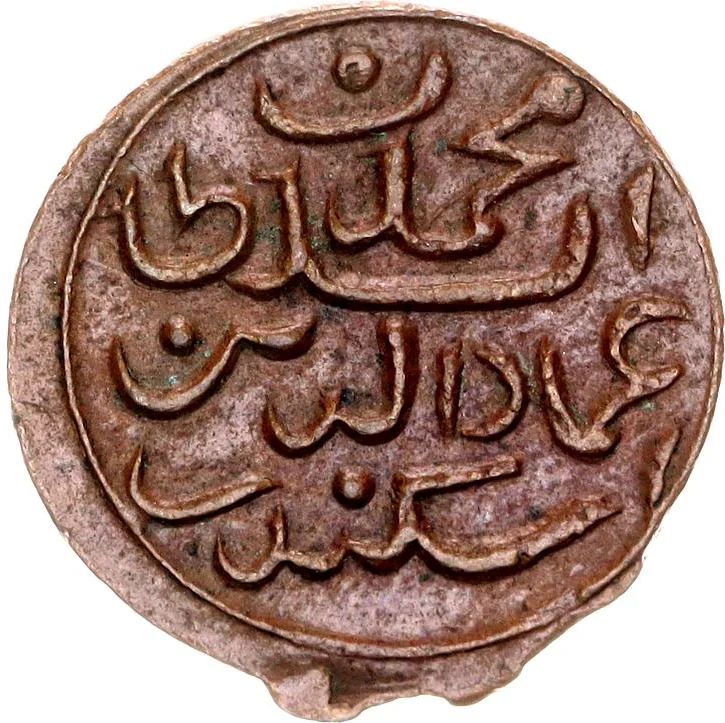
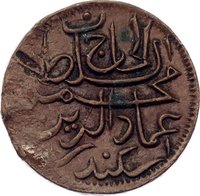
Obverse
Inscription:
سلطان
محمد
اماد الدين
اسكندر
محمد
اماد الدين
اسكندر
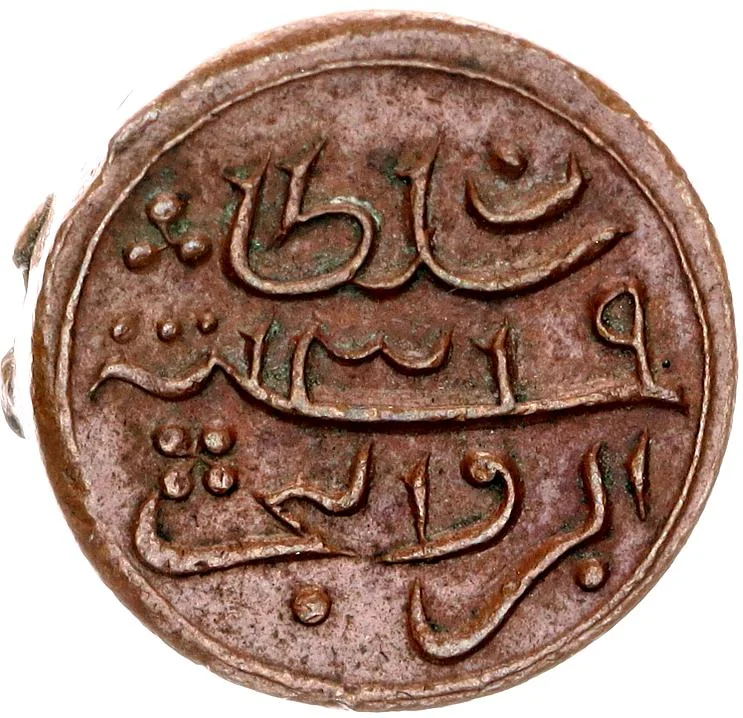
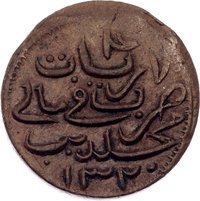
Reverse
Inscription:
سلطان
١٣١٩
سنة
البر والبحر
١٣١٩
سنة
البر والبحر
Edge
Plain
Mintings
| Year | Mint Mark | Mintage | Quality | Collection |
|---|---|---|---|---|
| 1901 | — | — | ||
| 1901 | — | — |
Historical background
In 1901, the Maldives operated under a complex and informal currency system, deeply tied to its political relationship with the British Empire. The archipelago was a British protectorate, having signed an agreement in 1887 that ceded control of foreign relations and defense to Britain in exchange for internal autonomy and protection. Officially, the Indian Rupee was the dominant currency for external trade and government finance, as the colonial administration in Ceylon (Sri Lanka) handled the islands' external affairs. This created a dual monetary environment where high-value transactions and international commerce were conducted in rupees.
Internally, however, the economy relied heavily on a traditional shell currency known as "Boli" or Cowrie shells (Cypraea moneta), particularly for local trade and daily transactions among the population. These shells, historically imported from the Maldives itself and later from other regions like East Africa, served as small change and were deeply embedded in the social and economic fabric. Alongside cowries, strips of processed silver known as "Larin"—a currency with a history spanning the Indian Ocean region—were used for larger internal transactions. This system was largely self-regulated and operated separately from the official rupee economy.
The currency situation reflected the Maldives' isolated and subsistence-based economy at the time. There was no formal mint or central bank; the state's revenue came largely from customs duties on imports and exports, collected in rupees. The coexistence of ancient shell money with modern coinage underscored a period of transition, where global economic systems were making incremental inroads into a traditional island society still governed by its own sultanate and customs. This hybrid system would persist until the formal introduction of the Maldivian Rufiyaa and Laari coinage in 1947, which finally replaced cowrie shells as legal tender.
Internally, however, the economy relied heavily on a traditional shell currency known as "Boli" or Cowrie shells (Cypraea moneta), particularly for local trade and daily transactions among the population. These shells, historically imported from the Maldives itself and later from other regions like East Africa, served as small change and were deeply embedded in the social and economic fabric. Alongside cowries, strips of processed silver known as "Larin"—a currency with a history spanning the Indian Ocean region—were used for larger internal transactions. This system was largely self-regulated and operated separately from the official rupee economy.
The currency situation reflected the Maldives' isolated and subsistence-based economy at the time. There was no formal mint or central bank; the state's revenue came largely from customs duties on imports and exports, collected in rupees. The coexistence of ancient shell money with modern coinage underscored a period of transition, where global economic systems were making incremental inroads into a traditional island society still governed by its own sultanate and customs. This hybrid system would persist until the formal introduction of the Maldivian Rufiyaa and Laari coinage in 1947, which finally replaced cowrie shells as legal tender.
🌟 Limited