

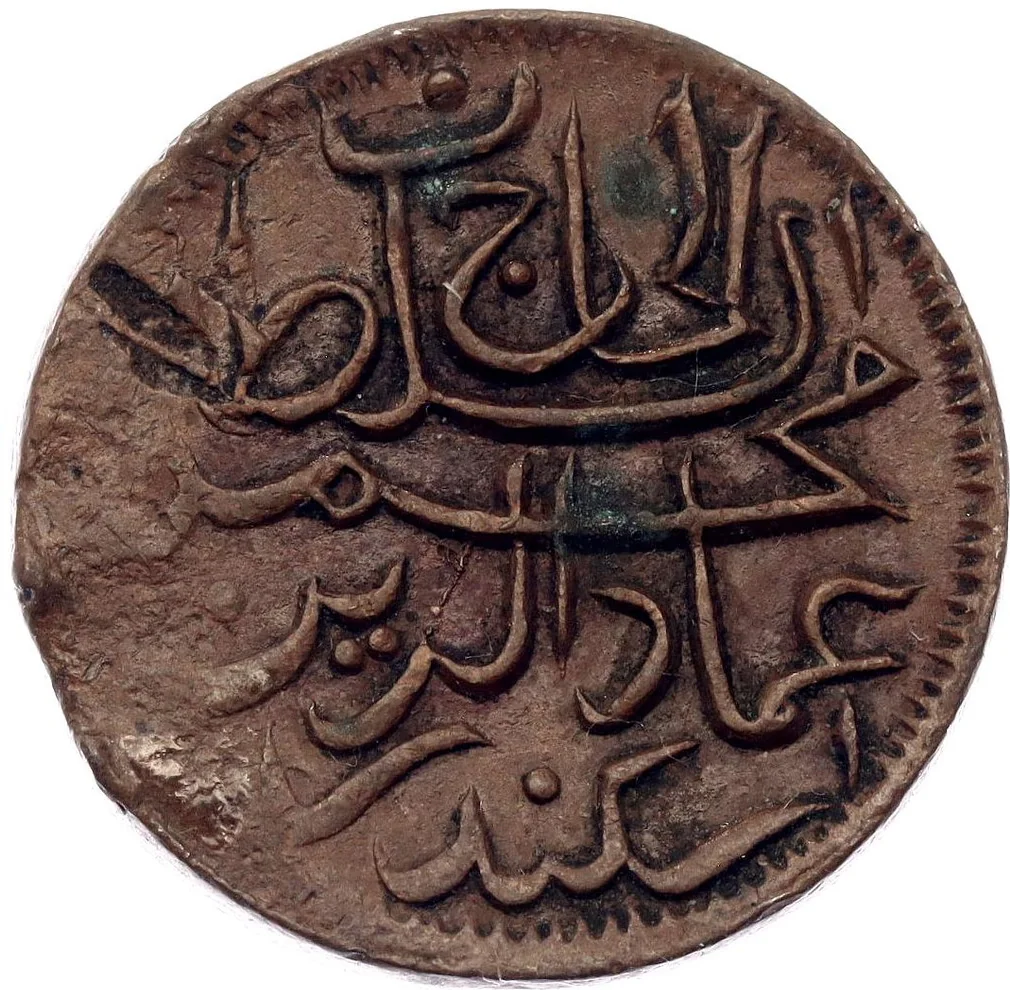
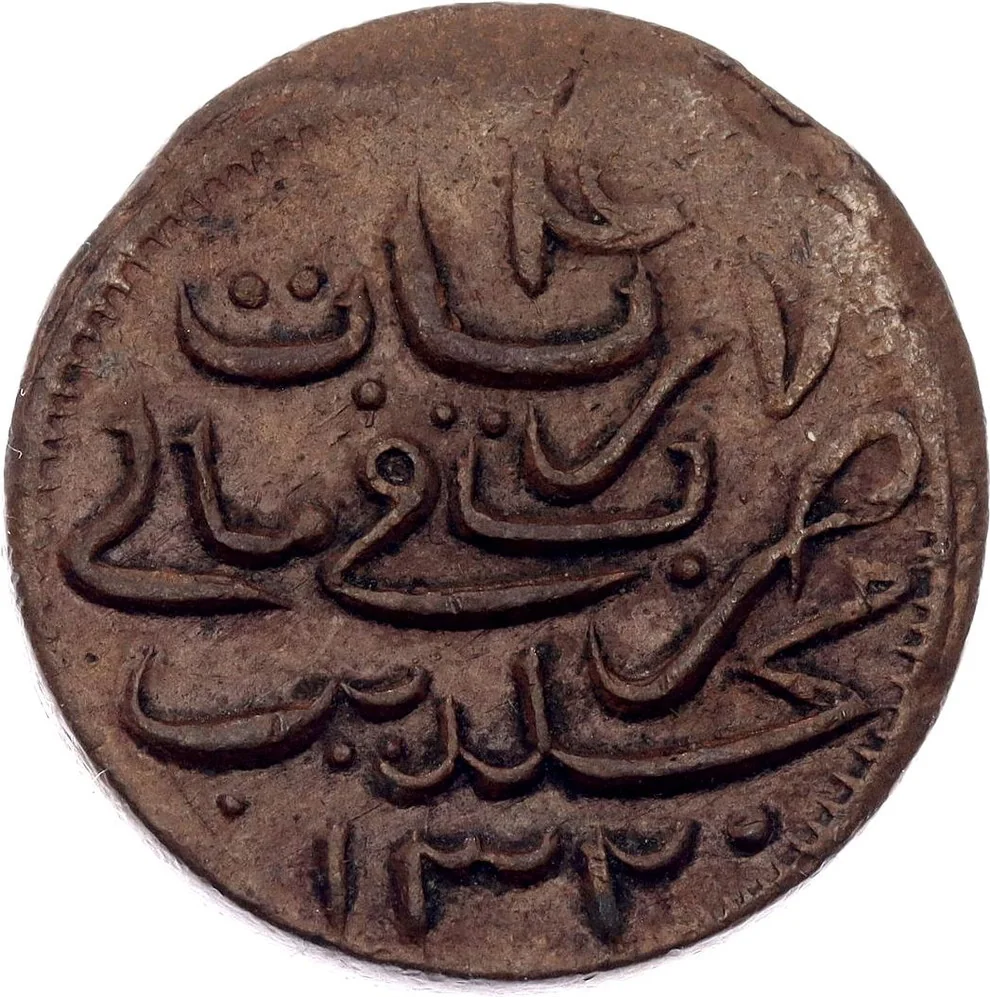
4 lariat – Maldives
Add to wishlist
Maldives
Context
Year: 1902
Islamic (Hijri) Year:: 1320
Issuer: Maldives
Ruler: Muhammad Imaaduddeen VI
Currency:
(1660—1947)
Demonetized: Yes
Material
References
KM: #
Numista: #18693
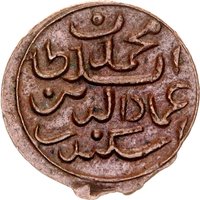
Obverse
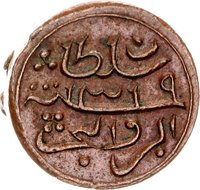
Reverse
Edge
Smooth or reeded
Mintings
| Year | Mint Mark | Mintage | Quality | Collection |
|---|---|---|---|---|
| 1902 | — | — |
Historical background
In 1902, the Maldives operated under a unique and largely self-contained monetary system, deeply influenced by its status as a British protectorate since 1887. The archipelago did not mint its own coins for general circulation. Instead, the official and most prevalent currency was the Maldivian Larín, a distinctive, fishhook-shaped piece of silver wire often stamped with Arabic script. This currency, with roots stretching back centuries, was the backbone of local trade and state finance, used for tax payments and everyday transactions among islanders. Its value was intrinsically tied to its silver content and weight.
However, the increasing integration of the Maldives into the wider Indian Ocean trade network created a dual-currency environment. Alongside the Larín, various foreign silver coins circulated freely, particularly the Indian Rupee, which was the official currency of British India. The Rupee's stability and use in regional commerce made it essential for external trade, government dealings with the British, and larger commercial transactions. Other coins, such as the Ceylonese Rupee and older Maria Theresa Thalers, also had limited circulation, leading to a complex system where exchange rates between these coins and the Larín were fluid and based on their perceived silver value.
The British protectorate agreement did not impose a standardized currency, leaving the Maldives with this hybrid system. There was no central bank, and monetary authority rested with the Sultan's government in Malé. While this system functioned for the isolated atolls, it was inherently inefficient for a modernizing economy. The early 20th century would eventually see the decline of the ancient Larín, as the government moved towards a decimalized currency system pegged to the Indian Rupee, a transition that began formally with the issuance of the first Maldivian rupee coins in the early 1900s, shortly after the period in question.
However, the increasing integration of the Maldives into the wider Indian Ocean trade network created a dual-currency environment. Alongside the Larín, various foreign silver coins circulated freely, particularly the Indian Rupee, which was the official currency of British India. The Rupee's stability and use in regional commerce made it essential for external trade, government dealings with the British, and larger commercial transactions. Other coins, such as the Ceylonese Rupee and older Maria Theresa Thalers, also had limited circulation, leading to a complex system where exchange rates between these coins and the Larín were fluid and based on their perceived silver value.
The British protectorate agreement did not impose a standardized currency, leaving the Maldives with this hybrid system. There was no central bank, and monetary authority rested with the Sultan's government in Malé. While this system functioned for the isolated atolls, it was inherently inefficient for a modernizing economy. The early 20th century would eventually see the decline of the ancient Larín, as the government moved towards a decimalized currency system pegged to the Indian Rupee, a transition that began formally with the issuance of the first Maldivian rupee coins in the early 1900s, shortly after the period in question.
🌟 Limited