

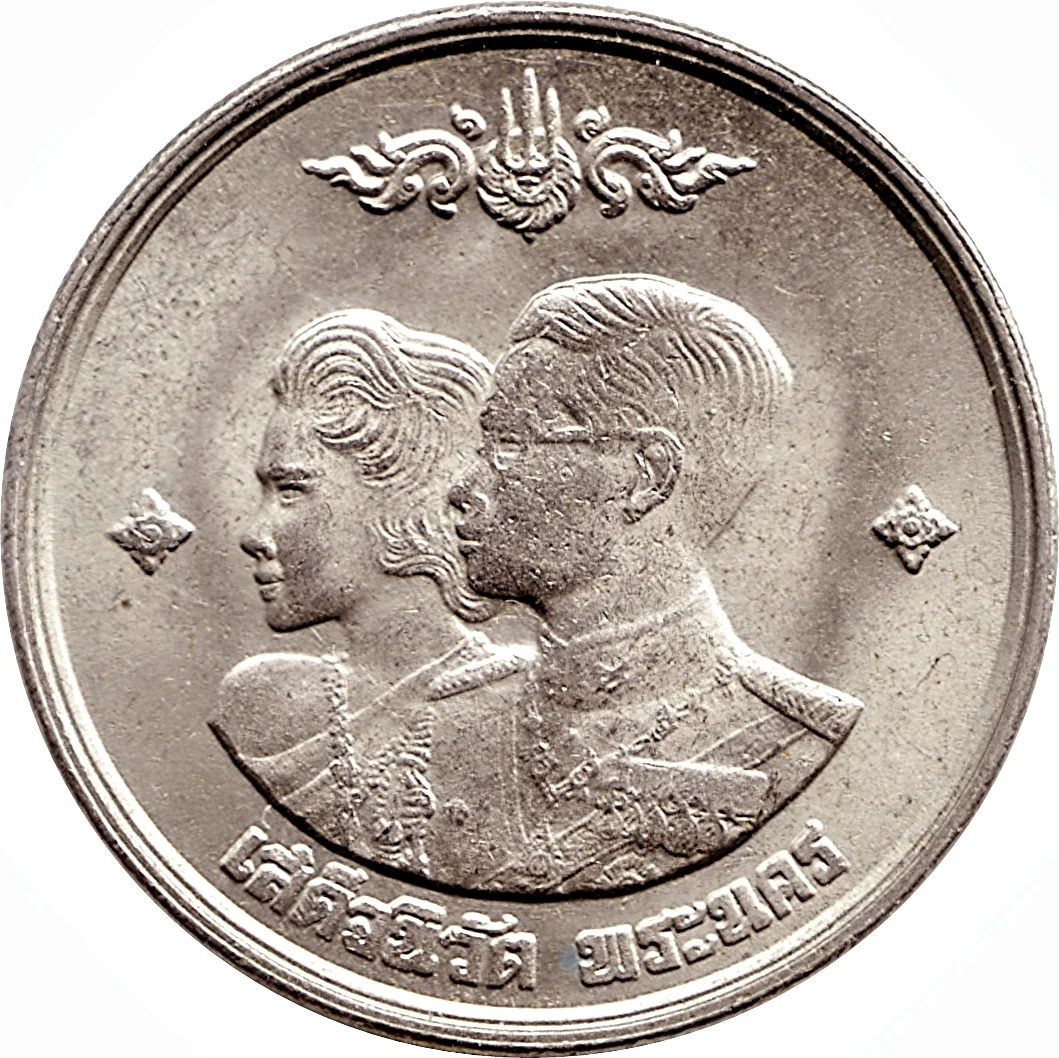
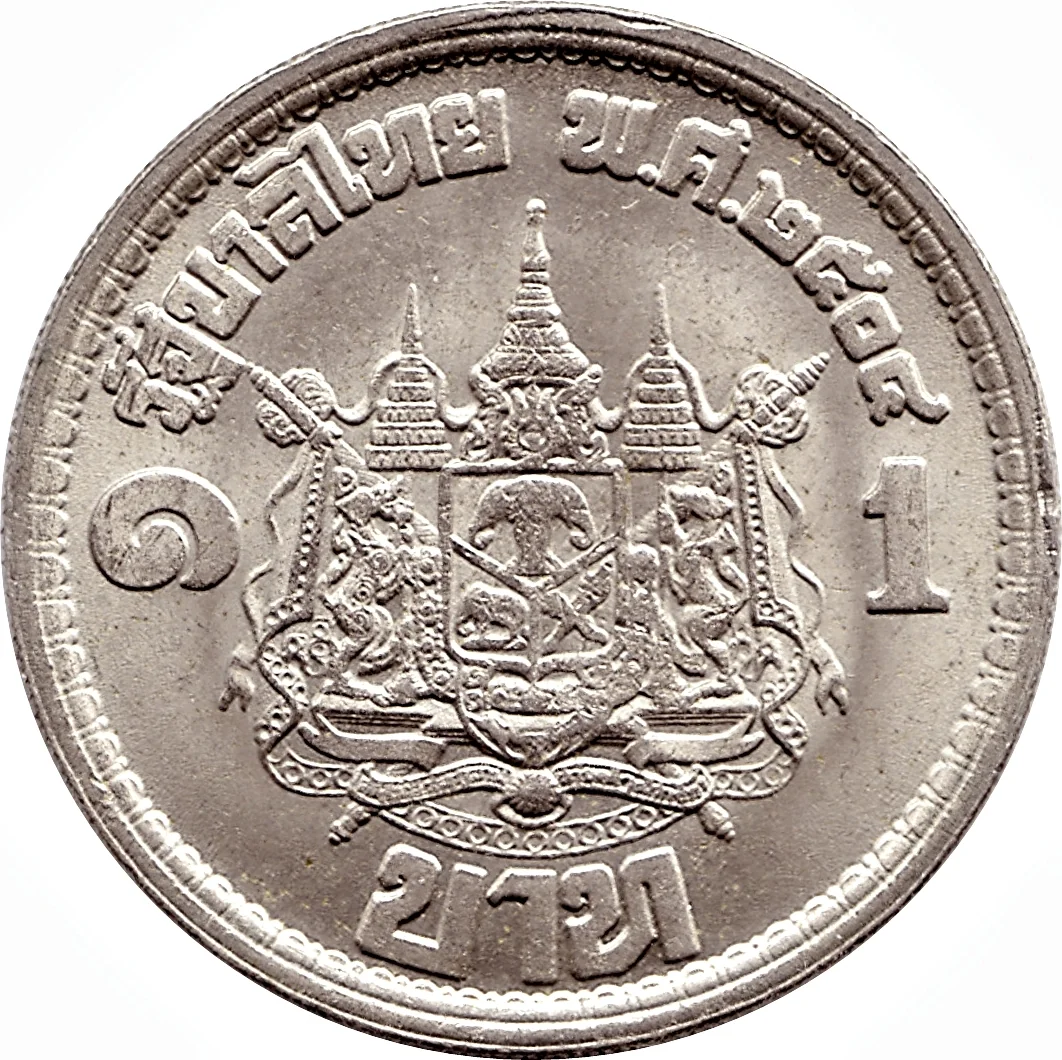
1 Baht – Thailand
Circulating commemorative coins
Commemoration: Royal homecoming of King Rama IX and Queen Sirikit
Thailand
Context
Year: 1961
Thai Year: 2504
Issuer: Thailand 
Ruler: Bhumibol Adulyadej
Currency:
(since 1897)
Demonetized: Yes
Total mintage: 4,430,000
Material
Diameter: 26.9 mm
Weight: 9.3 g
Thickness: 2.19 mm
Shape: Round
Composition: Copper-nickel
Technique: Milled
Alignment: Coin alignment
flip
References
Y: #Click to copy to clipboard83
Numista: #12263
Value
Exchange value: 1 THB = $0.03
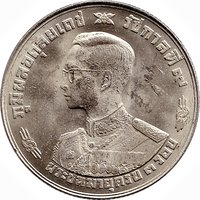
Obverse
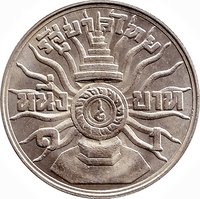
Reverse
Edge
Reeded
Categories
| Symbols> Coat of Arms |
| Person> Monarch |
Mintings
| Year | Mint Mark | Mintage | Quality | Collection |
|---|---|---|---|---|
| 1961 | — | 4,430,000 |
Historical background
In 1961, Thailand's currency system was defined by the Baht (THB), which was pegged to a fixed exchange rate under the Gold Exchange Standard. The official rate was set at 20.80 Baht to 1 US Dollar, a parity established in 1955 and maintained by the Bank of Thailand. This fixed peg provided crucial stability for a developing economy, encouraging foreign investment and trade by minimizing exchange rate risk. It was a cornerstone of the nation's early economic planning, aligning with the first National Economic Development Plan (1961-1966) launched under Field Marshal Sarit Thanarat, which prioritized infrastructure and industrialization.
However, this official system existed alongside a dual exchange rate market. Alongside the fixed official rate, a separate "free market" or financial rate operated, primarily used for capital account transactions. This secondary market allowed for some flexibility and helped insulate the country's foreign reserves from speculative pressures. The existence of this dual system indicated the careful balance the monetary authorities sought between control and market realities, managing the pressures of a growing economy integrated with global finance.
The overall currency situation in 1961 was therefore one of managed stability. The fixed peg to the US Dollar provided a reliable anchor, supporting Thailand's export-oriented growth and the government's development agenda. While the dual exchange rate mechanism acknowledged underlying market pressures, the Bank of Thailand successfully maintained the official parity, building international confidence. This period laid a foundation of monetary stability that would support Thailand's rapid economic expansion throughout the 1960s and 1970s, before global financial shifts eventually forced a move to a managed float in 1978.
However, this official system existed alongside a dual exchange rate market. Alongside the fixed official rate, a separate "free market" or financial rate operated, primarily used for capital account transactions. This secondary market allowed for some flexibility and helped insulate the country's foreign reserves from speculative pressures. The existence of this dual system indicated the careful balance the monetary authorities sought between control and market realities, managing the pressures of a growing economy integrated with global finance.
The overall currency situation in 1961 was therefore one of managed stability. The fixed peg to the US Dollar provided a reliable anchor, supporting Thailand's export-oriented growth and the government's development agenda. While the dual exchange rate mechanism acknowledged underlying market pressures, the Bank of Thailand successfully maintained the official parity, building international confidence. This period laid a foundation of monetary stability that would support Thailand's rapid economic expansion throughout the 1960s and 1970s, before global financial shifts eventually forced a move to a managed float in 1978.
🌱 Common