

4 marks – Sweden
Add to wishlist
Sweden
Context
Years: 1737–1738
Issuer: Sweden
Ruler: Frederick I
Currency:
(1719—1798)
Demonetized: Yes
Total mintage: 31,000
Material
References
KM: #
Numista: #185263
Value
Bullion value: $37.27
Obverse
Description:
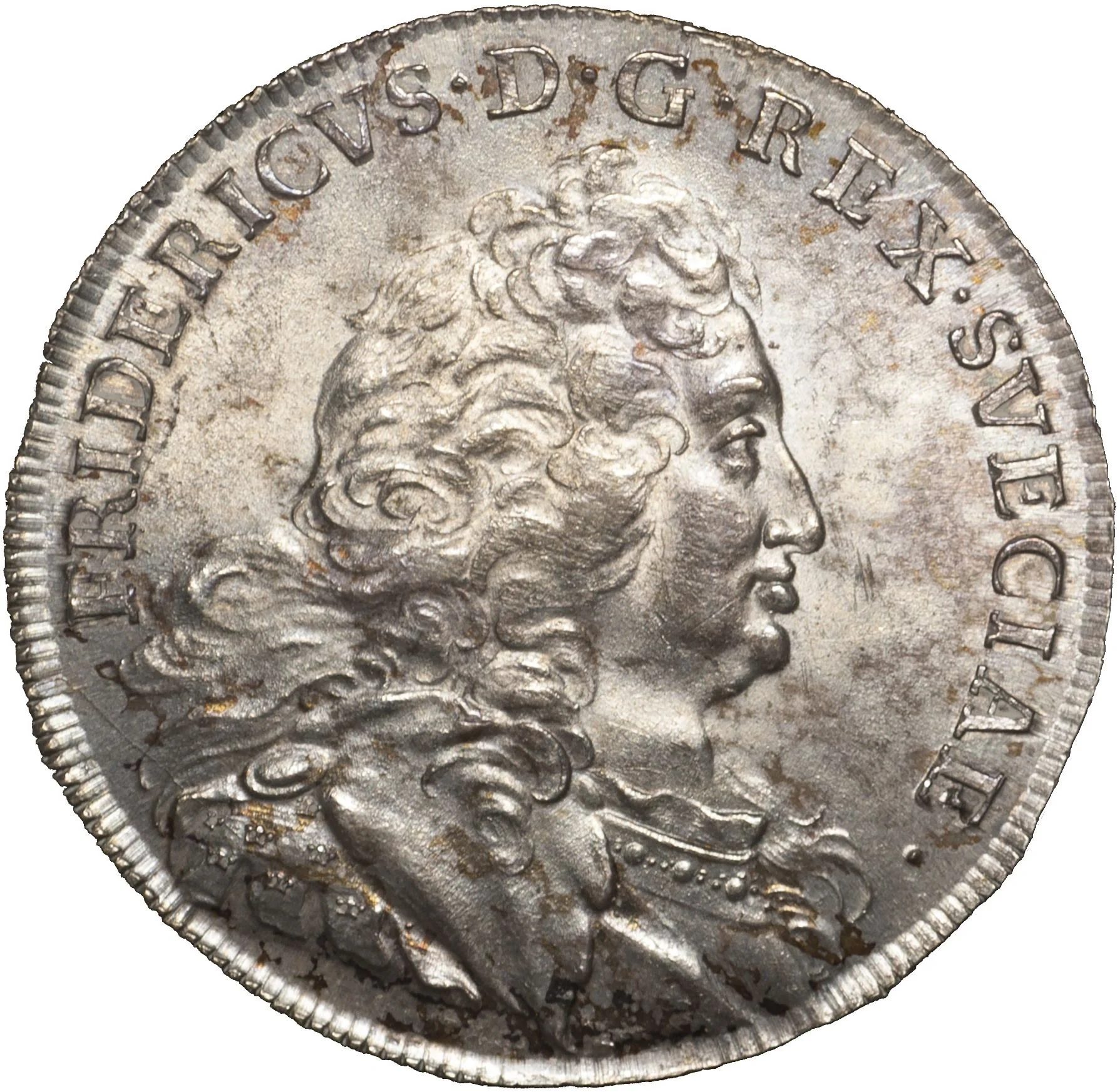
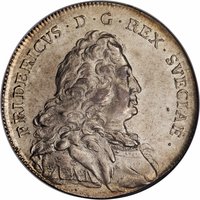
Bust of Frederick I in ornate armor, with long curly hair.
Inscription:
FRIDERICUS·D·G·REX·SVECIAE·
Script: Latin
Engraver: Johann Karl von Hedlinger
Reverse
Description:
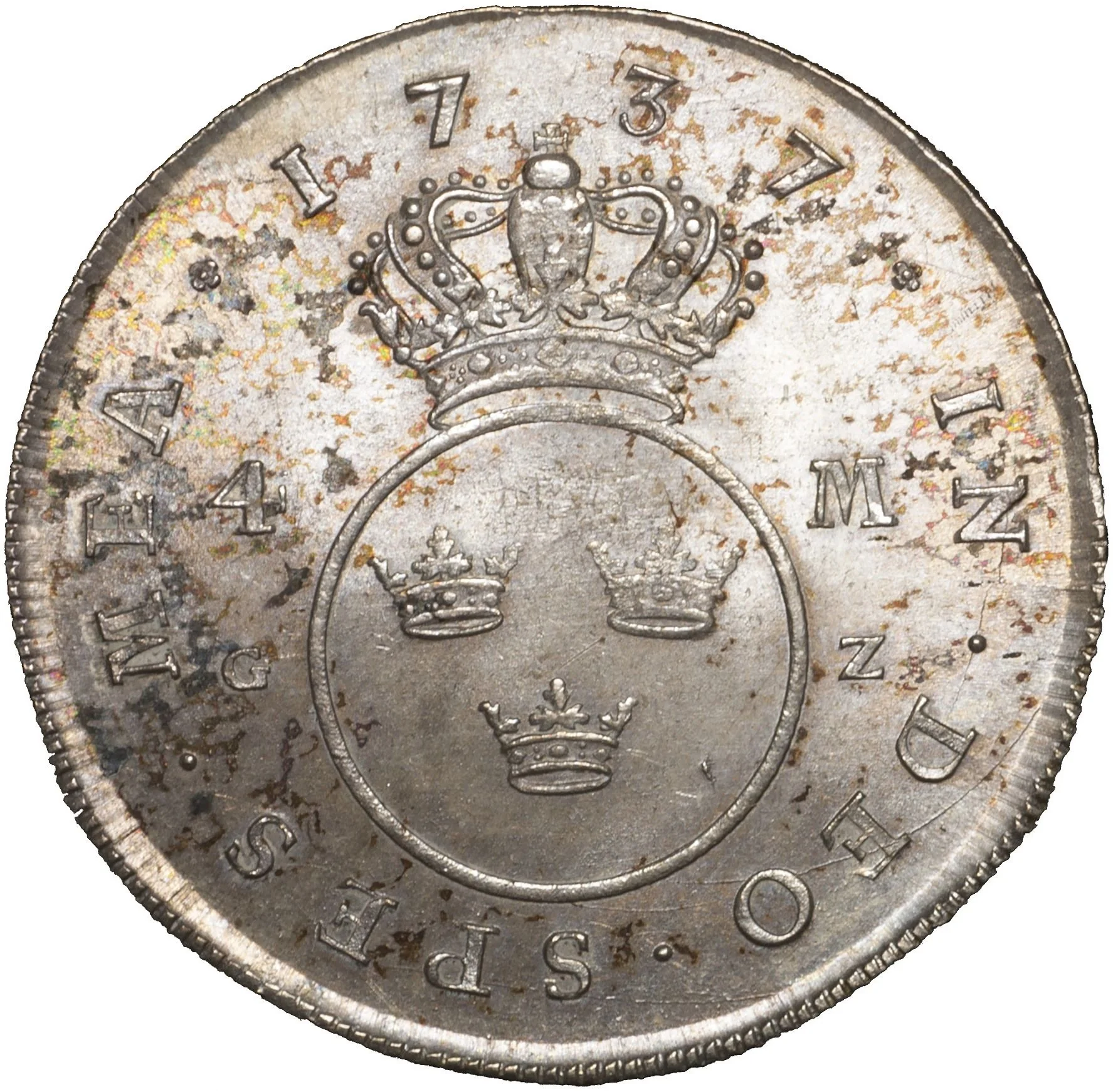
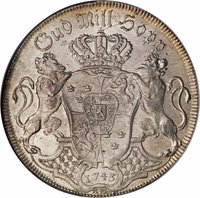
Three Swedish crowns within a crowned circle, flanked by value and mintmark, encircled by legend.
Inscription:
IN·DEO·SPES·MEA·1738·
4 M
G Z
4 M
G Z
Script: Latin
Engraver: Johann Karl von Hedlinger
Edge
Diagonal reeding
Mints
| Name | Mark |
|---|---|
| Stockholm | — |
Mintings
| Year | Mint Mark | Mintage | Quality | Collection |
|---|---|---|---|---|
| 1737 | — | 17,000 | ||
| 1738 | — | 14,000 |
Historical background
In 1737, Sweden was operating under a complex and strained monetary system, a legacy of its period as a great power in the 17th century. The official currency was the silver riksdaler, but decades of war financing had led to severe debasement and the widespread circulation of depreciated copper plate money (plåtmynt) and paper credit notes. This created a confusing dual system where the intrinsic metal value of coins often differed significantly from their face value, leading to chronic instability, hoarding of silver, and a lack of public trust in the currency.
The situation was actively managed by the Riksens Ständers Bank (the precursor to the Riksbank), which held a monopoly on note issuance. However, the bank's policies were often driven by the state's fiscal needs rather than monetary stability. To stimulate a struggling economy and facilitate exchange, the bank had embarked on issuing inconvertible paper money, known as transportsedlar. These were initially intended as credit notes but increasingly functioned as a forced paper currency, as their conversion into specie (silver) was limited and uncertain.
Consequently, 1737 fell within a precarious period of experimentation with fiduciary money, setting the stage for future troubles. While the paper notes provided short-term liquidity for commerce, they were underpinned by insufficient silver reserves and state credit. This inherent weakness would culminate a few years later, in the 1740s, in a severe loss of value and a currency crisis, forcing a painful restructuring. Thus, the monetary landscape of 1737 was one of fragile transition, caught between a discredited metallic past and an unsecured paper future.
The situation was actively managed by the Riksens Ständers Bank (the precursor to the Riksbank), which held a monopoly on note issuance. However, the bank's policies were often driven by the state's fiscal needs rather than monetary stability. To stimulate a struggling economy and facilitate exchange, the bank had embarked on issuing inconvertible paper money, known as transportsedlar. These were initially intended as credit notes but increasingly functioned as a forced paper currency, as their conversion into specie (silver) was limited and uncertain.
Consequently, 1737 fell within a precarious period of experimentation with fiduciary money, setting the stage for future troubles. While the paper notes provided short-term liquidity for commerce, they were underpinned by insufficient silver reserves and state credit. This inherent weakness would culminate a few years later, in the 1740s, in a severe loss of value and a currency crisis, forcing a painful restructuring. Thus, the monetary landscape of 1737 was one of fragile transition, caught between a discredited metallic past and an unsecured paper future.
✨ Legendary