

½ Ducat – Sweden
Sweden
Context
Years: 1735–1738
Issuer: Sweden 
Ruler: Frederick I
Currency:
(1719—1798)
Demonetized: Yes
Total mintage: 706
Material
References
KM: #Click to copy to clipboard422
Numista: #64151
Value
Bullion value: $282.83
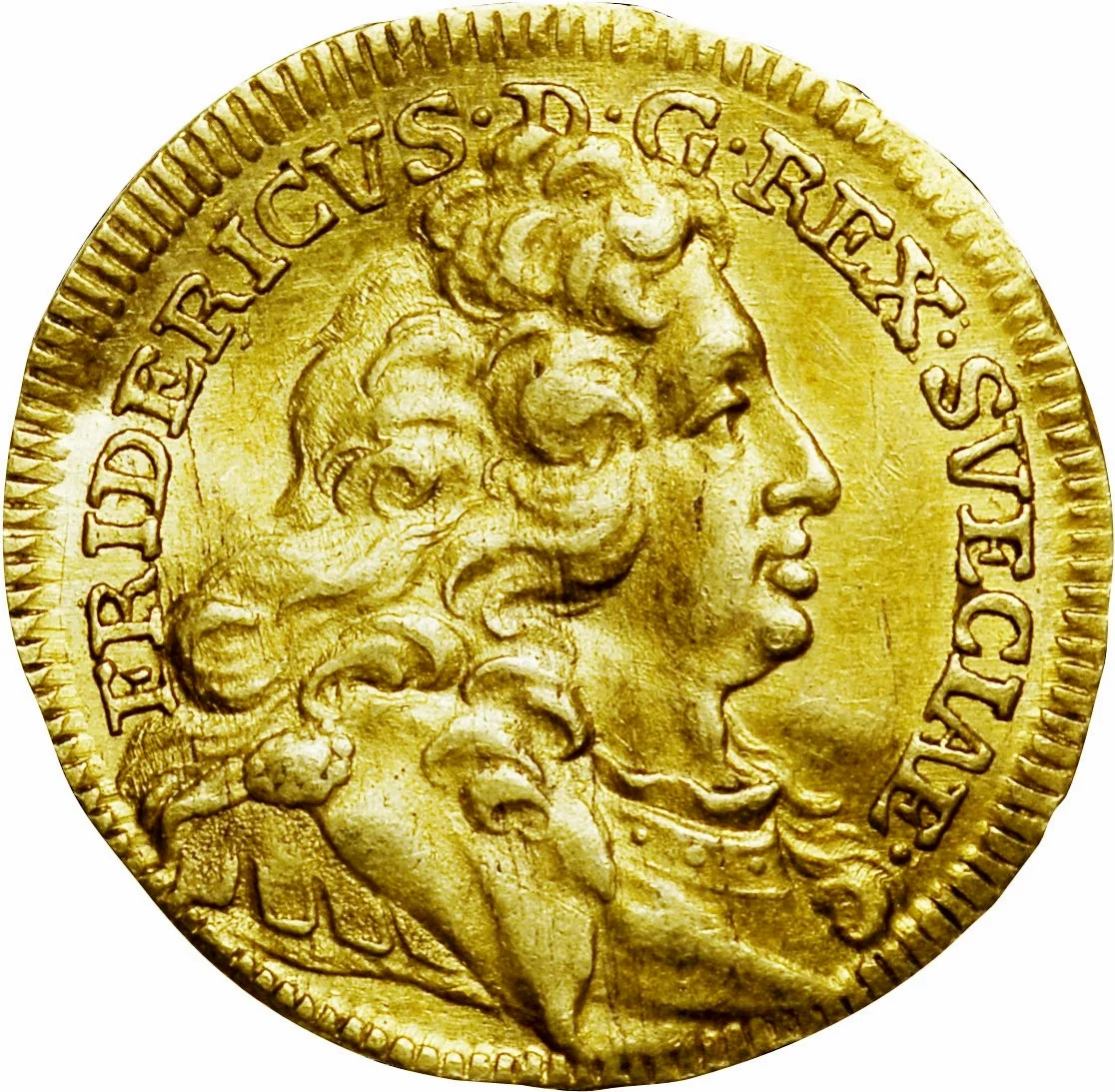
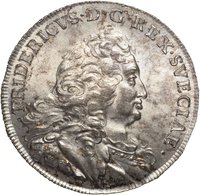
Obverse
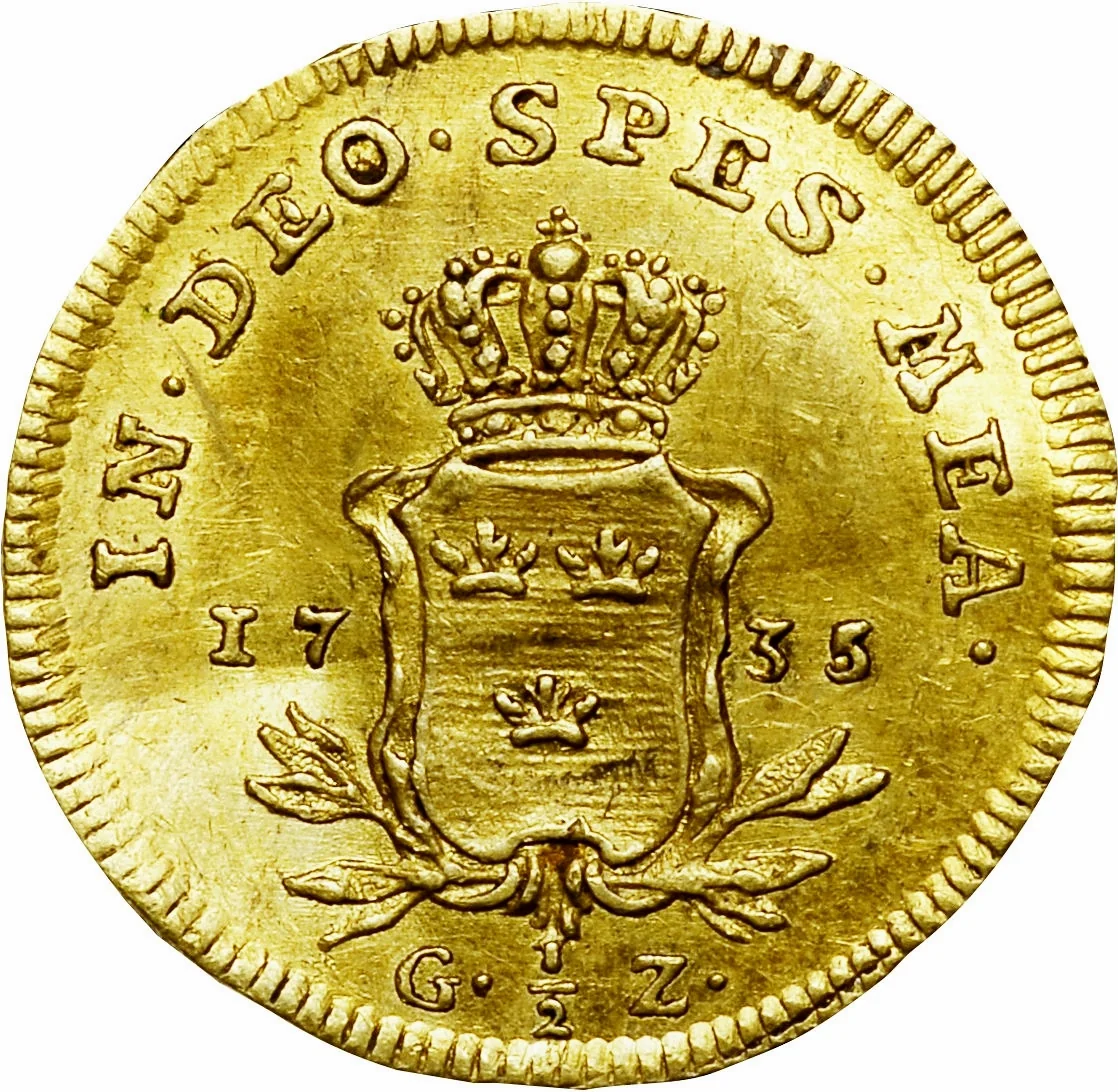
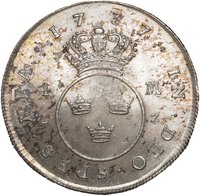
Reverse
Description:
Shield with Sweden's three crowns divides date between sprigs. Value and mintmark below.
Inscription:
IN•DEO•SPES•MEA•
17 35
G.Z.
1/2
17 35
G.Z.
1/2
Script: Latin
Edge
Categories
| Symbols> Coat of Arms |
Mints
| Name | Mark |
|---|---|
| Stockholm | — |
Mintings
| Year | Mint Mark | Mintage | Quality | Collection |
|---|---|---|---|---|
| 1735 | — | 304 | ||
| 1738 | — | 402 |
Historical background
In 1735, Sweden was navigating a complex and challenging monetary landscape, a direct legacy of its failed Great Power ambitions in the 17th century. The state was burdened by massive debts from the Great Northern War (1700-1721), which had been financed largely through the repeated debasement of the silver daler coinage. This resulted in a severe loss of public confidence in the currency and rampant inflation. The monetary system was a confusing tangle of old, clipped, and newer, lower-quality coins circulating simultaneously, alongside a separate system of government-issued paper credit notes. This created a dual-currency reality where transactions were fraught with uncertainty over real value.
The period was characterized by the government's ongoing struggle to stabilize the currency and restore fiscal order under the "Age of Liberty" parliamentary regime. A pivotal reform had been attempted in 1726 with the introduction of the riksdaler specie, a new silver coin intended to have a fixed intrinsic value and restore trust. However, by 1735, this reform was still in its fragile early stages. The public remained skeptical, and the older, debased coinage (mynt) continued to circulate at officially mandated rates that did not reflect their true metal content, leading to persistent economic distortions and hoarding of good silver.
Consequently, the currency situation in 1735 was one of cautious transition and underlying instability. While the framework for a sound metallic standard existed on paper, the practical economy still suffered from the hangover of wartime finance. The success of the new riksdaler depended entirely on the Riksdag's ability to maintain fiscal discipline and avoid the temptation of further debasement, a political challenge that would define Swedish economic policy for decades to come. The era thus represents a critical juncture between the inflationary chaos of the past and the slow, difficult march toward monetary stability.
The period was characterized by the government's ongoing struggle to stabilize the currency and restore fiscal order under the "Age of Liberty" parliamentary regime. A pivotal reform had been attempted in 1726 with the introduction of the riksdaler specie, a new silver coin intended to have a fixed intrinsic value and restore trust. However, by 1735, this reform was still in its fragile early stages. The public remained skeptical, and the older, debased coinage (mynt) continued to circulate at officially mandated rates that did not reflect their true metal content, leading to persistent economic distortions and hoarding of good silver.
Consequently, the currency situation in 1735 was one of cautious transition and underlying instability. While the framework for a sound metallic standard existed on paper, the practical economy still suffered from the hangover of wartime finance. The success of the new riksdaler depended entirely on the Riksdag's ability to maintain fiscal discipline and avoid the temptation of further debasement, a political challenge that would define Swedish economic policy for decades to come. The era thus represents a critical juncture between the inflationary chaos of the past and the slow, difficult march toward monetary stability.
✨ Legendary