

1 Riksdaler – Sweden
Sweden
Context
Years: 1738–1748
Issuer: Sweden 
Ruler: Frederick I
Currency:
(1719—1798)
Demonetized: Yes
Total mintage: 61,423
Material
References
KM: #Click to copy to clipboard423
Numista: #37567
Value
Bullion value: $73.03
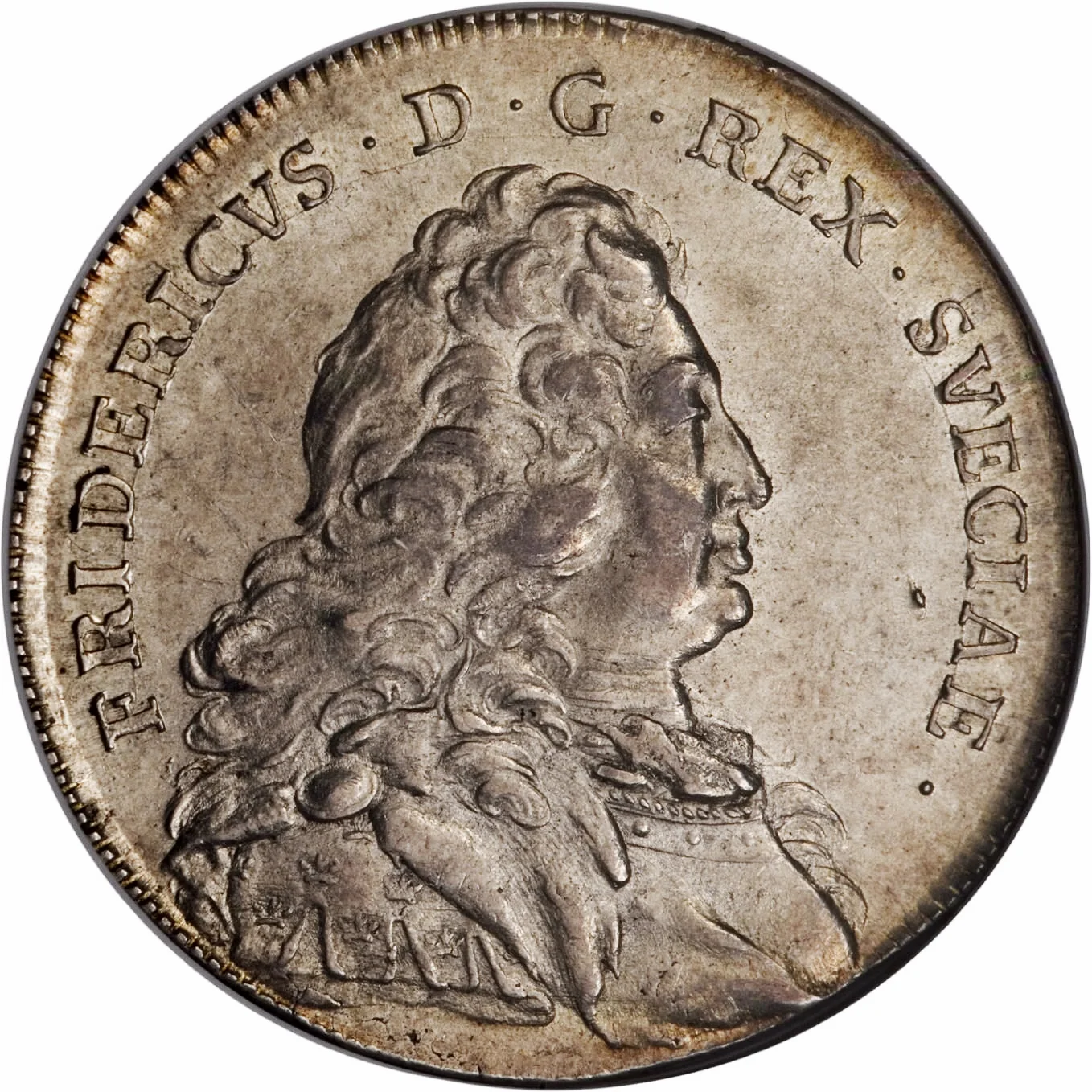
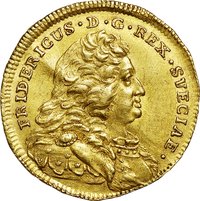
Obverse
Description:
Bust of Frederick I, right-facing.
Inscription:
FRIDERICUS•D•G•REX•SVECIAE•
Script: Latin
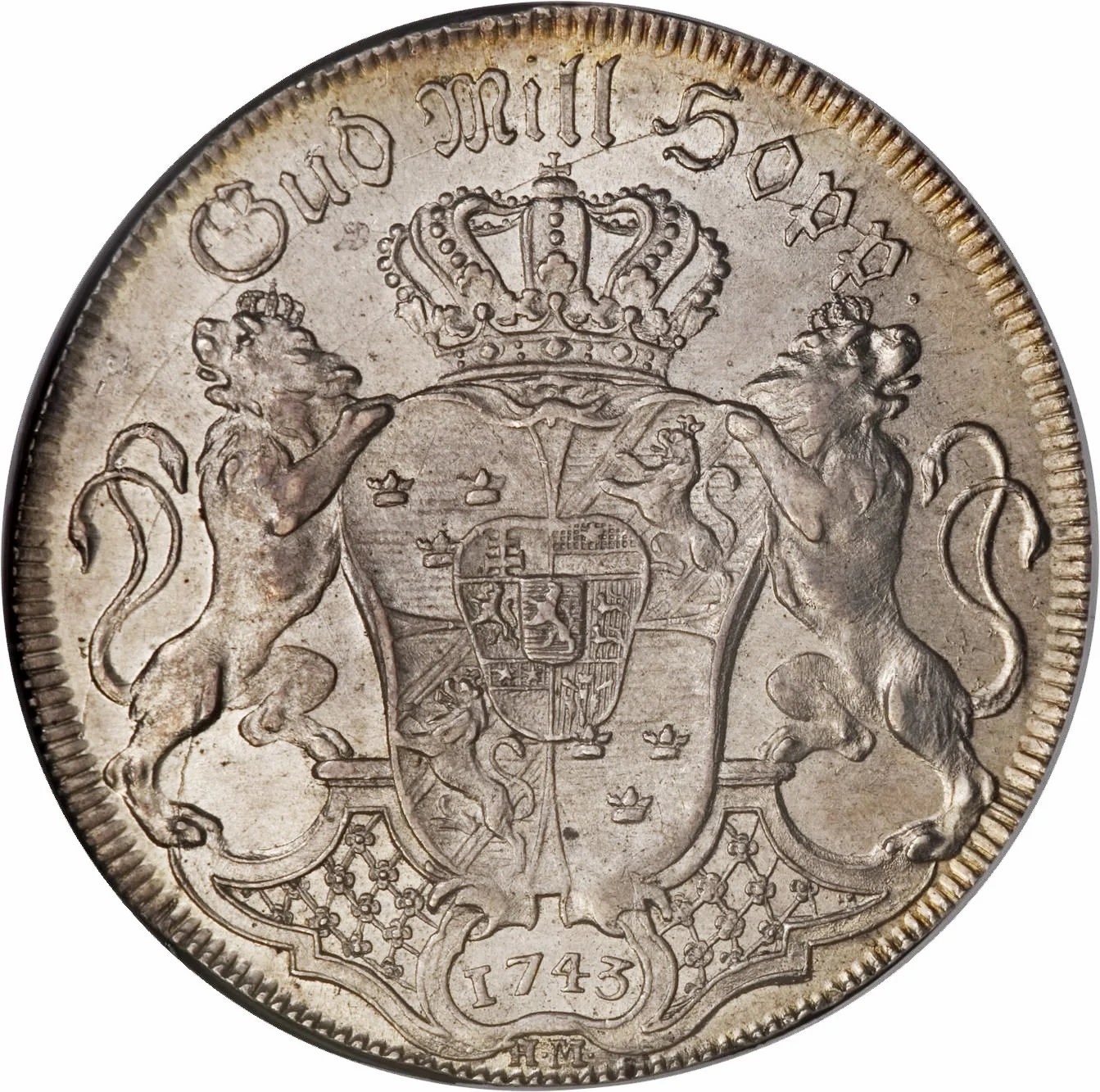
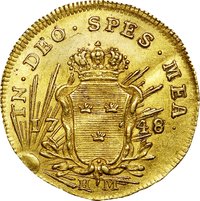
Reverse
Description:
Ornate shield with crown, supporters, date in cartouche, and mintmark.
Inscription:
Gud Mitt Hopp .
1743
HM
1743
HM
Scripts: Latin, Latin (Fraktur blackletter)
Edge
Categories
| Symbols> Coat of Arms |
Mints
| Name | Mark |
|---|---|
| Stockholm | — |
Mintings
| Year | Mint Mark | Mintage | Quality | Collection |
|---|---|---|---|---|
| 1738 | — | — | ||
| 1739 | — | 13,254 | ||
| 1740 | — | 10,704 | BU | |
| 1741 | — | 8,799 | ||
| 1742 | — | 486 | ||
| 1743 | — | 4,372 | ||
| 1744 | — | 8,948 | ||
| 1746 | — | 3,383 | ||
| 1747 | — | 4,194 | ||
| 1748 | — | 7,283 |
Historical background
In 1738, Sweden was operating under a complex and strained monetary system, a legacy of its period as a great power in the previous century. The official currency was the silver riksdaler, but decades of war financing had led to severe debasement. The government, notably under King Charles XII, had issued vast quantities of copper plate money (plåtmynt) and low-quality silver coinage to cover expenses, creating a system where the intrinsic metal value of coins was often far below their face value. This resulted in a chronic shortage of trustworthy specie and a circulation flooded with depreciated and foreign coins, causing significant confusion and hindering trade.
The situation was actively managed by the Riksens Ständers Bank (the Bank of the Estates of the Realm), founded in 1668 and the world's oldest central bank. However, in 1738, the bank was still grappling with the aftermath of the failed monetary experiments of the 1710s, known as the "plate money period." While a stabilization had been attempted earlier in the 1730s, the money supply remained unstable. The bank's notes, an early form of paper currency, were not yet fully trusted and circulated alongside the problematic metal coins, with their value often fluctuating.
Economically, 1738 fell within the so-called "Age of Liberty" (1719-1772), a period of parliamentary rule. The monetary chaos was a central concern for the Riksdag (parliament), as it directly impacted state finances, public debt, and the nation's emerging mercantile interests. Debates raged between the "Hat" and "Cap" parties on how to achieve stability—whether through stricter metallism or managed currency. Thus, the currency situation in 1738 was not merely a technical financial issue but a pressing political problem, setting the stage for future reforms aimed at establishing a more reliable and unified monetary standard.
The situation was actively managed by the Riksens Ständers Bank (the Bank of the Estates of the Realm), founded in 1668 and the world's oldest central bank. However, in 1738, the bank was still grappling with the aftermath of the failed monetary experiments of the 1710s, known as the "plate money period." While a stabilization had been attempted earlier in the 1730s, the money supply remained unstable. The bank's notes, an early form of paper currency, were not yet fully trusted and circulated alongside the problematic metal coins, with their value often fluctuating.
Economically, 1738 fell within the so-called "Age of Liberty" (1719-1772), a period of parliamentary rule. The monetary chaos was a central concern for the Riksdag (parliament), as it directly impacted state finances, public debt, and the nation's emerging mercantile interests. Debates raged between the "Hat" and "Cap" parties on how to achieve stability—whether through stricter metallism or managed currency. Thus, the currency situation in 1738 was not merely a technical financial issue but a pressing political problem, setting the stage for future reforms aimed at establishing a more reliable and unified monetary standard.
✨ Legendary