

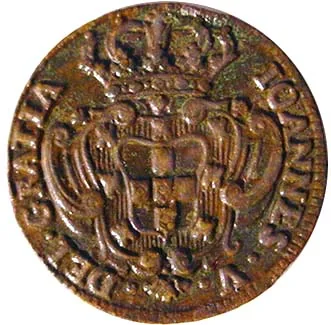

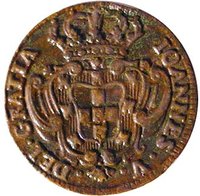
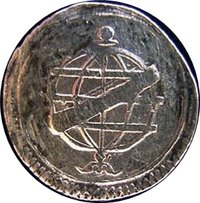
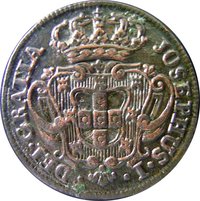
Obverse
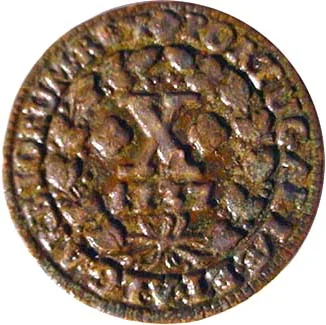
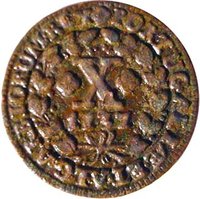
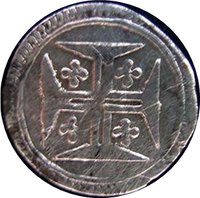
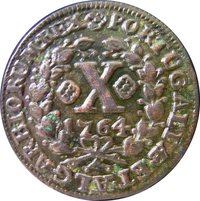
Reverse
Description:
Wreath value, date beneath.
Inscription:
PORTUGALIÆ · ET · ALGARBIORUM · REX
X
1737
X
1737
Script: Latin
Edge
Plain
Mints
| Name | Mark |
|---|---|
| Imprensa Nacional - Casa da Moeda | — |
Mintings
| Year | Mint Mark | Mintage | Quality | Collection |
|---|---|---|---|---|
| 1737 | — | — | ||
| 1738 | — | — | ||
| 1742 | — | — | ||
| 1743 | — | — | ||
| 1744 | — | — | ||
| 1745 | — | — | ||
| 1746 | — | — | ||
| 1747 | — | — | ||
| 1748 | — | — | ||
| 1749 | — | — |
Historical background
In 1737, Portugal’s currency situation was characterized by profound instability and debasement, a legacy of King John V’s extravagant spending and the prior economic policies of his father, Peter II. The kingdom was operating on a bimetallic system of gold cruzados and silver réis, but the century had seen a severe shortage of precious metals in circulation. To finance lavish court expenditures, monumental building projects like the Convent of Mafra, and a costly foreign policy, the crown repeatedly resorted to minting coins with reduced precious metal content. This practice, combined with the massive influx of Brazilian gold that was increasingly directed to England via trade treaties (like the Methuen Treaty of 1703), led to a steady devaluation of Portuguese currency and rampant inflation, eroding both domestic commerce and international financial credibility.
The monetary chaos was further exacerbated by a proliferation of outdated and foreign coins circulating within the realm. Older, full-weight coins were hoarded or melted down, leaving the debased newer currency in common use—a classic example of Gresham’s Law, where "bad money drives out good." Furthermore, the accounting system was complex and anachronistic, based on the real (plural réis), with values often expressed in the thousands (milréis). This instability created significant difficulties for merchants, complicated tax collection, and placed a heavy burden on the lower classes, whose wages failed to keep pace with rising prices for basic goods.
Despite the glaring problems, 1737 fell within a period of administrative inertia regarding monetary reform under John V. The king, focused on consolidating royal absolutism and patronage, did not undertake a comprehensive recoinage or stabilization during this specific year. The decisive actions would come later, under his successor Joseph I, and his powerful minister, the Marquis of Pombal, who in the 1750s would implement sweeping reforms to restore confidence in the currency. Thus, 1737 represents a point of continued strain within a longer crisis, where the economic foundations of the Portuguese Empire were being undermined by fiscal mismanagement and an unfavorable balance of trade, all while Brazilian gold paradoxically flowed through Lisbon without stabilizing its coinage.
The monetary chaos was further exacerbated by a proliferation of outdated and foreign coins circulating within the realm. Older, full-weight coins were hoarded or melted down, leaving the debased newer currency in common use—a classic example of Gresham’s Law, where "bad money drives out good." Furthermore, the accounting system was complex and anachronistic, based on the real (plural réis), with values often expressed in the thousands (milréis). This instability created significant difficulties for merchants, complicated tax collection, and placed a heavy burden on the lower classes, whose wages failed to keep pace with rising prices for basic goods.
Despite the glaring problems, 1737 fell within a period of administrative inertia regarding monetary reform under John V. The king, focused on consolidating royal absolutism and patronage, did not undertake a comprehensive recoinage or stabilization during this specific year. The decisive actions would come later, under his successor Joseph I, and his powerful minister, the Marquis of Pombal, who in the 1750s would implement sweeping reforms to restore confidence in the currency. Thus, 1737 represents a point of continued strain within a longer crisis, where the economic foundations of the Portuguese Empire were being undermined by fiscal mismanagement and an unfavorable balance of trade, all while Brazilian gold paradoxically flowed through Lisbon without stabilizing its coinage.
🌱 Fairly Common