

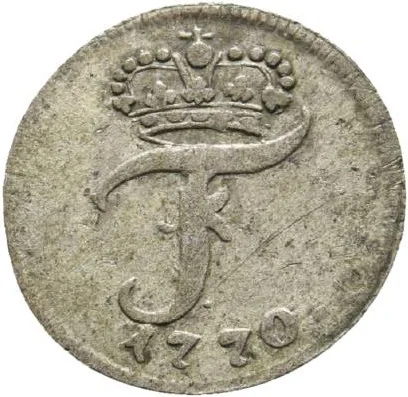
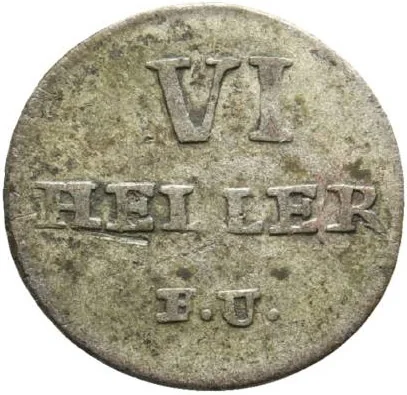
6 Hellers – Landgraviate of Hesse-Cassel
Context
References
KM: #Click to copy to clipboard495
Numista: #182065
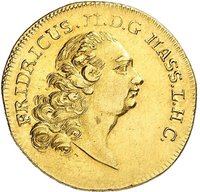
Obverse
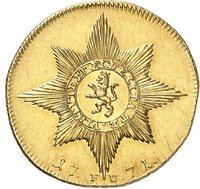
Reverse
Edge
Mints
| Name | Mark |
|---|---|
| Kassel | — |
Mintings
| Year | Mint Mark | Mintage | Quality | Collection |
|---|---|---|---|---|
| 1770 | — | — |
Historical background
In 1770, the Landgraviate of Hesse-Cassel operated within the complex and fragmented monetary system of the Holy Roman Empire. The official currency was based on the Reichsthaler, a large silver coin defined by imperial decree, but the reality was a proliferation of circulating coins from various German states and foreign entities. This created a constant challenge of exchange rates and valuation, complicating both daily trade and state finances. Furthermore, the landgraviate itself minted its own smaller denomination coins, such as the Albus and Heller, which were essential for local transactions but whose value was often subject to fluctuation and debasement relative to the stable silver Reichsthaler.
The situation was directly managed by the landgrave, Frederick II, who viewed the monetary system as a key instrument of state power and revenue. The minting rights (Münzregal) were a cherished sovereign privilege, and seigniorage—the profit made from minting coins—provided important income for the treasury, especially for funding his renowned mercenary army. However, this incentive could lead to the temptation of debasement, reducing the silver content to create more coins from the same bullion, which risked inflation and loss of public trust. Frederick II generally pursued a policy of maintaining relatively stable and high-quality coinage to foster economic confidence and facilitate the landgraviate’s active role in international trade and finance.
By the 1770s, Hesse-Cassel was notably one of the wealthiest German principalities, partly due to its efficient taxation and the hiring out of its soldiers. This fiscal strength provided a buffer against the worst instabilities of the period's currency chaos. Nevertheless, the monetary landscape remained a patchwork, requiring constant administration to manage the coexistence of full-bodied silver coins for large-scale and international use alongside fiduciary small change for everyday life. This duality set the stage for future monetary reforms, as Enlightenment ideas about standardized and state-controlled currency began to gain influence later in the century.
The situation was directly managed by the landgrave, Frederick II, who viewed the monetary system as a key instrument of state power and revenue. The minting rights (Münzregal) were a cherished sovereign privilege, and seigniorage—the profit made from minting coins—provided important income for the treasury, especially for funding his renowned mercenary army. However, this incentive could lead to the temptation of debasement, reducing the silver content to create more coins from the same bullion, which risked inflation and loss of public trust. Frederick II generally pursued a policy of maintaining relatively stable and high-quality coinage to foster economic confidence and facilitate the landgraviate’s active role in international trade and finance.
By the 1770s, Hesse-Cassel was notably one of the wealthiest German principalities, partly due to its efficient taxation and the hiring out of its soldiers. This fiscal strength provided a buffer against the worst instabilities of the period's currency chaos. Nevertheless, the monetary landscape remained a patchwork, requiring constant administration to manage the coexistence of full-bodied silver coins for large-scale and international use alongside fiduciary small change for everyday life. This duality set the stage for future monetary reforms, as Enlightenment ideas about standardized and state-controlled currency began to gain influence later in the century.
✨ Legendary