Logo Title
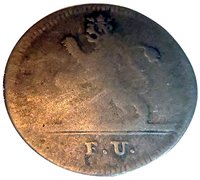
obverse
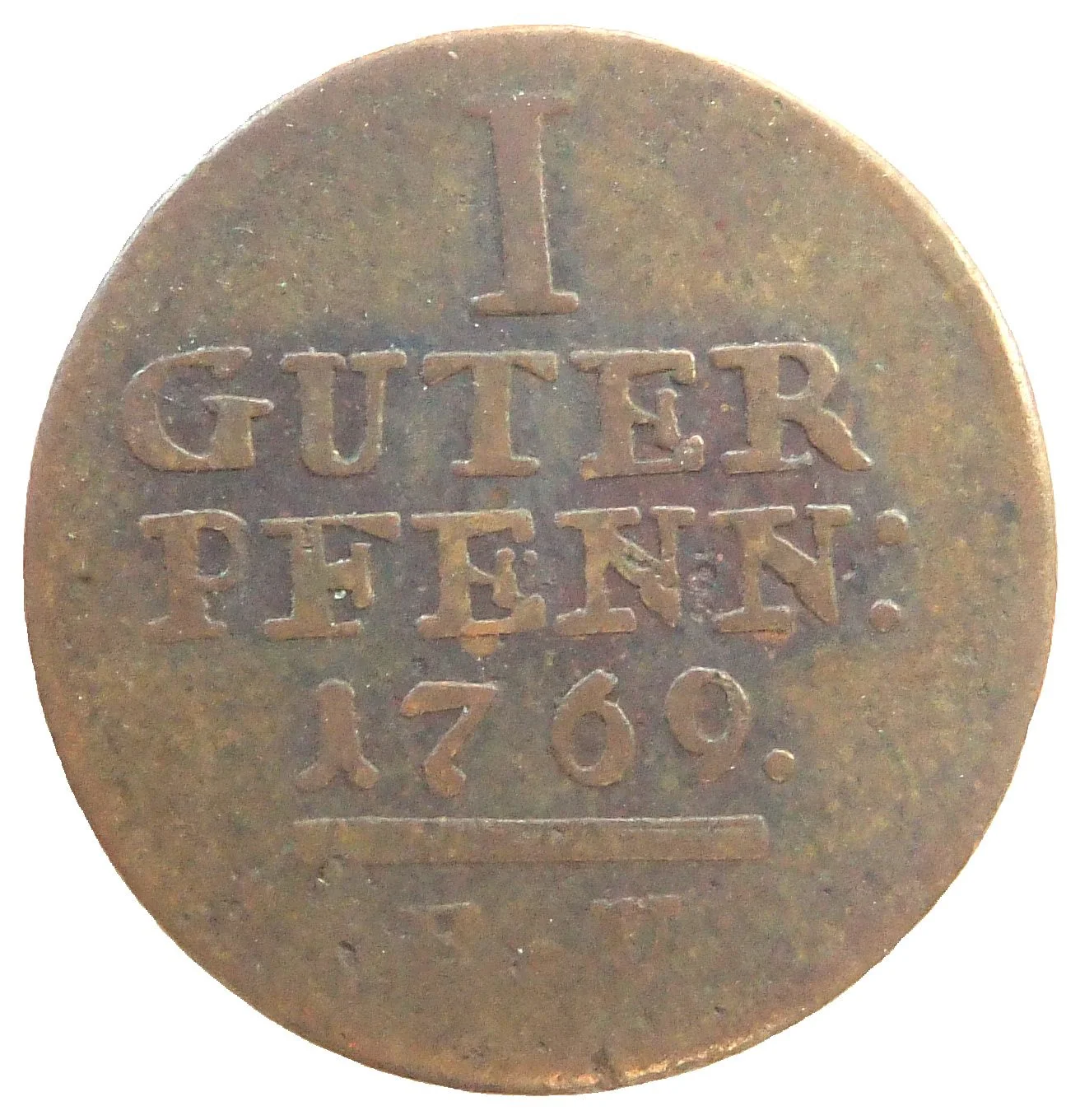
reverse
Pfennighüter CC0

1 Pfennig – Landgraviate of Hesse-Cassel

Context
Year: 1769
Currency:
Demonetized: Yes
Material
Diameter: 20.5 mm
Weight: 2.78 g
Shape: Round
Composition: Copper
Magnetic: No
References
KM: #Click to copy to clipboard34.2
Numista: #465290

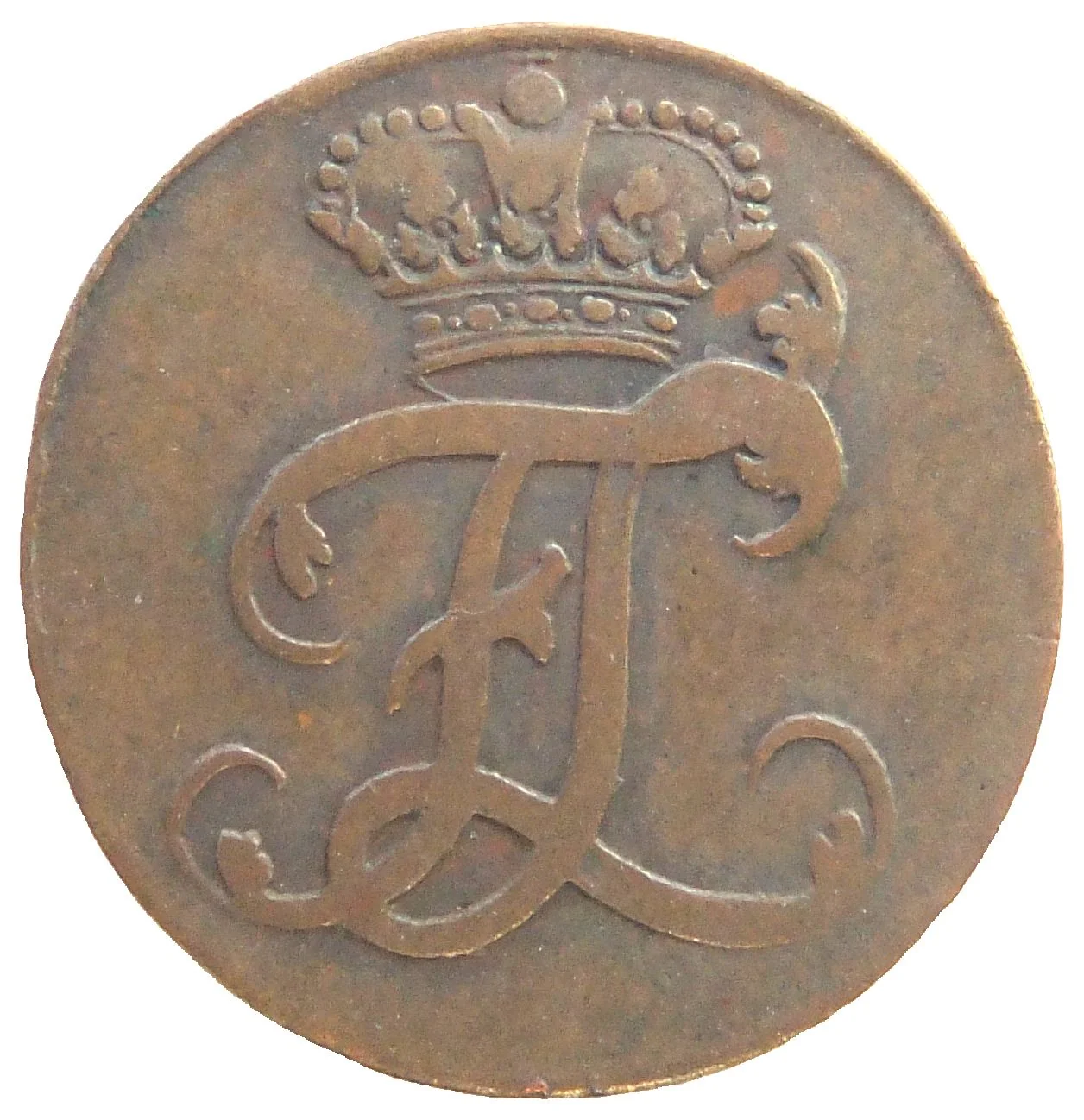
Obverse

Description:
Crowned initials.
Inscription:
FL
Script: Latin

Reverse

Description:
Value, year, mint master initials.
Inscription:
I

GUTER

PFENN:

1769.

____

F.U.
Script: Latin

Edge
Mints

NameMark
Kassel

Mintings

YearMint MarkMintageQualityCollection
1769

Historical background

In 1769, the currency situation in the Landgraviate of Hesse-Cassel was one of relative stability and strength, a notable achievement in the fragmented and often chaotic monetary landscape of the Holy Roman Empire. This stability was largely the legacy of Landgrave William VIII (ruled 1751-1760), who had instituted rigorous monetary reforms. He established a strict silver standard, centralized minting authority, and aggressively combated the circulation of debased foreign coins, ensuring that the Hesse-Cassel thaler and its subdivisions were trusted and widely accepted.

This sound currency was not merely an economic policy but a direct pillar of the state's formidable fiscal power. Hesse-Cassel was famously a Militärstaat (military state), and its reliable coinage facilitated the efficient collection of taxes and, most lucratively, the hiring out of its highly disciplined regiments as mercenaries to foreign powers. The substantial "subsidies" received, particularly from Great Britain during the ongoing Seven Years' War (which had ended in 1763), flowed into the treasury in stable foreign specie, which could be reliably minted into local currency without causing inflation.

Consequently, under the rule of Landgrave Frederick II in 1769, the Landgraviate enjoyed a robust and enviable fiscal position. The treasury was famously full, and the currency was among the hardest in the region. This financial strength provided the landgrave with significant political autonomy and funded ambitious court projects, while also creating a foundation for the state's later role as a crucial banker to Europe during the Napoleonic era. The monetary order of 1769 was thus a key instrument of Hesse-Cassel's power and prestige.
Legendary