

4 escudos – Spain
Add to wishlist
Spain
Context
Year: 1761
Issuer: Spain
Ruler: Charles III
Currency:
(1497—1833)
Demonetized: Yes
Total mintage: 3,825
Material
References
KM: #
Numista: #107472
Value
Bullion value: $1838.85
Obverse
Description:
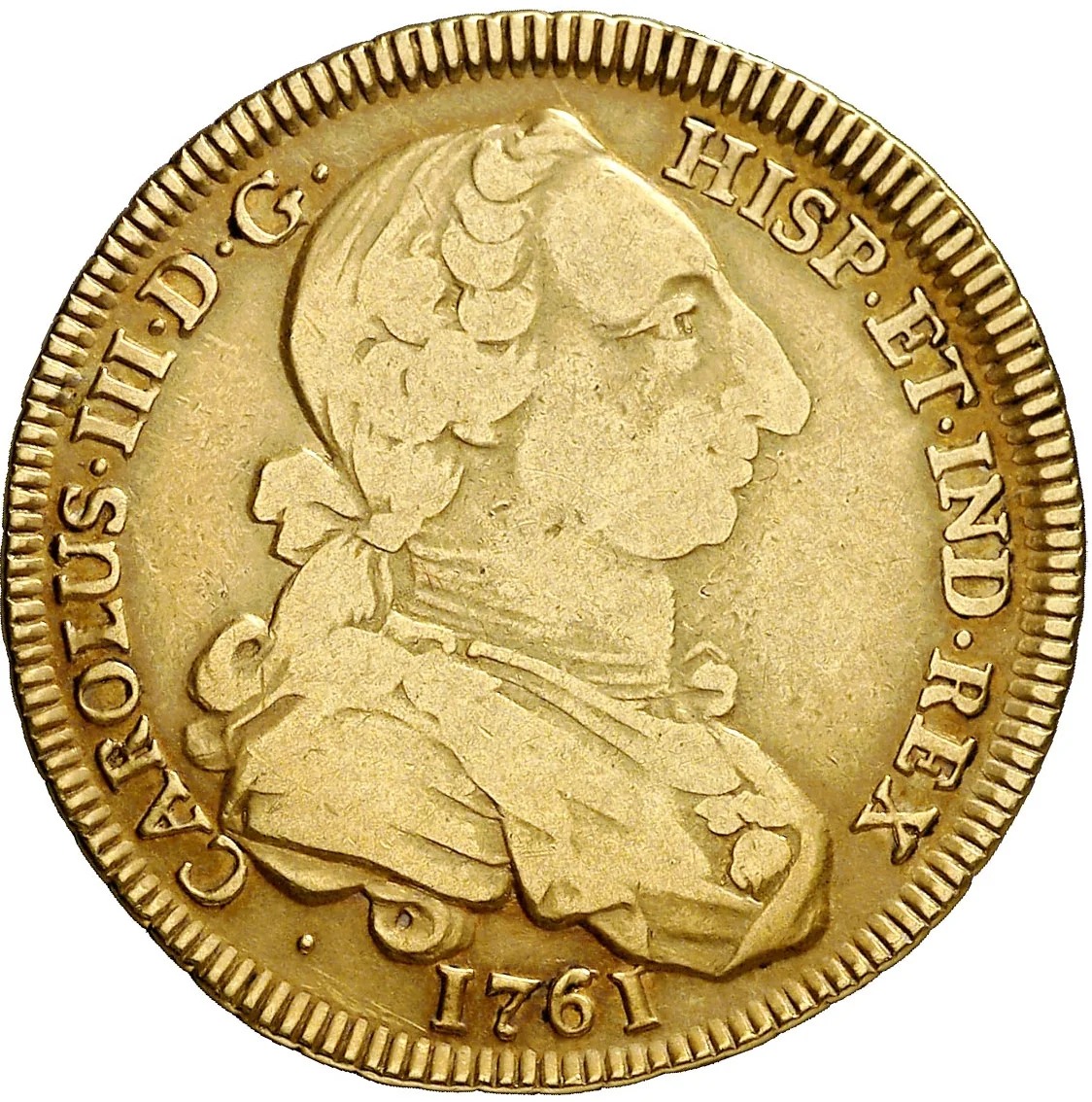
Armored bust of King Charles III facing right.
Inscription:
CAROL · III · D · G · HISP · ET IND · R ·
· 1761
· 1761
Script: Latin
Engraver: Tomás Francisco Prieto Martin
Reverse
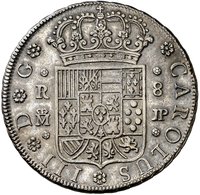
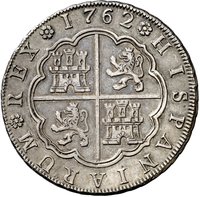
Description:
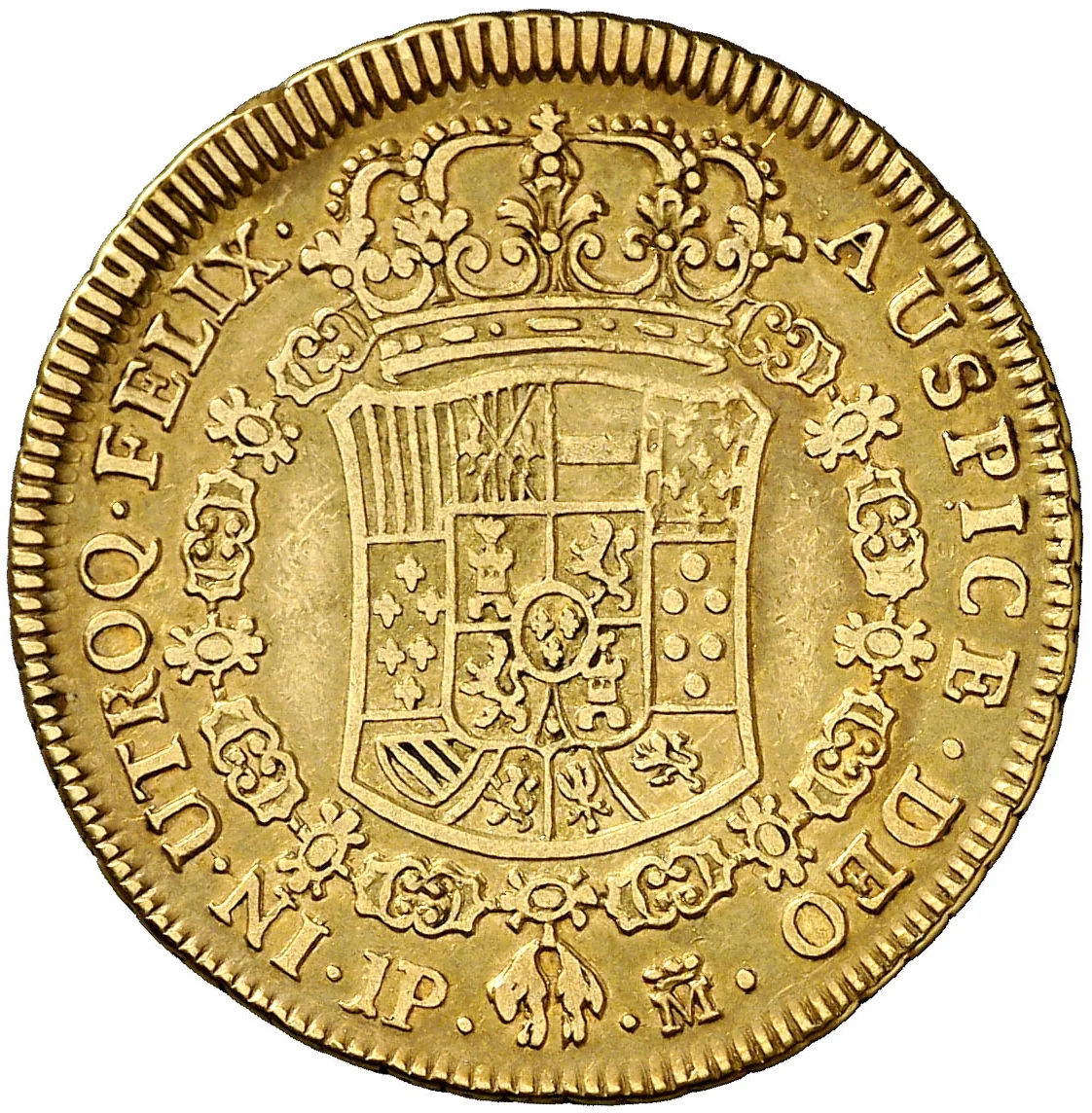
Crowned Spanish coat of arms with the Golden Fleece.
Inscription:
IN · UTROQ · FELIX · AUSPICE · DEO ·
JP· ·M·
JP· ·M·
Script: Latin
Engraver: Tomás Francisco Prieto Martin
Edge
Categories
| Symbols> Coat of Arms |
Mints
| Name | Mark |
|---|---|
| Royal Mint of Madrid | (M) |
Mintings
| Year | Mint Mark | Mintage | Quality | Collection |
|---|---|---|---|---|
| 1761 | MJP | 3,825 |
Historical background
In 1761, Spain's currency system was a complex and troubled reflection of the broader Bourbon monarchy's economic challenges. The primary circulating coin was the silver real, with the peso or "piece of eight" (8 reales) serving as a key international trade coin. However, the system was plagued by severe shortages of physical specie, particularly small-denomination coins for everyday transactions. This scarcity was a direct result of Spain's deeply negative balance of trade, which drained silver and gold from its American colonies to pay for manufactured goods from Northern Europe, leaving the domestic economy starved of circulating currency.
The monetary landscape was further complicated by a bewildering variety of older, debased, and foreign coins in circulation. Decades of war, most recently the costly Seven Years' War (in which Spain entered in 1762), had forced successive governments to debase the copper vellón coinage to finance deficits, eroding public trust. Consequently, coins from different reigns and regions circulated at varying and fluctuating premiums, creating chaos in commerce. The government of King Charles III, who had ascended the throne in 1759, recognized this monetary disorder as a major obstacle to economic modernization and fiscal stability.
Therefore, 1761 fell within a period of intense diagnosis and preparation for major reform. The Crown's ministers, influenced by Enlightenment ideas, were actively studying the problem, laying the groundwork for a sweeping monetary reorganization. This culminated just a few years later in the royal decree of 1772, which introduced a new, unified national coinage based on a bimetallic standard. Thus, the currency situation in 1761 was one of profound disorder, but stood on the precipice of a concerted Bourbon reform effort aimed at creating a stable, uniform currency to stimulate the Spanish economy.
The monetary landscape was further complicated by a bewildering variety of older, debased, and foreign coins in circulation. Decades of war, most recently the costly Seven Years' War (in which Spain entered in 1762), had forced successive governments to debase the copper vellón coinage to finance deficits, eroding public trust. Consequently, coins from different reigns and regions circulated at varying and fluctuating premiums, creating chaos in commerce. The government of King Charles III, who had ascended the throne in 1759, recognized this monetary disorder as a major obstacle to economic modernization and fiscal stability.
Therefore, 1761 fell within a period of intense diagnosis and preparation for major reform. The Crown's ministers, influenced by Enlightenment ideas, were actively studying the problem, laying the groundwork for a sweeping monetary reorganization. This culminated just a few years later in the royal decree of 1772, which introduced a new, unified national coinage based on a bimetallic standard. Thus, the currency situation in 1761 was one of profound disorder, but stood on the precipice of a concerted Bourbon reform effort aimed at creating a stable, uniform currency to stimulate the Spanish economy.
✨ Legendary