

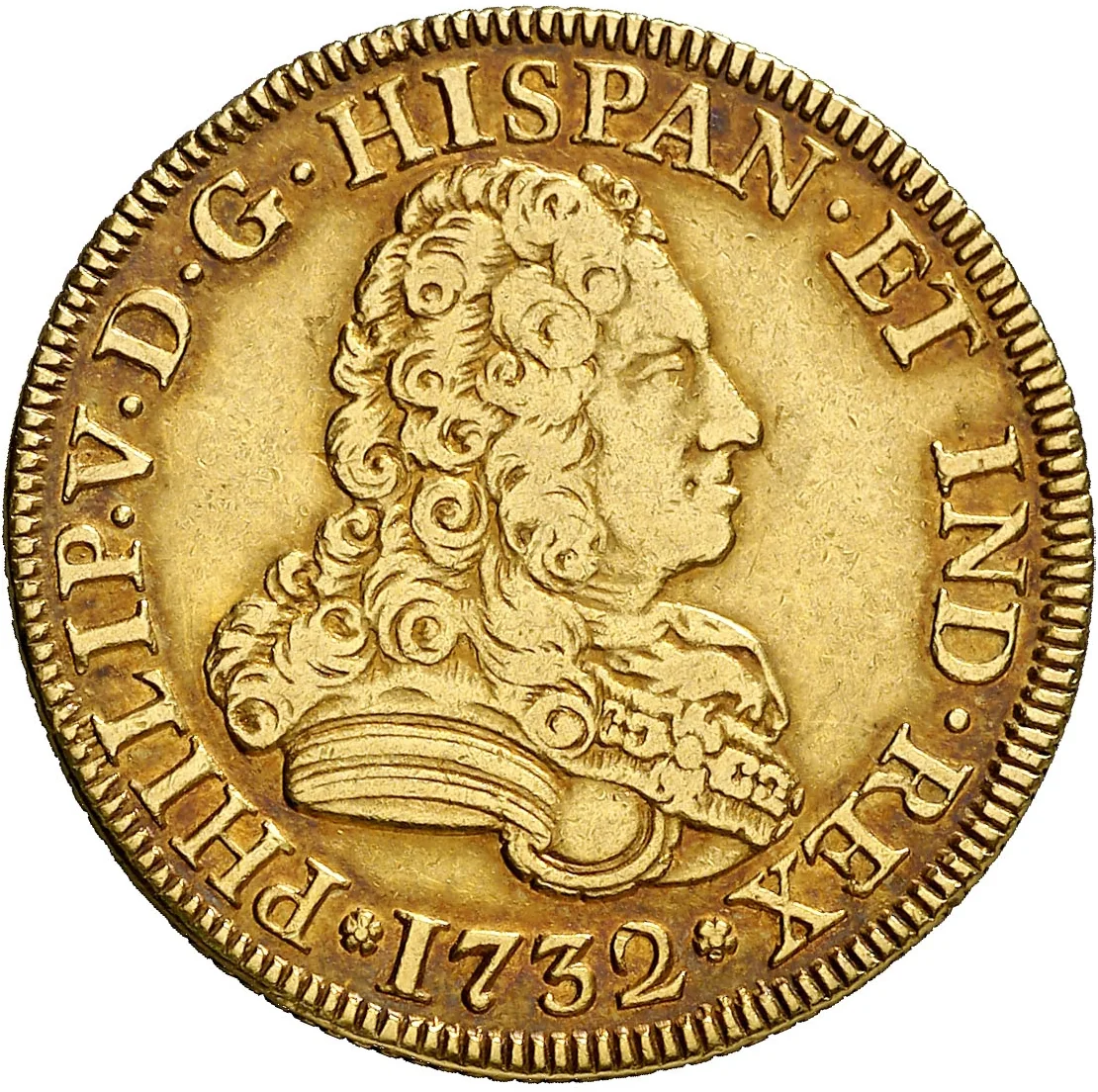
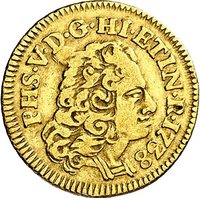
Obverse
Description:
Armored bust of Philip V in profile.
Inscription:
PHILIP · V · D · G · HISPAN ET IND · REX
❀ 1732 ❀
❀ 1732 ❀
Script: Latin
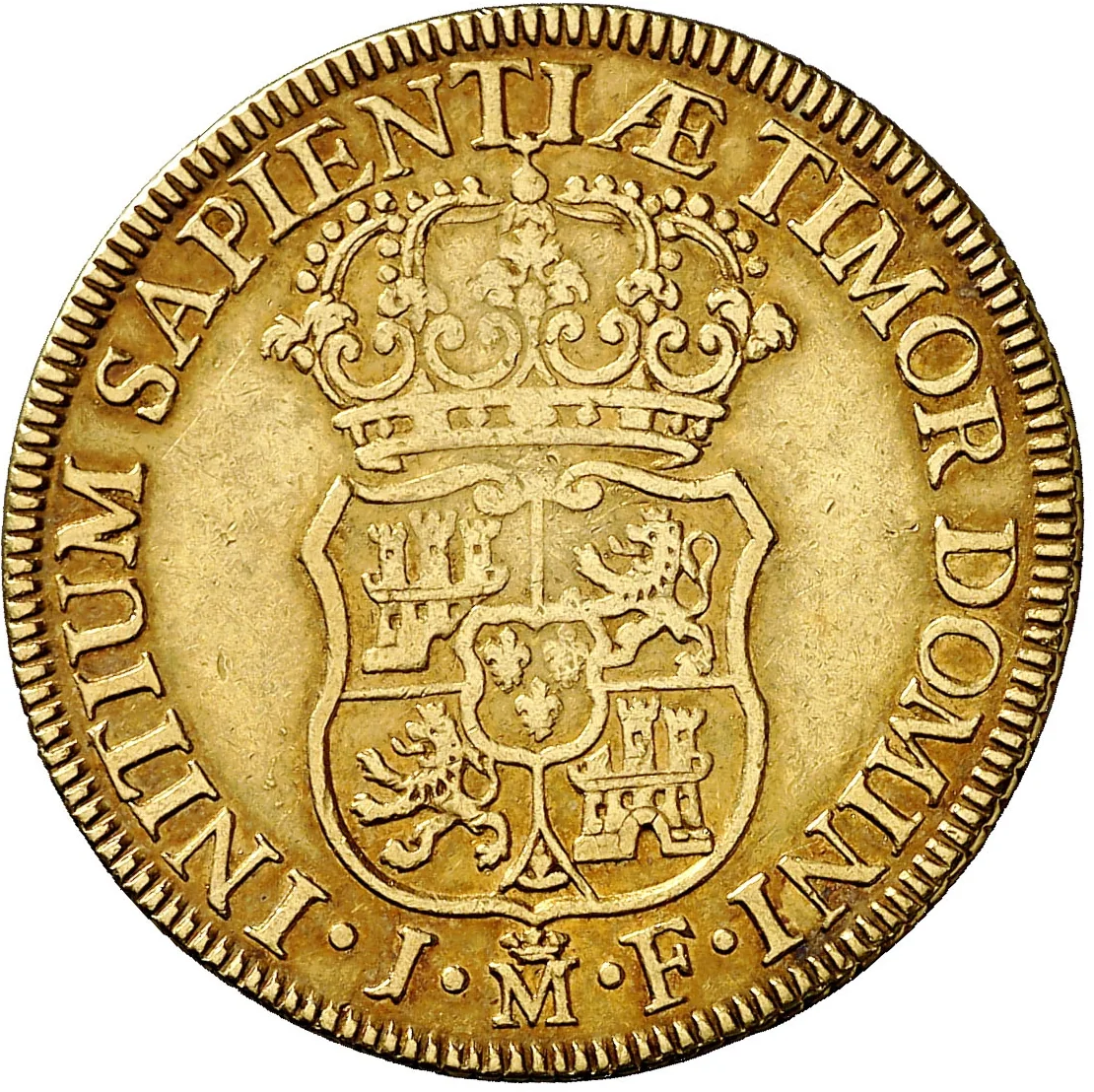
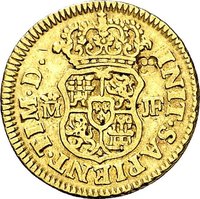
Reverse
Description:
Royal arms of Spain.
Inscription:
INITIUM SAPIENTIÆ TIMOR DOMINI
· J · M · F ·
· J · M · F ·
Script: Latin
Edge
Categories
| Symbols> Coat of Arms |
Mints
| Name | Mark |
|---|---|
| Royal Mint of Madrid | (M) |
Mintings
| Year | Mint Mark | Mintage | Quality | Collection |
|---|---|---|---|---|
| 1732 | MJF | 2,652 | ||
| 1733 | MJF | — | ||
| 1734 | MJF | 5,593 |
Historical background
In 1732, Spain operated under a complex and strained monetary system, a legacy of the Habsburg era that was proving difficult to reform under the Bourbon monarchy of King Philip V. The primary unit of account was the real, with eight reales making a peso or "piece of eight," a coin famous throughout the global trade networks. However, the physical currency in circulation was a chaotic mix. Alongside full-weight Spanish coins, there were vast quantities of debased and clipped domestic coins, as well as a flood of foreign silver, particularly from Spanish America, which varied widely in purity and acceptance. This created a chronic problem of trust and valuation in everyday transactions.
The root of the instability lay in the Crown's persistent financial demands, driven by costly European wars and the maintenance of its vast empire. To raise funds, the monarchy had repeatedly resorted to debasement—reducing the silver content in coins—and the issuance of excessive vellón, a cheap copper-based coinage intended for small change. The over-issue of vellón led to severe inflation, especially for common goods, and caused a disconnect between the officially mandated values of coins and their actual market worth in precious metal. This situation was exacerbated by regional disparities, with kingdoms like Catalonia sometimes resisting royal monetary decrees.
Despite these challenges, 1732 fell within a period of attempted stabilization under Philip V’s reforms. Efforts were being made to centralize control over the mints and to introduce more uniform coinage, laying groundwork for future reforms. Nevertheless, the system remained fragile and cumbersome, acting as a drag on the domestic economy. The real financial lifeblood of the empire was the annual arrival of silver fleets from the Americas, whose treasure was often immediately earmarked to pay foreign creditors and finance military ambitions, rather than to systematically repair the dysfunctional domestic currency system.
The root of the instability lay in the Crown's persistent financial demands, driven by costly European wars and the maintenance of its vast empire. To raise funds, the monarchy had repeatedly resorted to debasement—reducing the silver content in coins—and the issuance of excessive vellón, a cheap copper-based coinage intended for small change. The over-issue of vellón led to severe inflation, especially for common goods, and caused a disconnect between the officially mandated values of coins and their actual market worth in precious metal. This situation was exacerbated by regional disparities, with kingdoms like Catalonia sometimes resisting royal monetary decrees.
Despite these challenges, 1732 fell within a period of attempted stabilization under Philip V’s reforms. Efforts were being made to centralize control over the mints and to introduce more uniform coinage, laying groundwork for future reforms. Nevertheless, the system remained fragile and cumbersome, acting as a drag on the domestic economy. The real financial lifeblood of the empire was the annual arrival of silver fleets from the Americas, whose treasure was often immediately earmarked to pay foreign creditors and finance military ambitions, rather than to systematically repair the dysfunctional domestic currency system.
✨ Legendary