

4 escudos – Spain
Add to wishlist
Spain
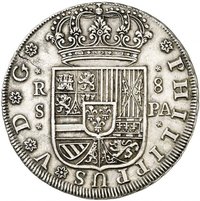
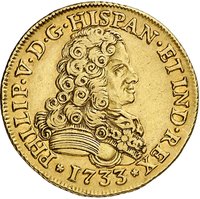
Obverse
Description:
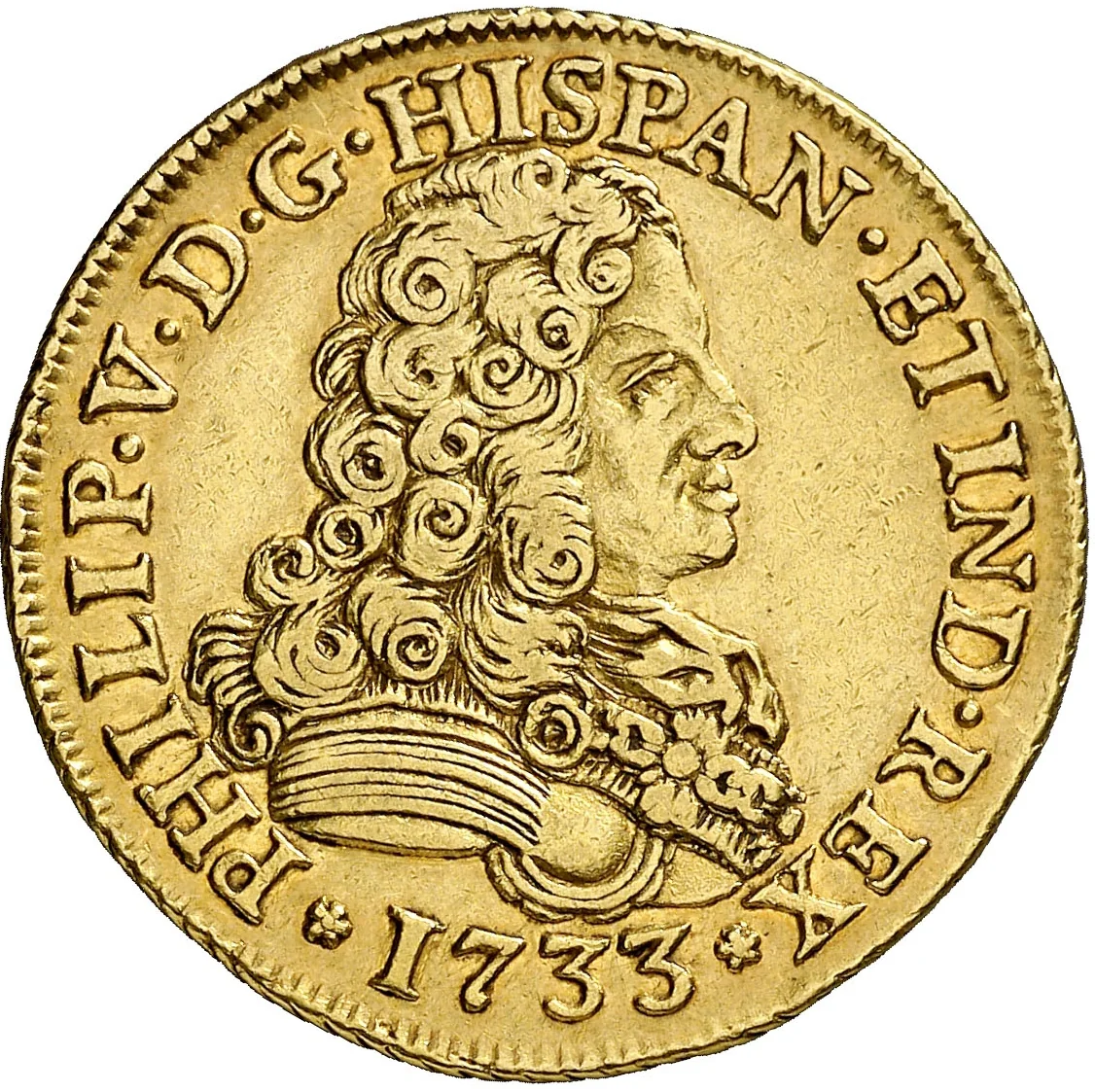
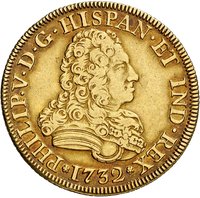
Armored bust of Philip V in profile.
Inscription:
PHILIP · V · D · G · HISPAN ET IND · REX
❀ 1733 ❀
❀ 1733 ❀
Script: Latin
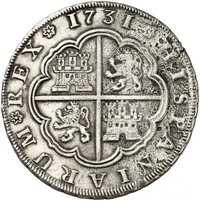
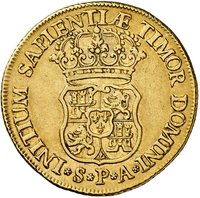
Reverse
Description:
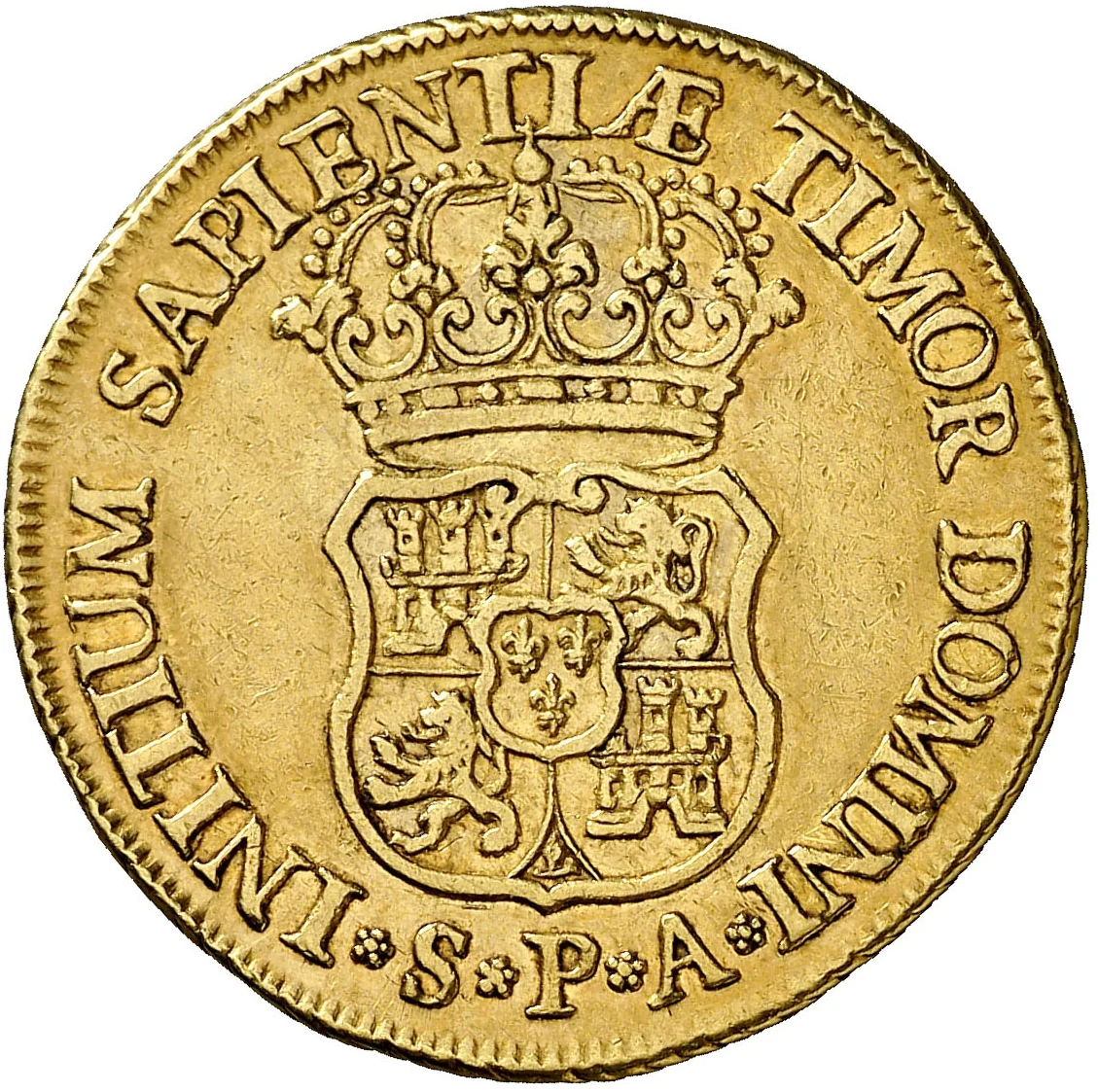
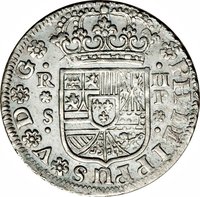
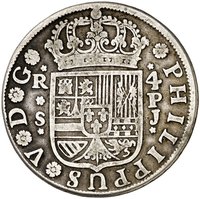
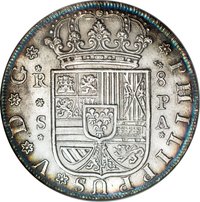
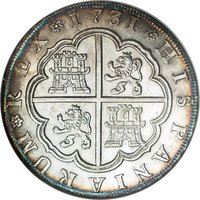
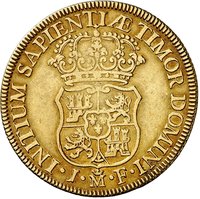
Royal arms of Spain.
Inscription:
INITIUM SAPIENTIÆ TIMOR DOMINI
❀ S ❀ P ❀ A ❀
❀ S ❀ P ❀ A ❀
Script: Latin
Edge
Categories
| Symbols> Coat of Arms |
Mints
| Name | Mark |
|---|---|
| Royal Mint of Seville | S |
Mintings
| Year | Mint Mark | Mintage | Quality | Collection |
|---|---|---|---|---|
| 1731 | SPA | — | ||
| 1732 | SPA | — | ||
| 1733 | SPA | — |
Historical background
In 1731, Spain operated under a complex and strained monetary system inherited from the Hapsburg era and further complicated by the early Bourbon reforms. The primary unit of account was the real (plural: reales), with the famous piece of eight (8 reales coin) serving as a key international trade coin. However, the system was not uniform. Alongside silver coins like the real, gold escudos (each worth 16 reales) circulated for large transactions, and a plethora of low-value copper coins, the vellón, were used for everyday purchases. This bimetallic system was perpetually vulnerable to fluctuations in the relative market values of gold and silver.
The currency situation was marked by chronic instability and debasement. Decades of warfare and fiscal shortfalls had led successive governments to repeatedly reduce the silver content in vellón coins and manipulate their face value, causing severe inflation and a loss of public confidence. This practice, known as "alteración de la moneda," meant that the intrinsic metal value of a coin was often far less than its nominal value. Consequently, people hoarded full-weight silver and gold coins (Gresham's Law in action), further disrupting the economy and complicating both domestic commerce and the Crown's ability to collect taxes in sound money.
King Philip V, the first Bourbon monarch, was actively attempting to centralize and reform the system. A major monetary reform in 1728 had introduced new, machine-struck gold and silver coins from the Madrid mint, featuring the king's portrait, in an effort to standardize and modernize the coinage. However, in 1731, these reforms were still in their early stages and had not yet resolved the deep-seated problems. The economy remained hampered by a confusing mix of old and new coins of varying values, while the Crown's persistent need for revenue continued to threaten the stability of the fledgling system.
The currency situation was marked by chronic instability and debasement. Decades of warfare and fiscal shortfalls had led successive governments to repeatedly reduce the silver content in vellón coins and manipulate their face value, causing severe inflation and a loss of public confidence. This practice, known as "alteración de la moneda," meant that the intrinsic metal value of a coin was often far less than its nominal value. Consequently, people hoarded full-weight silver and gold coins (Gresham's Law in action), further disrupting the economy and complicating both domestic commerce and the Crown's ability to collect taxes in sound money.
King Philip V, the first Bourbon monarch, was actively attempting to centralize and reform the system. A major monetary reform in 1728 had introduced new, machine-struck gold and silver coins from the Madrid mint, featuring the king's portrait, in an effort to standardize and modernize the coinage. However, in 1731, these reforms were still in their early stages and had not yet resolved the deep-seated problems. The economy remained hampered by a confusing mix of old and new coins of varying values, while the Crown's persistent need for revenue continued to threaten the stability of the fledgling system.
Series: 1731 Spain circulation coins
✨ Legendary